

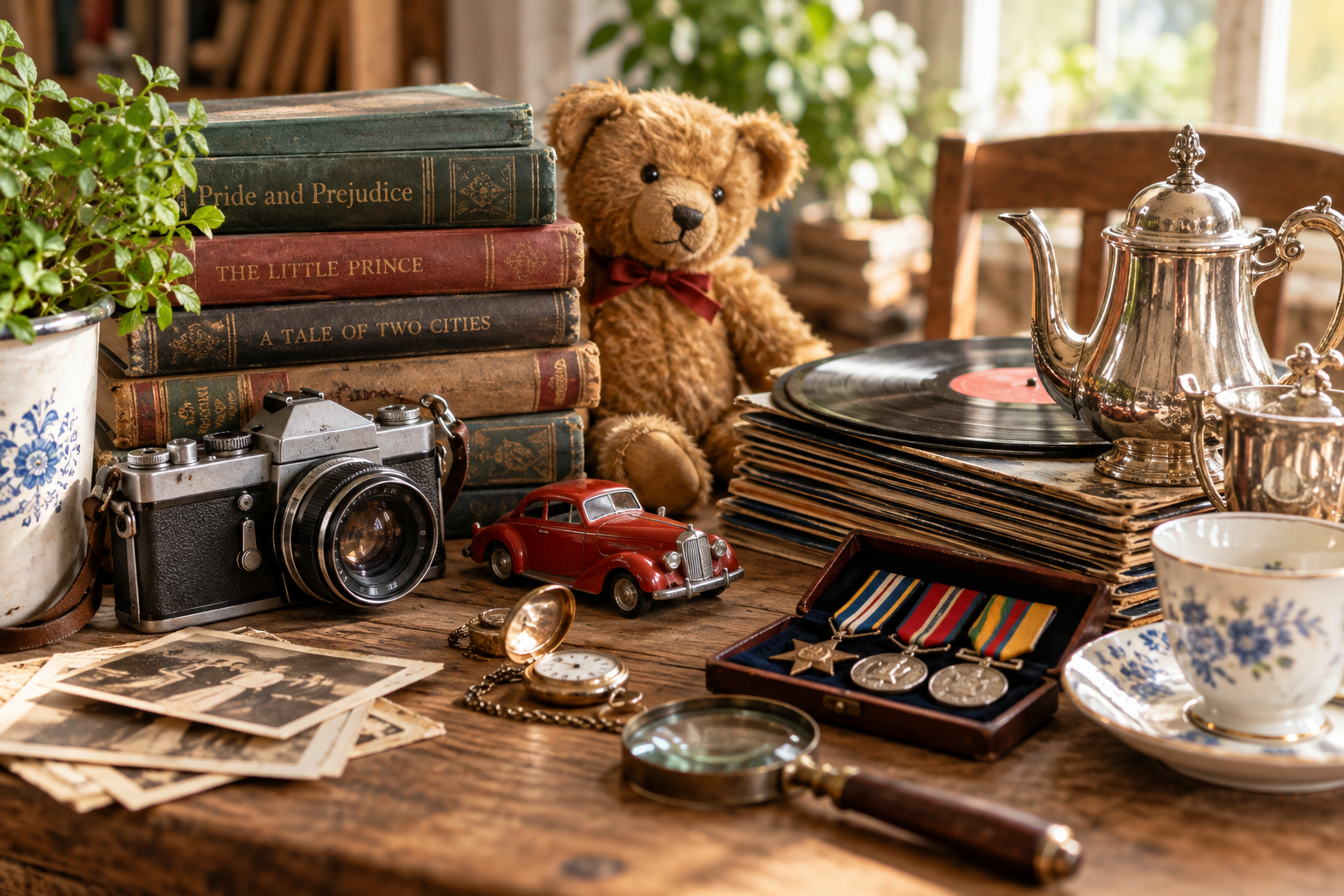
When we’re clearing a home, it’s often the ordinary things that get packed away first. A shelf of old books, a box of kitchen utensils, a sewing machine tucked into a cupboard or a collection of vinyl records that hasn’t been played in years. They may not look particularly special, especially when there’s a whole house to sort through and a long list of things to do.
But I’ve come to appreciate that ordinary doesn’t always mean worthless. One should check to see if anything is valuable before donating. Some belongings that seem destined for the donation pile may have a little more value than we realise. That doesn’t mean every old item is a hidden fortune waiting to be discovered, of course, but it does mean that a closer look can sometimes be worthwhile before we let something go.
In Part 1 of this series, we looked at jewellery, antiques, coins, watches, china and artwork that may deserve a second glance. This time, we’re turning our attention to the everyday items that can be just as easily overlooked. From old books and silverware to vintage toys, cameras and kitchenware, we’ll explore what might be worth checking before you decide whether to keep, sell or donate it.
Because when you’re sorting through a lifetime of belongings, a little knowledge can make those decisions feel a whole lot easier.
Books are often among the first things we sort through when decluttering. Bookshelves that have been filled for years can suddenly feel overwhelming when we are downsizing or preparing a family home for sale. It is tempting to pack everything into boxes and donate it to the nearest charity shop, especially when there are simply too many books to keep.
But before you do, take a little time to look through the collection. While most second-hand books have modest resale value, certain editions can be surprisingly collectible. A book does not necessarily need to be extremely old to attract interest. Its edition, rarity, author, condition and demand among collectors can all influence its value.
Some books worth a closer look include:
It is also worth looking through older family libraries for unusual subjects, local history books, out-of-print titles or collections that have been kept together for generations. Here in South Africa, books relating to local history, early travel, regional heritage or significant historical events may be of interest to specialist collectors.
Condition matters, too. A book with loose pages, water damage, missing illustrations or a heavily damaged cover may be less desirable than a complete copy in good condition. However, do not assume that a worn book is automatically worthless. Rare editions can still attract interest despite signs of age.
If you find a book that looks unusual, check the title page and publication details, including the publisher, year and edition information. A reputable rare-book dealer or specialist bookseller may be able to help you identify it. Online listings can provide useful clues, but remember that an advertised price is not necessarily what a book has actually sold for.
And please do not feel that you need to research every paperback in the house. The idea is simply to set aside anything unusual, signed, particularly old or potentially collectible before donating the rest. Sometimes, a few minutes spent looking through a forgotten bookshelf can reveal a book that deserves a little more attention.
Silver is one of those materials that can easily be overlooked when sorting through a home. Over time, it loses its shine and develops a darkened or tarnished appearance. A silver-plated serving tray that has been sitting in a cupboard for years may look rather tired, while a collection of old cutlery might seem like nothing more than unwanted kitchen clutter. Before donating these items, however, it is worth taking a closer look.
One of the first things to understand is the difference between solid silver and silver plate. Sterling silver is generally marked 925, indicating that it contains 92.5% silver. You may also come across markings such as sterling, while older silver items can have different hallmarks depending on where and when they were made. Silver-plated pieces, on the other hand, have a thin layer of silver over another metal and usually have a much lower precious-metal value.
When examining silver items, look for hallmarks, maker’s marks or other identifying stamps. These are often found on the underside of serving dishes, the backs of spoons, the handles of cutlery or the bases of decorative objects. A small mark may help you identify the manufacturer, the silver content or even the country of origin.
Items worth checking include:
It is important not to assume that every item marked silver is valuable, or that every unmarked item is worthless. Hallmarks can be difficult to interpret, and some pieces may require professional testing to establish their composition. The value of an item can also depend on its weight, craftsmanship, age, condition and collector demand.
If you discover something that may be solid silver, avoid polishing it aggressively before having it assessed. Heavy cleaning can sometimes damage delicate details or remove part of its original finish. Take clear photographs of any markings and ask a reputable jeweller, silver specialist or antiques dealer for advice if you are unsure.
And remember, silver-plated items can still have decorative or practical value even if they contain very little precious metal. A beautiful old serving tray may be worth keeping because it reminds you of family gatherings, or it may be something another person would love to use in their home.
The aim is not to turn every tarnished spoon into a treasure hunt. It is simply to recognise that some items deserve a second look before being placed in the donation box.
Military memorabilia is something I would always handle with a little extra care when decluttering a family home. An old medal tucked into a drawer, a uniform hanging at the back of a wardrobe or a collection of photographs stored in a dusty box may not seem particularly important at first glance. Yet these items can hold remarkable stories about the people who owned them and the lives they lived.
For many families, military belongings are far more than old objects. They may represent a parent, grandparent or great-grandparent who served during a significant period in history. Even when the person who owned them is no longer with us, these possessions can provide a meaningful connection to their past and help younger generations understand a little more about their family history.
Some military memorabilia may also have financial or historical value. Medals, badges, uniforms, photographs, documents and other service-related items can attract the interest of collectors, historians or specialist museums. However, value depends on factors such as rarity, condition, authenticity, historical significance and demand. An ordinary service medal may have considerable sentimental importance without having a high resale value, while an unusual item may deserve further investigation.
Before donating military memorabilia, look out for:
If you are sorting through a loved one’s belongings, try to keep related items together rather than separating medals from their boxes, documents or photographs. The accompanying details may help identify the owner and explain the item’s history. If possible, ask family members whether they recognise anything or know the story behind the collection.
Avoid polishing medals, cleaning old uniforms aggressively or attempting to repair delicate items before seeking advice. Original condition can matter to collectors and historians, and well-intentioned cleaning may cause damage. Take clear photographs of the items, including any inscriptions, markings and accompanying paperwork, before deciding what to do with them.
If you suspect that a piece may have historical or financial significance, consider contacting a reputable militaria specialist, auction house or relevant historical organisation. In South Africa, military museums and heritage organisations may also be useful starting points when researching items connected to the country’s military history.
And please remember that you do not need to establish a monetary value before deciding that something deserves to be kept. A medal belonging to your grandfather or a photograph of a loved one in uniform may be irreplaceable to your family, even if it has little commercial value.
Vintage toys are often tucked away in cupboards, stored in garages or forgotten in boxes that have not been opened for years. When we are decluttering a family home, it is easy to assume that old toys have served their purpose and can simply be donated. After all, they may be scratched, faded or missing a few pieces, and nobody has played with them in decades.
But before passing them along, it is worth taking a closer look. Certain vintage toys can attract collectors, particularly when they come from sought-after manufacturers, belong to a popular range or were produced in limited quantities. Some toys may also have sentimental value that makes them worth keeping, even if they are not particularly valuable on the resale market.
You do not need to be a toy collector to recognise when something deserves a second look. Familiar brands such as LEGO, Matchbox, Corgi, Dinky Toys, Barbie and early action figures may have collectible examples, although the value can vary enormously depending on the specific item.
When sorting through old toys, look out for:
Original packaging can make a difference to the appeal and value of some collectible toys. If you find an old toy in its original box, keep the packaging with it rather than throwing it away. Instructions, accessories and small parts may also be important, so try to keep everything together while you investigate.
Condition matters, but a toy does not necessarily need to be perfect to have collector interest. Some rare examples may still attract attention despite signs of age or wear. On the other hand, a common toy in excellent condition may have little resale value simply because there are so many available.
If you discover something unusual, check for manufacturer names, model numbers, dates or identifying marks. Take photographs and compare the item with reputable collector resources or completed sales rather than relying solely on online asking prices. If you suspect that it may be particularly valuable, a specialist toy dealer or auction house may be able to help.
And, of course, remember that old toys can hold enormous sentimental value. A teddy bear that accompanied your child everywhere, a doll that belonged to your mother or a favourite childhood game may be worth keeping simply because of the memories attached to it.
Before donating vintage toys, give yourself time to sort them carefully, keep matching pieces together and decide whether anything deserves further investigation. You may discover a collectible, a treasured family keepsake or simply a toy that another child will be delighted to enjoy.
Vinyl records are another item worth looking through carefully when decluttering a home. You may come across a collection that has been sitting in a cupboard for decades, perhaps belonging to a parent or grandparent who loved music. It can be tempting to assume that old records are simply taking up space, especially if nobody in the family owns a record player anymore. But before donating the collection, it is worth checking whether any albums might be of interest to collectors.
Vinyl has enjoyed a renewed appreciation among music lovers, and certain records can attract considerable interest. However, age alone does not make an album valuable. Its rarity, pressing, artist, condition and demand among collectors all play a part. A well-known album that was produced in large numbers may have little resale value, while a less familiar release or unusual pressing may be worth investigating.
When sorting through a record collection, look for:
Condition matters enormously with vinyl. Scratches, warping, dirt and damaged sleeves can affect both listening quality and collector appeal. Handle records by their edges and avoid stacking heavy items on top of them. If you find a potentially collectible album, resist the temptation to clean it with household products or attempt repairs before checking the appropriate care methods.
It is also worth looking closely at the record label and the information printed on the sleeve. Catalogue numbers, country of manufacture and other identifying details can help distinguish one release from another. Two records with the same album title may have very different values depending on the pressing.
If you discover an unusual album, compare it with reliable record-collecting databases or ask a reputable vinyl dealer for advice. Online marketplaces can offer useful clues, but remember to compare completed sales of the same pressing in a similar condition rather than relying on ambitious asking prices.
And please do not overlook the sentimental side of a record collection. The albums your parents played on a Sunday afternoon or the music that accompanied family celebrations may hold memories that are far more meaningful than their resale value. You might even discover a collection that another family member would love to keep.
Before donating vinyl records, take a little time to sort through them, keep the sleeves and inserts together and set aside anything unusual for further investigation. You may not uncover a rare collector’s item, but you will have the reassurance of knowing that you gave the collection a fair look before passing it on.
Cameras are another item that can easily be overlooked when clearing a home. You might find an old film camera tucked into a cupboard, a camera bag in the garage or a collection of lenses that belonged to a parent who loved photography. With digital cameras and mobile phones now part of everyday life, older equipment can seem rather outdated. But before donating it, take a little time to see whether anything deserves a closer look.
Some vintage cameras and photography equipment are sought after by collectors, photographers and enthusiasts. Certain models have historical significance, while others remain popular because of their craftsmanship, lens quality or reputation. However, not every old camera is valuable, and age alone is not a reliable indication of what it may be worth.
Well-known manufacturers such as Leica, Nikon, Canon, Olympus, Pentax and Hasselblad have produced models that attract collector interest. The specific model, condition, functionality and availability of accessories can make a considerable difference, so it is worth identifying the camera properly rather than relying on the brand name alone.
When sorting through old photography equipment, look out for:
Before donating a camera, check for the manufacturer’s name, model number and any identifying information. If it uses film, avoid assuming that it is worthless simply because it is no longer convenient to use. Some photographers still enjoy shooting with film, and certain older cameras remain highly desirable.
Condition is important, but a camera that has not been used for years may still be worth investigating. Check for obvious damage, corrosion, missing components or signs of moisture. Avoid forcing stuck mechanisms or attempting repairs if you are unfamiliar with the equipment. A camera that appears to be in good condition may still need professional inspection before its functionality can be established.
It is also worth checking the camera bag and surrounding storage areas carefully. Small accessories, spare lenses, filters and original paperwork can easily become separated from the main equipment. Keep related items together and take clear photographs of the model numbers and any accessories before seeking advice.
If you discover a camera that looks unusual or potentially collectible, compare it with reputable camera dealers or specialist photography resources. A professional camera shop or experienced vintage camera dealer may be able to help identify the model and advise whether it has resale value. As always, remember that online asking prices are not necessarily what buyers are actually paying.
And, of course, there may be more than financial value attached to an old camera. It might have captured family holidays, birthdays and moments that would otherwise have faded from memory. If you find old film rolls or memory cards while sorting through the equipment, consider whether they contain photographs your family would like to preserve before donating anything.
Before passing on old photography equipment, give it a careful once-over, keep matching accessories together and set aside anything that may deserve further investigation. You may discover a collectible camera, a useful piece of equipment or a little piece of family history worth holding on to.
Sewing machines are another household item worth taking a closer look at before donating. Many of us remember an older sewing machine that belonged to our mother or grandmother, perhaps sitting in a sturdy cabinet or tucked away in a spare room. These machines were often built to last, and some have continued working beautifully for decades. When we begin decluttering, however, it can be easy to assume that an old machine is simply outdated and no longer useful.
Before sending one off to a charity shop, take a moment to identify what you have. Certain vintage sewing machines are sought after by collectors, sewing enthusiasts and people who appreciate traditional craftsmanship. Others remain useful for everyday sewing and repairs. While not every old machine will have significant resale value, some models are worth investigating before making a decision.
Singer is one of the best-known names in vintage sewing machines, and certain older models have developed a following among collectors. Other manufacturers, including Bernina, Pfaff and Husqvarna Viking, have also produced machines that may be of interest. The manufacturer alone does not determine value, so identifying the specific model is an important first step.
When checking an older sewing machine, look for:
Condition is important, but a machine that has not been used for years is not necessarily beyond repair. Some vintage sewing machines are valued for their durability and straightforward mechanical design. However, avoid forcing stiff mechanisms, dismantling parts or attempting repairs before you know what the machine needs. A professional sewing machine technician may be able to assess its condition and advise whether servicing is worthwhile.
If the machine belonged to a parent or grandparent, take a little time to ask family members about its history. It may have been used to make school uniforms, wedding dresses, curtains or clothes for growing children. Those memories can be every bit as meaningful as the machine’s potential resale value.
If you suspect that your sewing machine may be collectible, take clear photographs of the machine, its model number, serial number, cabinet and accessories. A reputable vintage sewing machine dealer or experienced specialist may be able to help identify it. Compare similar models and their actual selling prices rather than relying only on online asking prices.
And remember, an old sewing machine does not have to be valuable to deserve a second chance. Someone may be delighted to restore it, use it for sewing projects or give it a new home. Before donating it, check whether it works, keep its accessories together and make an informed decision about its next destination.
Sometimes, what looks like an outdated household item is still a useful piece of craftsmanship, a collectible or a lovely reminder of the hands that once used it.
Kitchen cupboards can hold some rather interesting surprises when we begin decluttering. An old cast-iron pot tucked away at the back of a cupboard, a collection of enamel cookware that belonged to your grandmother or a set of vintage mixing bowls may seem like ordinary household clutter. But before donating everything, it is worth taking a closer look at what you have.
Certain vintage kitchen items have developed a loyal following among collectors, home cooks and people who appreciate traditional craftsmanship. Some pieces remain wonderfully practical, while others are sought after because of their design, manufacturer, age or rarity. Of course, not every old saucepan or mixing bowl is valuable, but a little investigation can help you avoid donating something that deserves a second look.
When sorting through kitchenware, keep an eye out for:
One of the most useful things to check is the manufacturer’s name or marking. Look underneath pots, pans and bowls, or examine the handles and bases for stamps, labels or model details. These clues may help you identify when an item was made and whether it belongs to a sought-after range.
Condition also plays a role. Chips, cracks, heavy damage, missing lids or worn surfaces can affect an item’s desirability. With cookware intended for food preparation, safety matters just as much as collectibility. Avoid using damaged enamel cookware or pieces with questionable coatings simply because they look attractive or vintage.
If you discover something unusual, take clear photographs of the item, its markings and any matching pieces. Compare it with reputable collector resources or ask a specialist dealer for guidance. Online asking prices can provide clues, but they do not necessarily reflect what buyers are actually paying.
And remember, kitchenware does not have to be valuable to deserve a second life. A sturdy old pot may still be useful to someone setting up their first home, while a beautiful mixing bowl might be treasured by someone who loves baking. If a piece has been part of your family’s kitchen for generations, it may also hold memories worth preserving.
Before donating vintage kitchenware, take a little time to identify unusual pieces, keep matching sets together and decide whether anything deserves further investigation. You may discover a collectible, a practical item someone else can enjoy or simply a lovely reminder of family meals and kitchens filled with love.
When we begin sorting through a home, it is easy to assume that the things we no longer use are simply things that someone else might find useful. Yet, as we have explored in this article, some everyday belongings can hold surprising value. An old book tucked away on a shelf, a box of vintage toys in the cupboard or a sewing machine that has not been used for years may deserve a closer look before being passed on.
The trick is not to become suspicious of every item or to turn decluttering into a treasure hunt. Most of us have enough to think about when sorting through a lifetime of belongings. It is simply about slowing down where it matters, looking for clues and giving ourselves permission to check before making a decision.
If you are helping a parent downsize or preparing a family home for its next chapter, remember that you do not need to work through everything in a single afternoon. A little research, a second opinion or a conversation with someone who knows the subject can help you feel more confident about what to keep, sell or donate.
And if you discover that an item is worth very little financially, that does not make it worthless. Something that has been gathering dust in your home may be exactly what another person has been searching for. There is real satisfaction in knowing that a useful or much-loved possession can find a new home.
In Part 3 of this series, we will look at researching potential value, deciding when a professional valuation may be worthwhile and making thoughtful decisions about what to sell, keep or donate. Because knowing what something might be worth is only half the story; knowing what to do next is just as important.
When you are sorting through a home, a few practical tools can make the process easier. Whether you are checking old keepsakes, protecting fragile items or keeping important belongings together while you research them, these are some useful things to have nearby.
🌿 A little note about my Amazon links
Some of the products I recommend on Rustic Daisy are linked to Amazon. These are affiliate links, which means that if you choose to purchase something through one of my links, I may receive a small commission at no additional cost to you. This helps support Rustic Daisy and allows me to continue creating useful content for you.
As an Amazon Associate I earn from qualifying purchases.
A quick note for my lovely South African readers 🇿🇦
Amazon links can be useful for readers who already shop through Amazon in their own country. Unfortunately, there isn’t currently a South African Amazon shopping site, so international shipping charges, import duties or other fees may apply when ordering from Amazon.
These additional costs can sometimes make an otherwise reasonably priced product considerably more expensive, so please check the final price, delivery costs and any additional charges before placing your order.
I’m working on finding local alternatives! 🌿
I’m always on the lookout for lovely, practical alternatives that are available right here in South Africa. When I find something suitable, I’ll gladly share it with you so that our local readers have options that are easier and more affordable to find.
I only recommend products that I genuinely believe are useful, relevant and worth considering. I’m not here to fill my pages with links simply for the sake of earning a commission.
Thank you for supporting Rustic Daisy, whether you’re reading from South Africa or somewhere else in the world. Every visit, share, click and purchase helps my little corner of the internet continue to grow. 🌼
South African readers: your local alternatives are coming! 🇿🇦🌿
1. Archival book sleeves or protective covers
If you have older books that you want to keep in good condition while researching them, protective covers can help reduce everyday wear and dust.
2. Acid-free storage boxes
A practical option for keeping photographs, documents and other delicate keepsakes together while you decide what to do with them.
3. Protective record sleeves
If you have a collection of vinyl records, replacement sleeves can help protect them from dust and handling marks.
4. Bubble wrap and packing materials
Helpful for protecting fragile china, cameras, ornaments and other breakable belongings while moving or storing them.
5. Clear storage bins
These make it easier to group items by category and see what you have set aside for further research.
6. A notebook for keeping records
A simple notebook can be surprisingly useful for recording makers’ marks, model numbers, condition, family history and links to comparable items you find online.
You do not need to buy everything on this list. Use what you already have where possible and choose only the things that genuinely make your sorting process easier.
Look for first editions, limited printings, signed copies and books in good condition. The author, publication date, rarity and demand among collectors can all influence value. A quick online search using the title, author and edition details can help you decide whether further research is worthwhile.
Not necessarily. Solid silver items may have a precious-metal value, while silver-plated pieces are generally worth less. Look for hallmarks or other identifying marks and have unfamiliar pieces checked before selling or donating them.
It is worth setting aside military memorabilia for a closer look before donating it. Medals, photographs, uniforms, documents and personal items may interest collectors or have important family history. Their value depends on factors such as authenticity, condition, rarity and provenance.
Some vintage toys can be collectible, particularly when they are rare, sought after or still in good condition with original packaging. However, age alone does not guarantee value. Research the maker, model and condition before deciding what to do with them.
Some records attract collectors, but many common albums have modest resale value. The artist, pressing, rarity, condition and current demand all matter. Check the exact release rather than relying only on the album title.
Before donating them, identify the make and model and check whether similar items are selling. Some older cameras and sewing machines have collector or practical value, while others may be worth more to someone who can repair or use them. Condition and completeness can make a difference.
If an item is unusual, appears well made, has a recognisable maker’s mark or seems to have been kept carefully for many years, it may be worth a quick check. You do not need to research every possession. Focus on items that stand out or that you would regret giving away without looking into them first.
If you are sorting through a home, helping a parent downsize or deciding what to keep and what to let go of, these related articles may also be helpful.
May we always remember that letting go can make room for a new chapter, while the stories attached to the things we have loved remain part of us.
Until next time,