

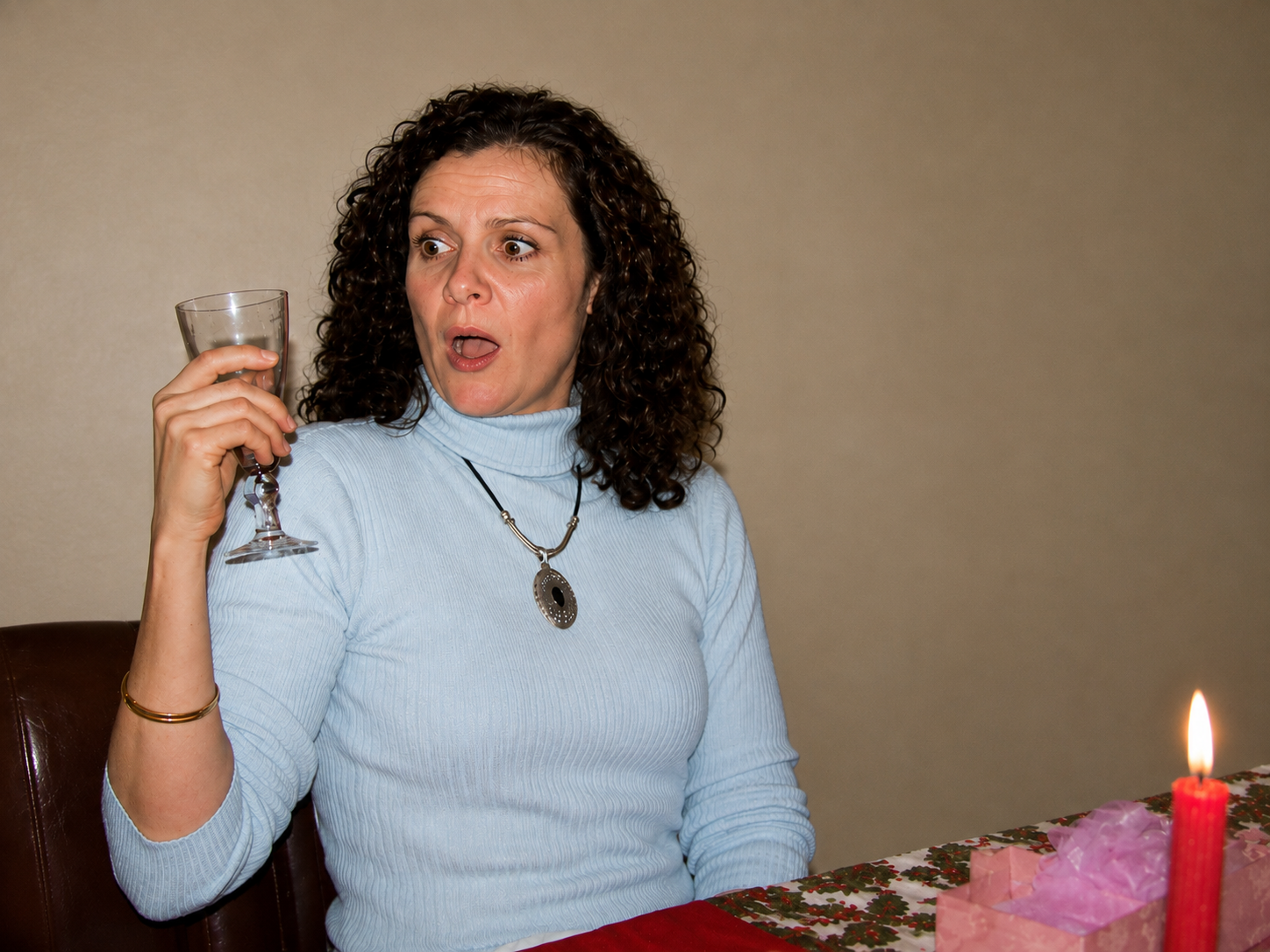
There’s a very unsettling moment that sneaks up on most of us somewhere in middle age. It doesn’t arrive with a fanfare or a flashing sign to warn you. It simply appears one ordinary day when you least expect it. Mine happened in the supermarket. I was pushing a trolley through the fruit and vegetable aisle when I heard myself muttering, “Who on earth is paying these prices for avocados?” I stopped in my tracks, looked around to see if anyone had heard me and felt a little shiver run down my spine.
I had become my parents.
Not just a little bit either. That sentence hadn’t merely sounded like something they would have said—it sounded exactly like them, right down to the slightly disapproving tone. I laughed out loud, earning a curious look from a gentleman comparing tomatoes, because at that moment I realised something that would continue to surprise me over the following years. My parents had been right about far more things than I had ever been willing to admit. I realised my parents were right about almost everything.
When you’re young, your parents have a remarkable ability to appear hopelessly old-fashioned. They worry about things that seem completely unnecessary, ask questions that feel irritatingly sensible and have an uncanny talent for spoiling what you firmly believe are excellent ideas.
Looking back now, I realise they weren’t trying to spoil anything at all. They were simply trying to save me from a few bruises, a few tears and quite a lot of wasted money. Unfortunately, youthful confidence has an extraordinary way of drowning out common sense. I honestly believed my generation had discovered life from scratch and that previous generations had somehow muddled through without understanding anything about the modern world.
It never occurred to me that people had been making exactly the same mistakes for centuries, only in slightly different clothes.
One of my mother’s favourite expressions was, “You’ll understand one day.” At the time, I found those four words deeply frustrating. They sounded suspiciously like an admission and that she couldn’t think of a better explanation. I wanted facts, evidence and a convincing argument. Instead, she’d simply smile in that calm, knowing way mothers seem to have perfected and repeat, “One day you’ll understand.”
If there were Olympic medals for patient parenting, she would have brought home gold. Of course, I was absolutely certain that day would never come. I was different. My life was different. My circumstances were different. As it turned out, I wasn’t nearly as unique as I imagined. That day arrived quietly over the course of many years, one small realisation at a time, until eventually I found myself saying those exact same words to my own children. I wish I could tell you I recognised the irony immediately, but it took an embarrassingly long time before I caught myself.
Take something as simple as putting on a jersey. Every winter without fail, my parents would insist I was going to catch a cold if I rushed outside dressed as though it were the middle of summer. I rolled my eyes so often I’m surprised they didn’t stay there permanently. I was convinced fresh air couldn’t possibly be that dangerous and that adults simply enjoyed inventing unnecessary rules.
Fast forward several decades and there I was, watching one of my own children heading out of the house wearing what appeared to be half a T-shirt in the middle of winter. Before I had time to think, the words escaped my mouth. “Aren’t you taking a jersey?” The silence that followed was almost deafening. My child looked at me with the exact same expression I’d worn all those years ago, somewhere between amusement and mild disbelief.
It was like looking into a time machine. In that instant, I understood that my mother probably hadn’t been trying to prevent pneumonia quite as much as she had simply wanted the comfort of knowing I’d be warm if the weather changed. Sometimes love disguises itself as nagging.
Money was another subject on which my parents seemed to possess an endless supply of opinions. They saved everything. Plastic containers were washed and reused until the lids had developed personalities of their own. Wrapping paper was carefully folded and tucked into a drawer for another birthday. Rubber bands, gift bags, pieces of string and perfectly good cardboard boxes all had future potential according to them.
As a teenager, I found this mildly ridiculous. Why keep an old ice cream container when you could simply buy another one?
Then adulthood arrived with electricity bills, insurance, unexpected car repairs and the astonishing discovery that money can disappear faster than biscuits at a family gathering. These days I find myself carefully washing yoghurt tubs because “they’re handy for leftovers,” and folding gift bags with almost professional precision.
Every time I do it, I laugh because somewhere my parents are surely nodding in quiet satisfaction. Apparently, frugality isn’t inherited. It simply arrives disguised as experience.
One lesson I resisted with particular enthusiasm was the idea that not everything had to happen immediately. I wanted the career, the home, the financial security and all the lovely things that came with them as quickly as possible. Patience seemed like something older people talked about because they’d already reached the finish line.
My father would often remind me that “good things take time,” a sentence I considered painfully unhelpful when I wanted results by next Tuesday. I didn’t appreciate those words until much later, after discovering that almost everything worthwhile in life grows slowly. Strong relationships aren’t built over a weekend. Financial stability doesn’t usually appear after one good month.
Confidence comes from years of quietly getting back up after setbacks. Even the gardens I admire most didn’t become beautiful overnight. They were planted, watered, weeded and patiently tended through seasons that probably looked rather unimpressive at the time. My father wasn’t trying to slow me down. He was trying to spare me the disappointment of expecting instant success in a world that rarely works that way.
Then there was the famous phrase every child has heard at least once. “Money doesn’t grow on trees.” As children, we assumed this was simply another one of those mysterious adult sayings, filed somewhere alongside “Because I said so” and “We’ll see.” I remember thinking it sounded rather obvious. Of course money didn’t grow on trees. Nobody was suggesting it did.
What I failed to understand was that my parents weren’t talking about trees at all. They were talking about effort, responsibility and choices. Every rand spent on one thing couldn’t be spent on something else. Every unnecessary purchase delayed something more important. It wasn’t until I started managing my own household that those words began making perfect sense. Now, whenever I hesitate before buying something I don’t really need, I can almost hear my father gently reminding me that trees are much better at growing leaves than bank notes.
The older I’ve become, the more I’ve realised that my parents weren’t trying to prepare me for childhood. They were quietly preparing me for adulthood. Every little reminder about saving money, working hard, treating people kindly, finishing what I’d started or thinking before speaking was laying another brick in a foundation I wouldn’t fully appreciate until many years later.
At the time, it all felt terribly ordinary. Sometimes it even felt annoying. Looking back now, I can see it for what it really was. It was love dressed in practical clothes. It wasn’t dramatic or glamorous, and it certainly didn’t feel particularly exciting when I was young, but it has stayed with me far longer than almost anything else I learnt.
These days, every now and then, I’ll catch myself saying something that sounds uncannily familiar. It might be a gentle reminder not to waste food, a suggestion to think before making a big purchase or a quiet comment about how it’s always worth doing a job properly the first time.
I’ll hear the words leave my mouth and smile to myself because they aren’t really mine at all. They’re echoes of conversations that took place around my childhood kitchen table, carried gently across the years until they eventually found their way back into another generation. And every single time it happens, I think exactly the same thing.
My goodness…
They really did know what they were talking about.
If someone had told my twenty-year-old self that one day I’d become fiercely protective of leftovers, switch lights off in empty rooms with military precision and feel personally offended by an unnecessarily long shower, I would have laughed until I cried.
Back then, I thought adulthood was all about freedom. Freedom to make my own decisions, decorate my own home, spend my own money and live life without someone gently reminding me to close the fridge door before all the cold air escaped.
I imagined I’d do everything differently. My house would run according to my rules, not the ones I’d grown up with. Yet somewhere between raising children, paying bills and discovering that electricity has become a luxury item, those old family sayings quietly unpacked their bags and moved back in.
One of the first clues was the lights. I honestly don’t remember when I became the person who walks through the house switching them off behind everyone else, but apparently it happened. There was a time when I’d leave every light blazing because I’d probably be back in that room in five minutes anyway. Now I find myself muttering, “Why is every light in the house on? Are we expecting aircraft to land?” It’s not even something I think about anymore. My feet automatically head towards the nearest switch while my mouth starts delivering the very speech I spent years pretending not to hear. I used to wonder why my parents made such a fuss over one light bulb. Now I receive the monthly electricity bill and suddenly their concern seems perfectly reasonable. Amazing how quickly financial responsibility sharpens your understanding.
The kitchen has become another place where I regularly hear the voices of my parents. As children, we were encouraged to finish what was on our plates because wasting food simply wasn’t done. At the time, I assumed this was another one of those arbitrary household rules designed to spoil my evening.
Now I look at the price of groceries and find myself gazing lovingly at the last spoonful of mashed potato, wondering what delightful creation it might become tomorrow. Nothing escapes the fridge without first being considered for another meal. Leftover roast chicken transforms into sandwiches, soup or pie. Vegetables find their way into omelettes. Even the lonely slice of bread sitting at the bottom of the loaf is given a second chance as toast.
Somewhere along the line I stopped seeing leftovers as second best and started seeing them as common sense. My mother would be delighted. She’d probably also remind me to scrape every last bit from the mixing bowl while I was at it.
Then there’s shopping. Oh, how confidently I used to wander through the supermarket tossing things into the trolley because they looked nice or happened to be on special. My parents always had a shopping list. They stuck to it with almost supernatural discipline while I drifted towards the biscuit aisle, convinced that chocolate was an essential household item.
Nowadays I still make a list, but somehow I return home with everything on it plus three things I hadn’t planned to buy because apparently I was temporarily hypnotised by scented candles or pretty notebooks. I like to think I’ve inherited my mother’s sensible approach to shopping while retaining just enough of my younger self to keep life interesting. After all, nobody ever regretted owning too many notebooks. Well… perhaps don’t answer that.
One sentence I distinctly remember dismissing was, “If a job’s worth doing, it’s worth doing properly.” I thought it sounded unnecessarily serious. Surely some jobs only needed doing well enough. Then life introduced me to flat-pack furniture, leaking taps, rushed painting projects and all the delightful consequences of trying to save time by taking shortcuts.
I’ve learnt, often the hard way, that the quickest way to do something is usually to do it properly the first time. Every shortcut has an irritating habit of circling back to introduce itself again, usually when you least expect it. I smile now whenever I hear those familiar words echoing through my mind because I know exactly where they came from. My parents weren’t trying to make life harder. They were trying to save me from doing the same job twice.
I also owe my parents a quiet apology for every occasion on which I ignored their advice about looking after things. As a child, I couldn’t understand why they insisted we treat our belongings with care. “Put it away properly,” they’d say. “Look after your shoes.” “Don’t leave your bike out in the rain.” It all seemed terribly unnecessary because, in my wonderfully uncomplicated world, things could simply be replaced.
Adult life has a remarkable way of correcting that misunderstanding. Suddenly, you discover that replacing things costs money, repairing things takes time and looking after what you already own is one of the simplest ways to make life a little easier. These days I catch myself carefully wiping down the kitchen table, storing tools where they belong and putting things back after I’ve used them. It’s not because I’ve become obsessively tidy—my family would quickly point out several areas of the house that prove otherwise—but because I’ve finally understood the quiet wisdom hidden inside those ordinary daily habits.
Perhaps the funniest transformation of all is how fascinated I’ve become by weather. As a child, I couldn’t imagine why adults discussed it so often. Every phone call seemed to begin with rain, sunshine, wind or the possibility of a cold front moving in from somewhere I’d never heard of. I promised myself I’d never become one of those people. Yet now I find myself checking the forecast before hanging out washing, commenting on approaching clouds as though I’ve personally been tracking them all morning and warning everyone that they should bring washing in before the rain arrives. I even have opinions about which months have become “nothing like they used to be.”
If that’s not proof that I’ve reached a certain stage in life, I honestly don’t know what is.
The more I think about it, the more I realise that my parents’ greatest lessons were rarely delivered during serious conversations. They weren’t sitting me down every Saturday afternoon for lectures about life. Their wisdom was woven into ordinary days. It was tucked inside reminders to say thank you, to return borrowed things promptly, to be on time, to apologise when I was wrong and to work hard even when nobody was watching.
At the time, these moments seemed so ordinary that I barely noticed them. They certainly didn’t feel like life-changing advice. Yet here I am, decades later, discovering that those small lessons have quietly shaped the person I’ve become far more than any dramatic speech ever could.
Sometimes I wonder if that’s the real magic of good parenting. It isn’t found in grand gestures or perfect words. It’s found in the thousands of ordinary moments that seem almost forgettable while they’re happening. A gentle reminder here. A quiet example there. A habit repeated so consistently that one day it simply becomes part of who you are.
We don’t always recognise those gifts when we’re young because we’re too busy looking ahead. It’s only when we glance over our shoulder years later that we realise our parents were leaving little signposts all along the road, pointing us towards a life that was kinder, steadier and wiser than we could possibly have imagined.
And perhaps that’s why I laugh now whenever I catch myself sounding exactly like them. Years ago, I would have been horrified by the thought. Today, it feels like one of the greatest compliments life could have given me. After all, if becoming a little more like my parents means valuing people over possessions, taking responsibility for my choices, treating others with kindness and finding joy in simple things, then maybe sounding like them isn’t something to resist at all. Maybe it’s something to be quietly grateful for.
As I’ve grown older, I’ve noticed something rather comforting. The things my parents taught me weren’t really about saving electricity, finishing my vegetables or putting a jersey on before going outside. Those were simply the everyday ways they expressed something much bigger. Hidden inside all those little reminders were lessons about gratitude, responsibility, patience and respect.
Children rarely recognise that at the time. We hear instructions. We see rules. We assume our parents are simply trying to make life less fun. It takes years, sometimes decades, before we realise they were quietly building the sort of character that would carry us through the difficult seasons of life. The funny part is that by the time we finally understand, they’re often no longer sitting at the kitchen table explaining it all. Instead, their voices have become part of our own inner conversation, gently reminding us what really matters when life becomes noisy.
One of the greatest gifts my parents gave me was something I didn’t appreciate until much later. They taught me that life isn’t built on grand achievements nearly as much as it is on ordinary habits. There was no applause for making your bed, returning something you’d borrowed or saying thank you when someone had gone out of their way to help you. Those things were simply expected.
At the time, I thought they were making far too much fuss over tiny details. Now I realise that those tiny details quietly become the foundation of a person’s life. The way we treat people when nobody is watching. The promises we keep even when it’s inconvenient. The willingness to admit we’re wrong. These are the things that shape our relationships far more than impressive job titles or expensive possessions ever could. My parents probably couldn’t have explained it that way if I’d asked them, but they lived it every single day, and somehow that was enough.
I also smile when I think about how often they encouraged me to be content with what I had. That was never an easy lesson for a young person growing up surrounded by advertisements telling us we always needed something newer, bigger or better. There was always another fashion, another gadget or another trend that promised to make life complete.
My parents seemed strangely immune to all of it. They appreciated nice things, of course, but they never behaved as though happiness could be bought. As a teenager, I found this terribly inconvenient because there were countless things I believed would dramatically improve my life if only somebody would buy them for me.
Looking back now, I can see that my parents were quietly teaching me one of the greatest secrets to a peaceful life. Gratitude grows much more reliably than endless wanting. It’s difficult to feel rich if you’re constantly looking at what someone else has, but it’s surprisingly easy to feel blessed when you notice what you’ve already been given.
I think about that lesson often these days, particularly when life feels busy or complicated. The happiest moments are rarely the ones that cost the most money. They’re usually the ones my parents seemed to understand instinctively. A family meal where everyone stayed around the table talking long after the plates had been cleared. A drive with no particular destination. Tea shared with a neighbour. Laughter that arrives unexpectedly over something completely ridiculous. A garden beginning to flower after weeks of patient care.
Those are the memories that stay with us. They don’t demand attention at the time because they seem so wonderfully ordinary, but years later they become the moments we would gladly relive if we could.
Of course, my parents weren’t perfect, and I think that’s another lesson I’ve only truly appreciated with age. When we are children, it’s easy to imagine that our parents have all the answers. Then we become teenagers and decide they have almost none. Somewhere in adulthood we finally arrive at a much gentler truth. They were simply people doing the very best they could with the knowledge, resources and circumstances they had. They made mistakes. They worried. They doubted themselves. There were probably nights when they lay awake wondering whether they were getting any of it right. Yet despite all of that, they somehow managed to give me enough love, guidance and stability to find my own way in the world. The older I become, the more extraordinary that seems.
Now, when one of my children comes to me for advice, I sometimes wonder whether I’ll ever have the quiet confidence my parents seemed to possess. I don’t always know the right thing to say. The world feels different in many ways, and life moves much faster than it did when I was growing up. Technology changes almost daily, jobs look different, families look different and challenges arrive wearing unfamiliar faces. Y
et I’ve discovered that the most valuable advice rarely changes. Be kind. Work hard. Keep your word. Save a little for tomorrow. Treat people with respect. Choose your friends wisely. Don’t spend money you don’t have. Say you’re sorry when you’ve made a mistake. Those lessons have survived every generation because they were never really about a particular time in history. They were about human nature, and human nature hasn’t changed nearly as much as we like to think it has.
At some stage I will catch one of my children repeating something I’ve said, perhaps to a friend or even to one of their own children one day, and I imagine I’ll smile in exactly the same way my parents probably did. They may not remember where they first heard those words. They might even think they came up with the idea themselves, and that’s perfectly alright.
Wisdom has never been concerned with receiving credit. It simply keeps travelling quietly from one generation to the next, finding new voices while carrying the same timeless truths.
If I’m completely honest, there are still days when I wish I could pick up the telephone and ask my mum one more question. Losing her has made me realise just how often I relied on her quiet wisdom, even when I didn’t fully appreciate it at the time. I count myself incredibly fortunate that I can still phone my dad, and there are moments when life presents a situation I’ve never faced before when he’s the first person I want to speak to.
I’d love to hear what Mum would have thought about some of the strange modern problems we deal with today, and I know Dad still has that wonderfully practical way of looking at life that somehow makes everything feel a little less overwhelming. Whether it’s over a cup of tea or at the end of a phone call, his calm reassurance has a way of reminding me that things usually work themselves out in the end.
Perhaps that’s one of the greatest gifts loving parents leave us. Even when one is no longer sitting across the table from us, the values, wisdom and love they shared continue to shape our decisions, while the parent who is still with us becomes an even more precious reminder of where those lessons first began.
So yes, I have finally reached the stage in life where I happily admit that my parents were right about almost everything. Not because they knew the future or because they never made mistakes themselves, but because they understood people.
They understood that kindness always matters, that patience usually pays off and that character is built one ordinary day at a time. They knew that life would teach me many of these lessons eventually, but they loved me enough to start teaching them long before I was ready to listen.
I still laugh every time I hear one of their familiar sayings come out of my own mouth. I smile when I carefully fold a gift bag for another occasion, remind someone to take a jacket or find myself saying, “You’ll thank me later.” Those little echoes no longer make me feel old. They make me feel connected. Connected to the people who shaped me with quiet consistency, ordinary routines and unwavering love.
And perhaps that’s the most beautiful surprise of all. We spend so much of our youth trying not to become our parents that we completely miss the possibility that, if we were fortunate enough to be raised with love, kindness and good values, becoming just a little more like them might be one of life’s greatest achievements.
Life has a way of teaching us the very lessons our parents tried to share years earlier. As we gain experience ourselves, their everyday wisdom often begins to make much more sense.
Many familiar sayings come from lived experience. Parents often repeat them because they’ve already learnt difficult lessons and hope to spare their children from making the same mistakes.
Absolutely. Many people find themselves adopting the habits, sayings and values they once dismissed. It’s often a sign that life has given them a deeper appreciation for the wisdom they grew up with.
As we grow older, we begin to see ordinary family moments from our parents’ perspective rather than our own. Those everyday routines often become treasured memories filled with love and quiet sacrifice.
One of the simplest ways is by passing their kindness, values and practical wisdom on to the next generation. Often it’s the smallest daily habits that leave the greatest impact.
If this article brought back memories of your own parents or made you smile at the little sayings you’ve started repeating yourself, you might enjoy these other reflections from Rustic Daisy. They all explore the gentle lessons life teaches us, often when we least expect them.
Why Don’t They Listen To Me – Realising That People Need To Learn From Their Own Mistakes
The Peace I Found When I Stopped Trying To Change People
What Are Healthy Family Boundaries?
The Silent Family Where Nobody Talks About The Real Problems
Creating A Cosy Home After Life’s Major Transitions
The Meals I Cook When Life Feels Too Heavy To Think
Cozy Doesn’t Mean Expensive: How I Created A Warm Home On A Tight Budget
Perhaps our parents were never trying to have all the answers. They were simply handing us the map they’d drawn from their own lives, hoping it might help us avoid a few wrong turns. Most of us tucked that map away without looking at it. Then, years later, we quietly unfolded it and discovered they’d been drawing the route home all along.
Until next time,