

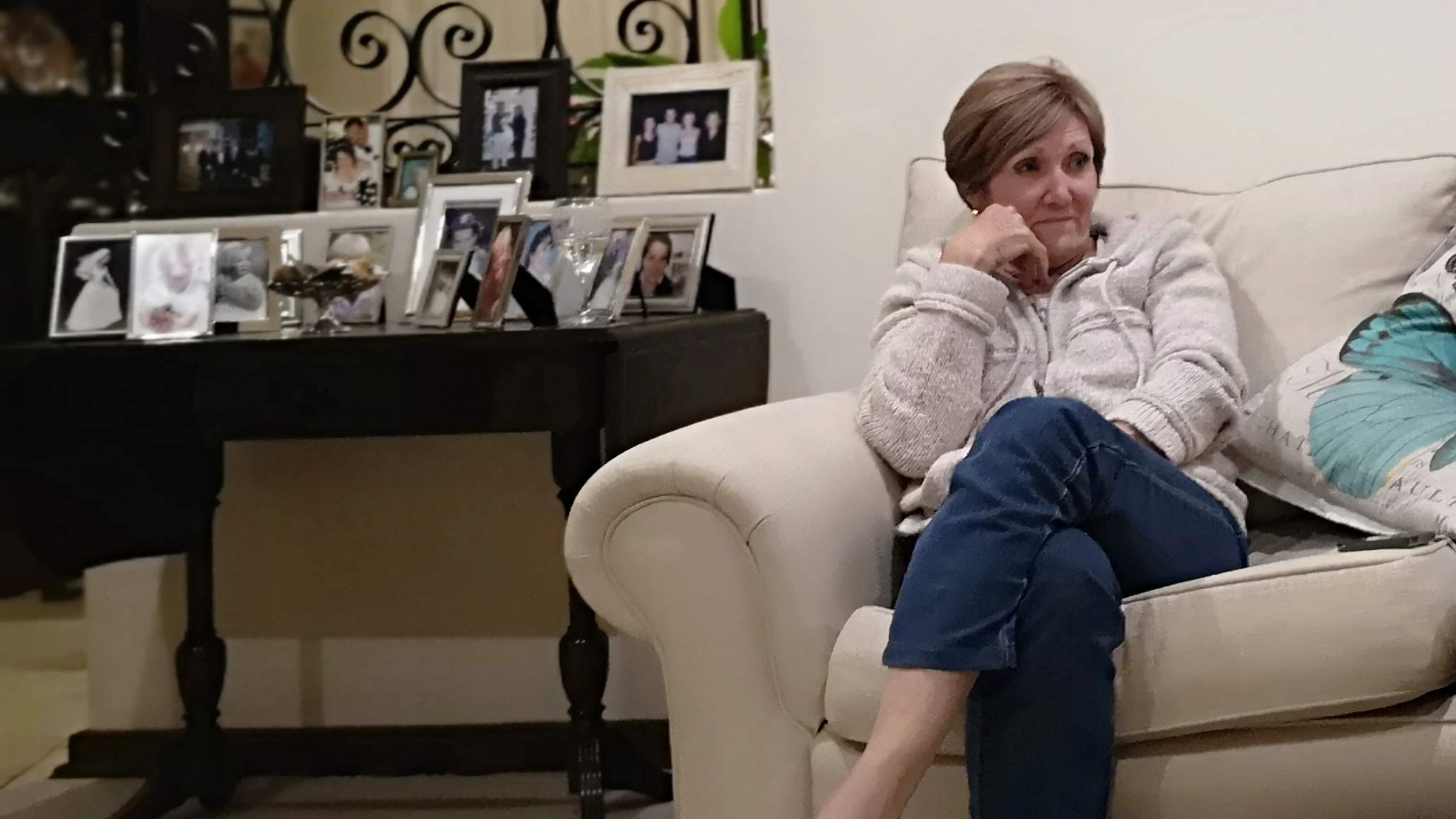
One Saturday afternoon I found myself standing in the kitchen with a tea towel over my shoulder, absent-mindedly stirring a pot on the stove while one of my adult children enthusiastically explained a brilliant new plan. They spoke with all the confidence that only youth can muster, complete with dramatic hand gestures and the unmistakable certainty that they had discovered something entirely original. I listened patiently because that’s what mothers do.
Eventually, when they paused long enough to take a breath, I gently mentioned that I’d tried something remarkably similar many years before and that it hadn’t ended quite as well as I’d hoped. I even explained why, sparing no embarrassing details about my own spectacular miscalculation, thinking perhaps my expensive lesson might save them from paying the same price. They smiled, thanked me sincerely, assured me they appreciated my perspective, and then carried on exactly as planned.
As the front door closed behind them, I stood in complete silence for a moment before bursting into laughter. Somewhere, I was absolutely certain, my own mother was enjoying one of the biggest “I told you so” moments in history. So why don’t they listen to me?
There’s an old saying that tells us you can lead a horse to water but you cannot make him drink. I’ve thought about those words more times than I can count over the last few years. The older I become, the more I realise that the saying has very little to do with horses and everything to do with human beings. We can offer our time, our love, our experience and our advice with the very best intentions, but we can’t make another person accept any of it. They are free to walk straight past the crystal-clear water we’ve carefully placed before them and head confidently towards a muddy puddle that somehow looks far more appealing. The remarkable thing is that they’ll often defend the muddy puddle with great enthusiasm, while we’re left standing there wondering why we even bothered carrying the bucket in the first place.
I never set out to become the unofficial family advice centre. Nobody appointed me to the position, and there certainly wasn’t a formal interview process. It just seemed to happen naturally somewhere between raising children, making mistakes, surviving those mistakes and eventually collecting enough life experience to recognise trouble wearing a fake moustache.
People started asking questions. Friends would phone for advice. Family members would want a second opinion. One of the children would begin a conversation with, “Mum, what do you think?” I always fell for it. Every single time. I’d genuinely believe they wanted my opinion, so I’d put down whatever I was doing, think carefully before answering and try my very best to be helpful. It took me an embarrassingly long time to realise that what many people actually want isn’t advice at all. They simply want enthusiastic applause for the decision they’ve already made.
I’ve become quite skilled at recognising the warning signs. The conversation usually begins with genuine curiosity before taking a sudden and unexpected turn. “What would you do?” they’ll ask, looking at me with those hopeful eyes that convince me they’re ready to hear another perspective.
Foolishly, I still believe them. I explain my thoughts, often drawing from something I’ve lived through myself because experience always carries more weight than theory. They nod thoughtfully. They even say encouraging things like, “That’s actually a really good point,” or “I never thought about it like that.” My heart begins to swell with optimism. Finally, I think, someone is actually listening.
Then comes the sentence that has dashed the hopes of parents throughout history. “Yes… but I think I’m still going to…” At that precise moment I realise the entire conversation was simply a courtesy stop before they carried on driving in exactly the direction they’d chosen before they even arrived on my doorstep.
I often wonder whether adult children possess some sort of built-in filter that automatically translates parental wisdom into harmless background noise. It’s probably installed somewhere around their eighteenth birthday. Before then, they’ll ask where their school shoes are while they’re standing on them, or whether leftovers in the fridge are still safe to eat despite the unmistakable science experiment growing inside the container.
Afterwards, however, they suddenly become experts on absolutely everything. They know more about finances than people who’ve spent decades balancing budgets. They know more about relationships than couples celebrating golden wedding anniversaries. They know more about home ownership despite never having discovered that roof repairs have an uncanny ability to happen immediately after you’ve spent your savings on something completely unrelated.
Watching this transformation is both fascinating and deeply amusing, particularly because I vaguely remember undergoing the very same personality change myself.
One of my favourite examples involved a purchase that absolutely had to be made. Apparently this particular item wasn’t merely desirable; it was life-changing. It would solve problems I hadn’t even realised existed. It was on special, which, as we all know, is often presented as a perfectly reasonable excuse for buying something you never intended to own in the first place. I quietly suggested waiting a few weeks before making such a big decision because excitement has a habit of wearing very expensive shoes.
My advice was received politely before being filed under the category labelled “Things Mum Doesn’t Understand.” The purchase went ahead with great celebration, photographs and enough excitement to convince me we were welcoming a new family member into the house. Three months later I discovered this miraculous object exactly where I’d secretly predicted it would be—still tucked away in its original packaging, occupying valuable cupboard space while gathering a light coating of dust. I looked at it, smiled to myself and walked away without saying a word.
There are moments in life when remaining silent deserves an Olympic gold medal.
I’ve had similar experiences with money, careers, relationships and enough DIY projects to fill an entire hardware store. Someone asks my opinion because they’ve reached a crossroads. I gently share a story about the time I ignored exactly the same warning signs and paid dearly for it, hoping they might avoid the same heartache. They listen kindly, thank me for sharing and then disappear into the distance with the cheerful confidence of someone who believes the laws of cause and effect simply won’t apply to them.
Months later they return carrying the same disappointment I was trying so hard to spare them from. Strangely, I never feel triumphant when that happens. There’s no satisfaction in being right when someone you love is hurting. If anything, I wish with all my heart that I’d been completely wrong.
The truth is that none of us offers advice because we enjoy hearing ourselves speak. Well, most of us don’t. We offer it because experience has a curious way of softening us. Every mistake we’ve survived quietly becomes another page in a handbook we never intended to write. Every disappointment teaches us something we couldn’t possibly have understood beforehand.
When we love someone, our instinct is to hand them that handbook and say, “Here, I’ve already made these mistakes for both of us. Perhaps you can skip a few chapters.” It sounds wonderfully sensible. It sounds incredibly efficient. Unfortunately, life doesn’t seem interested in efficiency. It insists that each of us writes our own handbook, complete with coffee stains, dog-eared pages and a few chapters we’d rather pretend never happened at all.
And if I’m being completely honest, there’s one small detail that keeps me wonderfully humble whenever I’m tempted to think everyone should simply listen to my excellent advice. I have a very clear memory of my own mother trying to save me from a few spectacular decisions. She would patiently explain exactly why my brilliant plan wasn’t nearly as brilliant as I believed it to be. I’d smile, thank her for caring and then march off to prove she was wrong.
I wasn’t trying to be difficult. I genuinely believed my situation was different, my ideas were better and that somehow the rules life had applied to everyone else simply wouldn’t apply to me. Looking back now, I can only laugh because I finally understand the expression on her face. It wasn’t frustration at all. It was recognition. She already knew something I hadn’t yet discovered: some lessons simply refuse to be borrowed. They insist on being lived.
That realisation has saved me from a great deal of unnecessary frustration, although I can’t honestly say I’ve mastered it completely. There are still moments when I have to physically stop myself from offering an opinion that nobody has asked for, particularly when I can see the ending before the opening credits have even finished.
It’s rather like watching someone confidently walk towards a glass door that’s so clean they haven’t realised it’s closed. You want to shout, wave your arms and do an interpretive dance if necessary, because you know what’s about to happen. Instead, you smile politely, take another sip of tea and silently brace yourself for the inevitable thud. Experience has taught me that even if you did shout a warning, there’s a very good chance they’d turn around long enough to tell you they know exactly what they’re doing before walking straight into the glass anyway.
Friends can be every bit as entertaining as family when it comes to advice. We’ve all had that one friend who phones because they “just need someone to talk to”. You settle into your favourite chair, make yourself comfortable and prepare for what you assume will be a meaningful conversation.
They explain the situation in painstaking detail, pausing every so often to ask, “What do you think?” You choose your words carefully because you care about them. You remind yourself not to sound preachy. You gently suggest another way of looking at things, drawing on your own experiences rather than pretending to have all the answers. They agree with every point you make, thank you profusely for your wisdom and end the call sounding wonderfully optimistic.
Then, almost before you’ve had time to put the kettle back on, they do the exact opposite of everything you’ve just discussed. A week later they phone again, sounding completely bewildered that the outcome is exactly what you quietly suspected it might be.
Relationships seem to be particularly fertile ground for this sort of thing. I don’t know what mysterious force takes over otherwise sensible people when romance enters the picture, but it deserves scientific study.
You’ll gently suggest that perhaps someone who has cancelled dinner six times, forgotten every birthday and only sends messages after midnight might not be the devoted soulmate they’re hoping for. Your friend nods thoughtfully and even admits you’ve made a good point.
Two days later they’re posting photographs together with captions about finding “their person”. Three months after that, you’re back on the sofa, tea in hand, listening sympathetically as they recount the astonishing news that this person has once again behaved exactly like the person they have always been.
At some point you begin to wonder whether you should stop giving advice altogether and simply keep a steady supply of chocolate biscuits in the cupboard. They may not solve anyone’s problems, but they do make listening considerably more enjoyable.
The same pattern appears in the smallest corners of everyday life. Someone asks which route to take because there’s roadworks ahead. You suggest the quieter road because you’ve already spent half an hour sitting in the traffic the day before. They decide to risk it anyway because “it can’t be that bad”. Forty-five minutes later you receive a message saying, “You’ll never believe this traffic!” I always smile when I read those texts. Not because I’m pleased they were delayed, but because life has once again demonstrated its remarkable consistency.
It doesn’t matter whether we’re talking about traffic jams, finances, relationships or buying an exercise machine that eventually becomes the world’s most expensive clothes horse. Human beings are wonderfully optimistic creatures. We all secretly believe our story will somehow unfold differently.
Perhaps that’s why I find myself laughing more these days than becoming irritated. There was a time when I took it personally if people ignored my advice. I assumed they didn’t respect my opinion or thought I had nothing worthwhile to offer. Now I realise it usually has very little to do with me. People aren’t rejecting my experience; they’re trusting their own.
We all have an incredible desire to discover things for ourselves, even when someone who genuinely loves us is standing nearby waving a large warning flag. Independence is a curious thing. Sometimes it gives us wings. Other times it sends us headfirst into a brick wall. Either way, most of us insist on finding out under our own steam.
Of course, I would sound terribly wise if I pretended I’d always listened to the people trying to help me, but my family would probably choke on their tea if they read that. I can still picture my younger self confidently dismissing advice because I was absolutely certain I knew better. My parents would warn me about spending money too quickly, taking on too much at once or believing every charming story I was told. I would smile sweetly, reassure them that times had changed and carry on exactly as planned.
Looking back now, I can see that my parents weren’t trying to control me. They were trying to lend me their experience in the hope that I might avoid a few unnecessary bruises along the way. Unfortunately, younger Sharon was far too busy collecting her own bruises to appreciate the generous offer.
One memory still makes me laugh every time it pops into my head. My father once warned me not to tackle a particular project because, in his words, “It always ends up being much bigger than you think.” Naturally, I assumed he was underestimating both my enthusiasm and my abilities.
I launched into the task with complete confidence, convinced I’d have it finished by lunchtime. Several hours later I was surrounded by half-completed work, tools scattered across the floor, a growing collection of colourful language and a problem that had somehow become three problems.
My father didn’t say, “I told you so.” He didn’t need to. He simply appeared beside me, looked around at the chaos with the faintest hint of a smile and asked, “Would you like a hand?” That tiny moment has stayed with me for years because it taught me something far more valuable than the original advice ever could. Real wisdom doesn’t keep score. It quietly helps you clean up the mess afterwards.
I’ve often wondered if that’s the role we’re really meant to play in the lives of the people we love. Perhaps our job isn’t to stop them making mistakes, because that’s a battle none of us will ever win. Maybe our role is simply to be the safe place they return to afterwards, where there’s a hot cup of tea, no lecture waiting at the kitchen table and someone who understands that disappointment already hurts enough without adding an audience.
That’s much harder than offering advice because it requires patience instead of words. It means biting your tongue when every fibre of your being wants to remind them that you saw this coming weeks ago. It means choosing kindness over being right, and if I’m honest, that’s a lesson I’m still learning myself.
The older I become, the more convinced I am that life has a wonderfully mischievous sense of humour. Just when we think we’ve accumulated enough wisdom to prevent every disaster, along comes another situation that catches us completely by surprise. We discover that we are still capable of making spectacularly questionable decisions despite possessing decades of experience.
We still buy things we don’t need because they were on special. We still convince ourselves that one more plant will definitely fit in the garden. We still start home improvement projects on a Sunday afternoon with unreasonable optimism and end them wondering why we didn’t simply leave well enough alone. Those little reminders are strangely comforting because they keep us humble. They remind us that none of us ever graduates from the School of Life. We simply move into the next classroom.
Perhaps that’s why I’ve become a little gentler with both myself and everyone around me. I still offer advice when someone genuinely asks for it because sharing our experiences is one of the ways we show love. I still hope the people I care about might occasionally avoid a pothole because I happened to fall into it first.
But I’ve slowly stopped carrying the responsibility for what they choose to do with that advice. The water is there if they want it. Whether they stop to drink is entirely up to them. In the meantime, I’ll keep the kettle on, the biscuit tin full and the front door open, because if experience has taught me anything at all, it’s that everyone eventually comes home with a story to tell. And more often than not, it’s those stories—not the advice—that become the lessons we remember for the rest of our lives.
It has taken me a surprisingly long time to understand that letting go isn’t the same as giving up. For years I confused the two. If someone I loved was heading towards what looked like an obvious mistake, I’d somehow convince myself that it was my responsibility to stop them. I’d explain it another way. I’d find a better example. I’d tell a story from my own life that surely, this time, would make the penny drop.
Looking back now, I must have sounded like a tour guide desperately trying to keep everyone on the marked path while they enthusiastically climbed over the fence to investigate the crocodiles. They weren’t trying to be difficult. They simply wanted to see for themselves. Human nature has always been wonderfully curious, even when curiosity occasionally comes with a repair bill.
The funny thing is that people often assume those of us who give advice think we have all the answers. Nothing could be further from the truth. Most of the advice I offer comes from things I got spectacularly wrong. It’s not based on perfection; it’s based on experience.
If I tell someone not to rush into something, it’s probably because I once rushed in with both feet and needed months to climb back out again. If I suggest reading the small print before signing anything, it’s because there was a younger version of me who believed the words “terms and conditions apply” were merely decorative.
Life has been an excellent teacher, but I can assure you it has never offered discounted tuition fees.
There are moments now when I catch myself smiling instead of speaking. One of the children will be explaining a plan that makes me instinctively reach for the imaginary emergency brake. In years gone by, I would have launched into a well-rehearsed speech filled with practical reasons, cautionary tales and enough motherly concern to smother a small village.
These days I pause for a second longer. I ask a few questions instead. Sometimes they arrive at the conclusion themselves. Sometimes they don’t. Either way, I’ve discovered that people are far more likely to hear their own thoughts than mine. It’s a humbling discovery for someone who has spent half her life believing that one more carefully chosen sentence might finally do the trick.
That doesn’t mean I suddenly sit in saintly silence while chaos unfolds around me. Oh no, I’m still human. There are occasions when I have to bite the inside of my cheek so hard I’m amazed I don’t leave teeth marks. There are times when I exchange one of those meaningful looks with my boyfriend that says, without a single word, “Well… this should be interesting.” There have even been moments when I’ve walked into another room purely because I could feel an “I told you so” trying to escape, and experience has taught me that those four little words have never improved anyone’s day. They may provide five glorious seconds of personal satisfaction, but they’re usually followed by an awkward silence that lasts considerably longer.
One of the greatest surprises has been discovering that people often learn far more from our response after things go wrong than they ever did from our advice beforehand. When someone comes back disappointed, embarrassed or nursing the consequences of a poor decision, they rarely need reminding that they ignored your warning. They already know.
What they need is someone who still welcomes them with kindness instead of keeping score. I think that’s one of the greatest gifts we can offer each other. Not endless advice, but unconditional grace. A place where mistakes aren’t greeted with folded arms and raised eyebrows, but with a cup of tea and the comforting reminder that we’ve all collected a few scars of our own.
I’ve noticed something else over the years, and it still makes me smile. Occasionally—very occasionally, because I don’t want to exaggerate my success rate—one of my children will casually mention something they’ve done, and tucked into the conversation will be a sentence that sounds suspiciously familiar. “I remembered what you said about not rushing into it,” they’ll remark, as though they’ve just thought of it themselves.
Naturally, I resist the overwhelming temptation to leap across the room shouting, “At last! My words have finally penetrated!” Instead, I nod as calmly as I can manage while quietly celebrating inside. It reminds me that advice isn’t always ignored. Sometimes it’s simply stored away in a dusty corner of the mind until life creates the perfect moment to take it down from the shelf.
Perhaps that’s how wisdom really works. We imagine our words disappear into thin air because we don’t see immediate results, when in reality they’re quietly waiting for the right season. A sentence spoken today might not make sense until five years from now. A story shared over a family lunch might suddenly become crystal clear when someone finds themselves standing in exactly the same situation. We rarely get to choose when another person is ready to hear something. Timing belongs to life, not to us. Once I accepted that, I stopped measuring the value of my advice by whether anyone acted on it straight away.
Of course, the biggest surprise of all has been realising that I’m still leading myself to muddy puddles from time to time. For someone who writes an entire article about people ignoring good advice, I’m remarkably capable of ignoring my own. I still convince myself that I can finish a “quick little project” before lunch, despite decades of evidence suggesting otherwise. I still underestimate how long a trip to the garden centre will take because apparently buying one packet of seeds requires inspecting every single plant in the nursery. I still believe I’ll pop into one shop for “just one thing” and emerge an hour later carrying candles I didn’t know I needed, a pretty notebook that was simply too lovely to leave behind and enough snacks to survive a minor national emergency. Clearly, wisdom has its limits.
Maybe that’s why I no longer become quite so frustrated when the people I love insist on finding things out for themselves. I understand them better because, if I’m honest, I recognise a little of myself in every one of them.
We are all convinced, from time to time, that our circumstances are unique, our ideas are slightly different and that this particular situation couldn’t possibly end the same way it did for everyone else. Sometimes we’re right. Sometimes we discover, with great humility, that our parents, grandparents or friends weren’t trying to spoil our fun after all. They were simply trying to save us a little heartache.
So these days, when I think about that old saying, I picture something slightly different. I no longer imagine myself standing beside a stubborn horse, desperately trying to persuade it to drink. Instead, I imagine quietly placing the bucket where it can easily be found before sitting down under the nearest tree with my cup of tea. If the horse drinks, wonderful. If it wanders off for a while and eventually comes back thirsty, the water will still be there. Love doesn’t need to chase people. It simply remains available.
That’s probably one of the gentlest lessons life has ever taught me. We cannot live someone else’s life for them, no matter how much we love them. We cannot hand over our experience like a family heirloom and expect it to fit them perfectly. Every person has their own lessons to learn, their own mistakes to make and their own stories to tell. All we can really do is love them through it all, laugh together whenever possible and keep the kettle ready for when they come home with another tale that begins with, “You’ll never guess what happened…”
And if, somewhere along the way, one of my children eventually catches themselves offering perfectly sensible advice to their own grown-up children, only to watch it float straight past uninterested ears, I hope they pause for just a moment before smiling.
I have often shared a smile of acknowledgement with my father when he listens to his grandchildren telling us about their new, spectacular plans for a unique business idea. He doesn’t need to say a word. The knowing smile and subtle raise of his eyebrow when he looks at me says “This all sounds very familiar”.
And from somewhere, if mothers are allowed to watch these things from wherever they are, my own mum will probably be smiling too. She always knew that one day I’d understand exactly what she meant. She simply had the patience to wait until I was ready to take a drink from the bucket she had quietly placed in front of me all those years ago.
The saying means that you can offer someone help, advice or an opportunity, but you cannot force them to accept it or act on it. Every person must make their own choices.
People often need to experience things for themselves. Even well-intentioned advice can be difficult to accept when someone believes their situation is different or they want to learn through personal experience.
Focus on offering support rather than trying to control the outcome. Share your experience with kindness, then allow others the freedom to make their own decisions while knowing you’re there if they need you later.
Absolutely. Many adult children naturally want to make their own decisions and learn from their own experiences. It’s a common part of developing independence, even when parents have valuable wisdom to share.
Yes. Sometimes advice isn’t ignored—it simply isn’t needed yet. Many people remember wise words years later when life presents them with a situation that suddenly makes those words meaningful.
If you’ve enjoyed this little chat over a cup of tea, you might like some of these other Rustic Daisy articles where I share honest reflections about family, relationships and finding peace in the things we can’t control.
The Peace I Found When I Stopped Trying To Change People
You Don’t Need Closure To Move Forward
What Are Healthy Family Boundaries?
The Silent Family Where Nobody Talks About The Real Problems
Things Elderly Parents Need That Money Can’t Buy
How Family Dynamics Affect Downsizing Decisions
What To Keep When You Can’t Keep Everything
Creating A Cosy Home After Life’s Major Transitions
The Meals I Cook When Life Feels Too Heavy To Think
One thing life has taught me is that I can’t control the decisions other people make, but I can choose how I respond. Creating small moments of calm has become one of the best ways to let go of frustration and keep my sense of humour intact. These are a few books and simple comforts I’ve genuinely enjoyed and think you might too.
The Let Them Theory – Mel Robbins – Let go of trying to control everything and embrace the unexpected.
The Gifts of Imperfection – Brené Brown – Embrace self-compassion and authenticity with this updated edition.
Don’t Sweat the Small Stuff — Richard Carlson – These tips will help you keep life easy and stress-free!
Set Boundaries, Find Peace: A Guide to Reclaiming Yourself by Nedra Glover Tawwab – A must read for anyone struggling with boundaries.
The Fifth Agreement — Don Miguel Ruiz – Embrace self-mastery with this guide to personal growth.
Daily gratitude journal – I love starting my day with a little gratitude practice. This journal makes it super easy!
Weighted blanket– This weighted blanket will help you sleep better. It’s super soft and cooling too!
Lavender pillow spray – I’m obsessed with this lavender mist! Perfect for a calming night.
White noise machine– Sleep better with this white noise machine! It’s perfect for travel or home use. Love the soothing sounds!
Herbal tea gift box– This tea gift set is perfect for relaxing. It includes a beautiful ceramic cup.
Self-care gift basket– This care package is perfect for anyone who needs a little comfort and positivity!
Adult colouring book– These adult coloring books will help you relax and find inner peace.
Colouring pens– These markers are perfect for coloring, sketching, and journaling! They have a dual tip so you can switch between a fine tip and a brush pen.
Soy wax scented candles – The combination of candle light and a beautiful fragrance for relaxation is priceless
Fresh flower vase set – Bringing a bit of the outside inside. I love fresh flowers to pick me up
Essential oil diffuser – The aroma of essential oils is incredible for healing and relaxing
Himalayan salt lamp – This Himalayan salt lamp is perfect for creating a cozy and calming ambiance at home!
Warm white LED bulbs (2700K) – These bulbs are perfect for a warm, cozy lighting feel in any room. They are energy-efficient and last long!
Calming essentail oils set – These essential oils have been a game-changer for my relaxation routine!
Life has a funny way of teaching us the same lessons from different angles, doesn’t it? If something in this story made you smile, nod in agreement or think of someone you love, then it has done exactly what I hoped it would. My wish is that whenever you visit Rustic Daisy, you’ll leave feeling a little lighter, a little understood and perhaps reminded that none of us has life completely figured out—and that’s perfectly alright.
Until next time,