

There comes a point in many families when the roles quietly begin to change.
The people who once looked after us, taught us how to ride a bicycle, bandaged our scraped knees and reassured us that everything would be alright suddenly need our help. It rarely happens overnight. Instead, it arrives gradually. Mum mentions that the stairs are becoming difficult. Dad admits that keeping up with the garden is becoming too much. The house that was once full of laughter, children and activity now feels far too large for two ageing people.
Helping parents downsize is one of the most emotional experiences many of us will ever face.
From the outside, it may seem like a simple task of sorting cupboards, packing boxes and moving into a smaller home. In reality, it is so much more than that. Every room tells a story. Every cupboard holds memories and almost every possession represents a chapter of someone’s life.
I know this because I have lived it.
My own experiences of helping family members through significant life changes taught me that downsizing is not about getting rid of belongings. It is about honouring a lifetime while preparing for a new season of life. It requires patience, kindness, understanding and above all compassion.
Helping parents downsize with compassion is about so much more than sorting through cupboards and deciding what will fit into a smaller home. It means recognising the memories, emotions and independence tied to a lifetime of belongings while helping our parents move into their next chapter with dignity and care.
If you are beginning this journey with your own parents, I hope sharing what I have learnt will make the road a little easier.
One of the biggest misconceptions people have is believing that older people are simply stubborn when they struggle to part with possessions. I don’t believe that is true.
When we look at an old dining table, we may simply see a piece of furniture but our parents see Christmas lunches with the whole family gathered around it.
We might look at an old saucepan and think it should be replaced but they remember preparing hundreds of family meals in it.
That worn armchair may have been where Dad sat every evening after work. The faded sewing machine could remind Mum of the clothes she lovingly made for her children when money was tight.
Objects become intertwined with memories and once I truly understood this, my entire approach changed. Instead of asking myself why someone wanted to keep something, I started asking what that item meant to them.
The answers were often heartbreaking, beautiful and deeply personal.
I quickly realised that the goal was never simply to empty a house. The real goal was to help someone move forward without feeling as though they were losing everything that made their house feel like home.
That changes the conversation completely. Instead of focusing on how many boxes need packing, I began focusing on how everyone was coping emotionally.
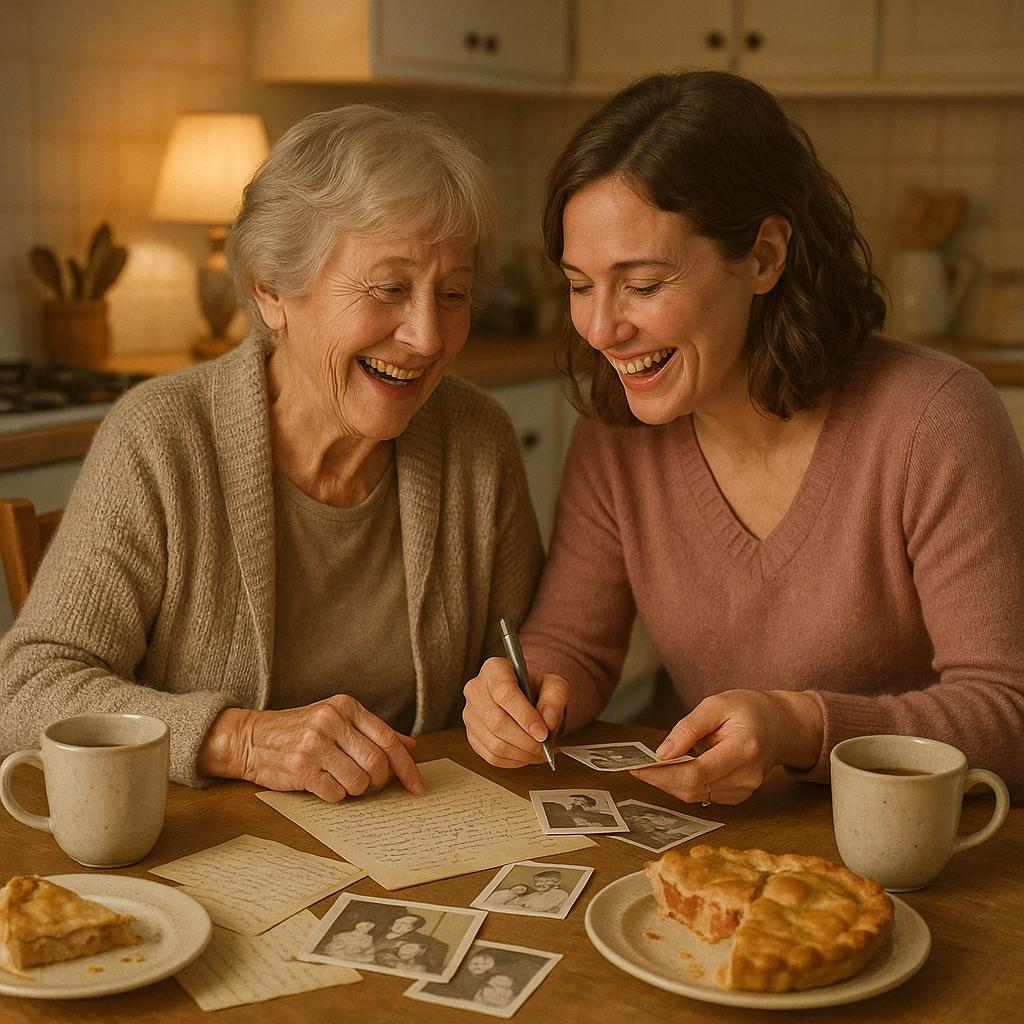
Some days were productive and other days we achieved almost nothing because we spent an hour looking through old family photographs and talking about holidays, birthdays and people who were no longer with us.
Looking back, those conversations were every bit as important as filling another donation box.
One piece of advice I give anyone facing this situation is not to wait until there is a crisis.
Unfortunately, many families only begin downsizing after a serious illness, a fall or an unexpected hospital stay. At that stage, everyone is already exhausted and emotional.
If your parents are still reasonably healthy and willing to have the conversation, begin gently. There is no need to tackle the entire house in one weekend, in fact, trying to do too much at once often creates unnecessary stress.
Those small achievements gradually build momentum without overwhelming anyone.
One mistake many families make is starting with sentimental belongings. I would not begin with photo albums, jewellery or family heirlooms because those items carry enormous emotional weight. Instead, start with areas that usually contain fewer memories.
For example:
Making these easier decisions first helps everyone gain confidence before moving on to more emotional possessions.
This is perhaps the greatest lesson I learnt.
Sometimes people do not actually want to keep an item, they simply want someone to hear the story attached to it, so I began asking simple questions.
“Where did this come from?”
“Who gave this to you?”
“What do you remember about it?”
The answers often lead to wonderful conversations that the family might never have had otherwise. Once those memories had been shared, letting go became much easier.
The object had served its purpose and the story had been passed on.
That, after all, is what many parents truly hope for.
Growing older often comes with a gradual loss of independence.
Downsizing can sometimes make people feel as though they are losing control over yet another part of their lives so, whenever possible, allow your parents to remain in charge of the decisions.
Instead of saying,
“We’re getting rid of this.”
Try asking,
“What would you like to do with this?”
That small change shows respect and, even if you disagree with the decision, allowing people to feel heard preserves their dignity.
Helping parents downsize with compassion means allowing them to make choices at their own pace, even when those choices differ from what we might have expected.
One afternoon everything may be going smoothly and the next moment someone bursts into tears over an old recipe book.
Grief rarely announces itself. It appears when we least expect it.
Sometimes the smallest objects carry the biggest memories.
When emotions surface, resist the temptation to hurry people along.
Pause. Make a cup of tea. Talk if they want to talk. Sit quietly if they do not.
There is no timetable for letting go.
One idea that has worked beautifully for some families has been creating a dedicated memory box.
Rather than trying to keep an entire household, carefully select the items that truly represent someone’s lifetime.
These include:
Knowing these precious keepsakes will remain together, makes it easier to release many of the less meaningful possessions.
A memory box becomes something future generations can treasure without feeling overwhelmed by hundreds of boxes stored in garages and spare rooms.
Not everything needs to remain in physical form.
Today we all carry remarkable cameras in our pockets. Take photographs of favourite furniture, gardens, collections, workshops, sewing rooms, bookshelves and ornaments. Capture the home exactly as it was before the move.
Those images often become just as valuable as the belongings themselves.
Many families create digital albums that can easily be shared with children and grandchildren, preserving memories without requiring additional storage space.
Television programmes have convinced many people that every old cabinet or china set must be worth a fortune. Sadly, that is rarely the case. Many treasured belongings hold enormous sentimental value but very little financial value. Preparing everyone for this reality helps avoid disappointment.
Sometimes donating an item to someone who genuinely needs it brings far greater satisfaction than trying to sell it for very little. There is something deeply comforting about knowing that another family will continue using something that once brought joy to your own.
One of the things that surprised me most was how differently family members viewed the same situation.
One sibling may desperately want to keep every family heirloom. Another may have no room in their home or may prefer not to have additional possessions. Someone living overseas may feel upset that decisions are being made without them. Long-forgotten disagreements can suddenly resurface when sentimental belongings are involved.
This is why open communication is so valuable.
If several family members are involved, keep everyone informed from the beginning. Share photographs of larger items, discuss decisions openly and give everyone the opportunity to choose keepsakes that have special meaning to them.
It also helps to agree on realistic timeframes. When everyone understands the process, there is usually far less conflict.
No possession is worth damaging family relationships.
Some belongings carry so much emotional weight that deciding their future feels almost impossible.
I have found it helpful to create a “not yet” box.Anything you are unsure about goes into that box rather than forcing an immediate decision. A few weeks later it can be readdressed and looked through again. Interestingly, many of the items that seemed impossible to part with during the first visit suddenly feel much easier to let go.
Time has a remarkable way of softening difficult decisions and giving yourself permission to wait can remove a great deal of pressure.
Sorting through an entire household involves hundreds, sometimes thousands of decisions.
After several hours, even deciding what to have for lunch can feel overwhelming.
I have learnt that shorter sessions are far more productive than trying to work from morning until night. A few focused hours followed by a proper break often achieves far more than pushing everyone to exhaustion. When people become tired, emotional decisions become much harder and bad decisions can be made.
There is absolutely nothing wrong with stopping for the day and continuing another time.
Downsizing is one of the few times in life when an entire family history unfolds before your eyes.
As we open cupboards and unpack forgotten boxes, we discover letters we have never read, holiday souvenirs from decades ago, children’s school reports, recipe books covered with handwritten notes and photographs that bring back stories no-one has spoken about for years.
Instead of seeing these moments as interruptions, begin to treasure them.
Some of my happiest memories from when we were packing up our family home, were not about how much we accomplished, they were about sitting together, laughing at old hairstyles, remembering family holidays and hearing stories that might otherwise have been lost forever.
Sometimes slowing down is exactly what the process needs.
While downsizing often focuses on reducing possessions, it is also an opportunity to make daily life safer.
Many older homes contain hidden hazards that become more significant as we age. Loose rugs, poor lighting, steep stairs, heavy furniture and cluttered walkways all increase the risk of falls.
As you help your parents settle into a smaller home, think beyond where the furniture will go. Ask yourself whether the home will support their independence. Simple improvements can make a tremendous difference.
Consider:
The aim is not simply to move into a smaller space. The aim is to create a home where your parents can continue living safely and confidently.
There were days when I expected far too much from myself. I thought we needed to finish an entire room before going home. Sometimes all we managed was one drawer and at first, that felt frustrating. Then I realised something.
Every single drawer completed was one less drawer waiting for another day.
Progress does not have to be dramatic to be meaningful. Some days your parents may decide to donate several boxes and other days they may not part with a single item.
Neither day is a failure.
Compassion means accepting people where they are rather than where we wish they would be.
A lifetime of possessions tells the story of who someone has been.
When helping parents downsize, it is helpful to ask which activities they still wanted to enjoy in their new home.
If Mum still loves knitting, her knitting supplies remain, and if Dad still enjoys woodworking, find space for his favourite tools.
Downsizing should never mean removing the hobbies and interests that continue to bring joy. It should simply mean creating a more manageable environment in which those interests can continue.
One of the greatest lessons this journey taught me was that home has very little to do with walls.
We often think of home as the place where we grew up, yet when we look more closely, home is really found in the people who filled that house with love.
It is Sunday lunches around the table.
The smell of baking.
The sound of familiar laughter.
The traditions passed from one generation to the next.
Those things are never left behind when a house is sold. They travel with us.
Once everyone understands that, saying goodbye to one home becomes a little easier because one realises that your family’s story will be continuing somewhere new.
Helping ageing parents through a major life transition can be emotionally exhausting. There will be moments when you question your decisions.
Please be kind to yourself. You are carrying your own emotions while trying to support someone else’s and that is not easy.
There is no perfect way to help someone downsize. There is only the loving intention to make the journey as gentle as possible and that is more than enough.
Looking back, I no longer remember exactly how many boxes we packed or how many trips we made between houses.
What I remember are the conversations, discovering forgotten photographs that made us laugh until we cried.
I remember sitting quietly while treasured keepsakes brought back memories of people we missed dearly.
I remember realising that every object represented a chapter in someone’s life.
Most of all, I remember understanding that helping parents downsize is not about emptying cupboards. It is about protecting someone’s dignity during one of life’s biggest changes. It is about listening more than speaking and replacing pressure with patience.
It is about recognising that every decision deserves kindness.
If you are helping your own parents through this season, I hope you will remember one simple truth.
You are not just helping them move into a different house, you are helping them carry a lifetime of memories into the next chapter of their lives.
That is one of the greatest gifts a son or daughter can ever give, and although the boxes will eventually be unpacked and the furniture arranged, what your parents are most likely to remember is not how quickly everything was done. They will remember how you made them feel.
If they felt heard, respected, loved and included throughout the process, then you have achieved something far more valuable than a successful move. You have helped them face change with dignity, and that is something no removal company could ever pack into a box.
The best time is before a crisis forces quick decisions. Starting early allows everyone to work at a comfortable pace and gives parents the opportunity to make thoughtful choices.
Listen to the stories behind their possessions, allow plenty of time and never pressure them into making immediate decisions. Respect and patience often achieve far more than persuasion.
Important documents, treasured family photographs, meaningful keepsakes, favourite furniture that fits the new home and items they use regularly should usually be prioritised.
Birth certificates, wills, marriage certificates, family photographs, military records, financial documents, sentimental heirlooms and legal paperwork should always be carefully reviewed before disposing of anything.
Yes. Downsizing often involves grief, nostalgia and uncertainty. A compassionate approach that focuses on preserving dignity makes the experience much easier for everyone involved.
Helping parents downsize is rarely just about moving into a smaller home. It is about making thoughtful decisions, protecting precious memories and helping the people we love feel supported through a major life transition.
If you are walking this road with your own family, you may find these related Rustic Daisy articles helpful too.
Deciding which belongings to keep can be emotional, especially when so many items hold memories. This article offers gentle guidance for choosing what matters most without feeling that you have to keep everything.
Read: What To Keep When You Can’t Keep Everything
When a parent is moving home, important paperwork needs special attention. Learn how to organise essential documents, keep them safe and make sure the right information is easy to find when it is needed.
Read: Important Family Documents: The Complete Guide To Organising Them
If you need a gentle place to begin, this article looks at everyday items you can sort through to make a home feel lighter and more manageable.
Read: 25 Things You Can Declutter Today Without Regret
If your parent is also experiencing memory changes, creating a safe and familiar living environment may become part of the downsizing journey. This guide explores practical ways to support safety, comfort and independence at home.
Read: Creating A Safe Home For Someone With Dementia
When you’re helping a parent downsize, a few practical items can make the process feel a little more manageable. From keeping important paperwork together to protecting treasured family keepsakes, these are the kinds of things that may genuinely come in handy along the way.
🌿 A little note about my Amazon links
Some of the products I recommend on Rustic Daisy are linked to Amazon. These are affiliate links, which means that if you choose to purchase something through one of my links, I may receive a small commission at no additional cost to you. This helps support Rustic Daisy and allows me to continue creating useful content for you.
As an Amazon Associate I earn from qualifying purchases.
A quick note for my lovely South African readers 🇿🇦
Amazon links can be useful for readers who already shop through Amazon in their own country. Unfortunately, there isn’t currently a South African Amazon shopping site, so international shipping charges, import duties or other fees may apply when ordering from Amazon.
These additional costs can sometimes make an otherwise reasonably priced product considerably more expensive, so please check the final price, delivery costs and any additional charges before placing your order.
I’m working on finding local alternatives! 🌿
I’m always on the lookout for lovely, practical alternatives that are available right here in South Africa. When I find something suitable, I’ll gladly share it with you so that our local readers have options that are easier and more affordable to find.
I only recommend products that I genuinely believe are useful, relevant and worth considering. I’m not here to fill my pages with links simply for the sake of earning a commission.
Thank you for supporting Rustic Daisy, whether you’re reading from South Africa or somewhere else in the world. Every visit, share, click and purchase helps my little corner of the internet continue to grow. 🌼
South African readers: your local alternatives are coming! 🇿🇦🌿
Important documents can easily become scattered during a move. A secure organiser provides one place for passports, insurance papers, certificates and other family records that need to stay safe and easy to find.
Clear storage bins are useful when you’re sorting through several rooms. Being able to see what’s inside makes it easier to separate items to keep, donate, sell or pass on to family.
Some belongings are too precious to part with, even when space is limited. Memory boxes offer a lovely way to preserve photographs, handwritten letters and small family treasures without filling an entire cupboard.
Photographs often hold some of our most treasured memories. A good photo album can help parents keep favourite pictures together and enjoy them without having to store piles of loose photographs.
Sturdy moving boxes are useful for packing belongings that are going to a new home. They’re especially helpful when you’re sorting items room by room and want to keep everything organised.
For fragile ornaments, china and sentimental keepsakes, bubble wrap provides an extra layer of protection while items are being packed and transported.
A simple marker set can make labelling boxes much easier. Marking each box with its contents and destination helps everyone know where things belong when it’s time to unpack.
A portable file box is handy for keeping paperwork together during the move. It can hold documents that parents may need to access regularly, rather than having them buried in packed boxes.
If you found this article helpful, please share it with friends and family. You never know who might be facing this journey right now.