

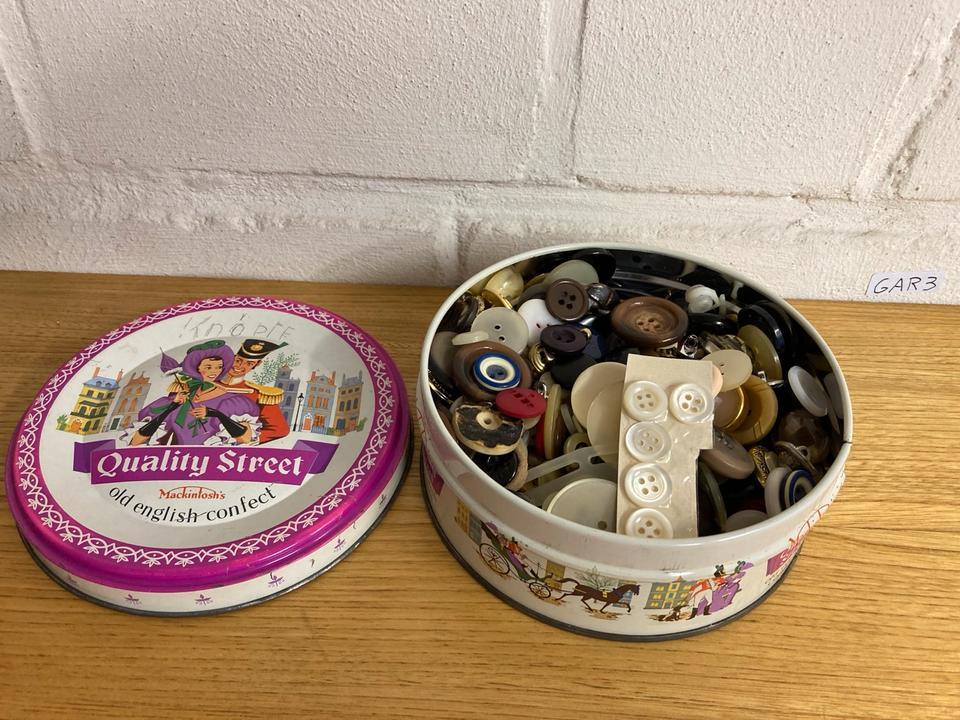
There is something almost magical about opening a cupboard that hasn’t been touched for years. You never quite know what you’re going to find. Sometimes it’s exactly what you expected – neatly folded tablecloths, a stack of old magazines or a collection of serving dishes that only made an appearance at Christmas. Other times, it’s something so wonderfully unexpected that everyone in the room stops what they’re doing, looks at each other and bursts into laughter. It isn’t because the discovery is valuable or unusual. It’s because, somehow, every family seems to collect the same curious little treasures, and in that moment you realise your family isn’t nearly as unique as you once thought.
I’ve spent enough time helping people through home transitions to know that the belongings are only part of the story. Yes, there are cupboards to empty, wardrobes to sort and shelves that haven’t seen daylight in years, but tucked between all those practical jobs are little moments that nobody plans for. Someone lifts the lid of an old biscuit tin expecting to find shortbread and discovers hundreds of buttons instead. A faded shopping list falls from the pages of a cookbook, written in handwriting everyone instantly recognises. Before long, the sorting has stopped altogether because the room is filled with laughter, memories and the inevitable question, “Who on earth kept all of this?”
Those are the moments I find myself remembering long after the boxes have been packed.
People often imagine that helping parents declutter is a serious, emotional experience from beginning to end, and of course there are moments when it is. Letting go of a family home or years of treasured belongings is never something to rush. Yet what surprises me every single time is just how much laughter sneaks into the day. It arrives quietly, usually when nobody expects it, turning what could have been a difficult afternoon into one of those family stories that gets retold for years afterwards. The funny discoveries somehow give everyone permission to breathe. They remind us that a lifetime isn’t only measured by the big milestones. Sometimes it’s measured by the drawer full of elastic bands, the collection of takeaway menus from restaurants that no longer exist or the ice cream tub that has somehow become home to fifty-seven loose screws.
I often think our homes are rather like diaries.
Not the tidy kind we imagine sitting on a bookshelf, but the wonderfully messy kind filled with shopping lists tucked between the pages, pressed flowers, little notes scribbled in the margins and receipts that should probably have been thrown away years ago. Every cupboard, drawer and shelf quietly records the habits of the people who lived there. You begin to see what they valued, what they refused to waste and what they thought might come in handy one day. It’s an oddly comforting thought because those little collections often tell us far more about a person’s everyday life than the expensive furniture ever could.
One of my favourite discoveries will probably sound very familiar.
It starts with a biscuit tin.
Not just any biscuit tin, but one of those beautiful old tins with flowers on the lid that somehow survives every house move. You spot it on the top shelf of a cupboard and immediately feel hopeful. Perhaps there really are biscuits inside. After all, somebody is bound to have hidden a special stash somewhere.
The lid is lifted with great anticipation.
Inside are buttons.
Hundreds of them.
Large ones, tiny ones, shiny ones, wooden ones, buttons from school uniforms, buttons from coats that disappeared decades ago and odd buttons that don’t seem to belong to anything at all. There is usually a tape measure curled up in one corner, several safety pins, a couple of needles and at least one reel of cotton that has become so tangled it resembles modern art.
Without fail, somebody laughs.
Then somebody else says, “My grandmother had one exactly like this.”
Within seconds, the room is filled with stories about biscuit tins that never contained biscuits. It turns out almost everyone’s grandmother, mother or aunt had one hidden away somewhere. We all grew up believing there might be a chocolate biscuit inside, only to be greeted by an army of buttons instead. Looking around the room, you suddenly realise this wasn’t just your family’s peculiar habit. It seems to have been an unwritten rule shared by an entire generation.
I have never quite understood why those tins make me smile so much, but I think it’s because they represent something that has quietly disappeared from modern life. Our parents and grandparents belonged to a generation that repaired things rather than replacing them. A missing button wasn’t an excuse to buy a new cardigan. It was simply an opportunity to fetch the biscuit tin. Clothes were mended, curtains were altered and children’s school uniforms were patched so they lasted another year. Nothing was wasted if it could possibly serve another purpose.
The more homes I visit, the more I admire that quiet resourcefulness.
Not long after the famous biscuit tin makes its appearance, another familiar discovery usually follows. Someone opens a kitchen cupboard and begins pulling out plastic containers, carefully stacking them on the worktop. At first there are only a few, but they keep coming. One cupboard leads to another and before anyone knows it, there is an impressive mountain of margarine tubs, ice cream containers and takeaway boxes spread across the kitchen table. Matching lids seem to have vanished years ago, yet nobody appears remotely concerned about this rather obvious problem.
Someone inevitably asks the question everyone else is thinking.
“Why did they keep all these?”
For a moment, nobody answers.
Then someone quietly smiles and says, “Because they were useful.”
It is such a simple response, yet it says so much about the generation who filled these homes. They saw possibility where many of us see clutter. Today’s leftover container was tomorrow’s lunchbox. An empty ice cream tub might hold soup for a neighbour, seedlings for the garden, leftover stew for the freezer or, if all else failed, a growing collection of screws in the garage. They weren’t keeping rubbish. They were keeping options.
Standing there surrounded by towers of well-loved plastic containers, I often find myself smiling rather than shaking my head. Those cupboards tell the story of people who had lived through times when making do wasn’t a trendy lifestyle choice. It was simply the sensible thing to do. Perhaps that’s why I find it difficult to laugh at the containers themselves. Instead, I find myself smiling at the kindness and practicality they represent.
And just when you think you’ve seen every wonderfully curious collection a family home has to offer, someone opens another drawer, lets out a surprised little laugh and calls everyone over.
“Come and have a look at this…”
That is when the next chapter of the story begins.
The next drawer is nearly always my favourite because nobody ever expects what they’re about to find. It’s usually tucked away in a kitchen dresser or hidden beneath a pile of neatly folded tea towels, and at first glance it looks perfectly ordinary. Then somebody begins lifting things out one by one. A handful of takeaway soy sauce sachets. Tiny packets of salt and pepper. Plastic cutlery still wrapped in napkins. Sugar sachets from cafés that probably closed years ago. By the time the drawer is empty, there’s enough to stock a small takeaway restaurant, and everyone is laughing because they suddenly realise their own kitchen has a very similar drawer at home.
Nobody can explain exactly how those little packets multiply. One meal becomes two, then ten, and before long they have quietly formed their own tiny community in the back of the cupboard. Every family promises they’ll use them one day, but somehow they survive every spring clean and every house move. It’s one of those wonderfully ordinary discoveries that reminds me just how alike we all are. We save these tiny things because throwing them away feels wasteful, even though we rarely reach for them again. Yet seeing them all together somehow feels strangely comforting. They are little reminders of takeaway nights after busy days, fish and chips shared on the beach or quick meals grabbed between school concerts and family commitments. Even the smallest, most forgettable objects have a habit of carrying little pieces of ordinary life with them.
A little further into the afternoon, someone usually opens a drawer that seems to have become the official resting place for every key the family has ever owned. There are house keys, padlock keys, tiny keys, enormous old brass keys and several that don’t even look as though they belong in this century. They jingle together in a tangled pile while everyone stares at them, hoping somebody will recognise at least one. Inevitably the guessing begins. Perhaps this one belonged to the garden shed. Maybe that tiny one fitted Gran’s old sewing cabinet. Somebody is absolutely convinced another opens the filing cabinet that disappeared during the previous move. Nobody really knows, yet nobody feels brave enough to throw them away. After all, what if one of them still opens something important?
I’ve often smiled at the way those mysterious keys become a perfect little picture of family life. We hold onto them because they represent possibility. Somewhere, in the back of our minds, we imagine there is still a lock waiting patiently for them. Even when logic tells us otherwise, hope quietly whispers that perhaps tomorrow we’ll remember exactly where they belong. I suspect that’s true of far more than just old keys. Many of the things we keep are really tiny promises to our future selves. We believe we’ll mend it, identify it, use it or organise it one day. Life simply gets busy before that day arrives.
Then, almost without fail, somebody discovers what I have come to think of as the technology graveyard.
There is always a drawer, a cupboard or an old shoebox containing enough charging cables to confuse even the most enthusiastic electronics expert. Thick cables, thin cables, chargers for mobile phones that haven’t existed for years, camera leads, mystery plugs and adaptors with absolutely no obvious purpose spill out onto the floor in an untidy heap. Everyone crouches down to investigate, convinced that surely one of them must belong to something important.
“Don’t throw those away,” someone says confidently. “One of them might fit something.”
Nobody knows what that “something” actually is.
The funniest part is watching everyone become strangely optimistic. People start picking up cables and examining the ends as though the answer might suddenly reveal itself. Somebody insists they still have the matching camera somewhere. Another is convinced there is an old laptop in the spare room that probably needs one of these chargers. Before long, the entire collection is carefully placed into a new box labelled “Cables”, ready to continue its mysterious journey into the next home.
If visitors from another planet were trying to understand human behaviour, I suspect they would be deeply puzzled by our relationship with electrical cables.
Not because we own them.
Because we refuse to part with them.
As the sorting continues, attention usually shifts towards bookshelves and sideboards where another familiar collection quietly waits to be rediscovered. It begins with a photograph tucked inside a frame or an old album pulled from the bottom shelf. Before anyone realises what’s happening, boxes are forgotten, packing tape is abandoned and chairs are pulled closer together as photographs are passed carefully from hand to hand. Children who never knew these younger versions of their grandparents suddenly become fascinated. Hairstyles are questioned, fashions are laughed at and everyone tries to identify distant relatives whose names have slowly faded from memory.
Those moments are never wasted time.
In fact, I think they are some of the most valuable moments of the entire day.
I’ve watched grandchildren hear stories they had never heard before simply because someone found an old holiday photograph tucked inside a drawer. I’ve listened as brothers and sisters remembered childhood adventures that had completely slipped from their minds until a faded picture brought them rushing back. It always amazes me how quickly an ordinary photograph can transport a whole room of people to another place and another time. The house seems to grow quieter for a while, not with sadness, but with reflection. It is as though every picture gently reminds us that while houses eventually change hands, the stories inside them continue to belong to the families who lived there.
Eventually the albums are closed, the photographs carefully returned to their boxes and everyone stands up ready to begin sorting once again. The work feels a little lighter now, almost as though those shared memories have quietly reminded everyone why they are there in the first place. It isn’t simply about making space or reducing clutter. It is about honouring a lifetime, preserving the stories that matter and carrying the very best of them into the next chapter.
Just then, from somewhere near the garage, a voice calls out with equal parts surprise and amusement.
“You’ve all got to come and see what I’ve just found…”
And somehow, despite promising that this time nobody would get distracted, every single person heads in exactly the same direction.
The garage has a remarkable way of bringing out the explorer in everyone. People who only moments before were carefully folding linen and wrapping china suddenly find themselves stepping over paint tins and peering into dusty corners with the excitement of archaeologists uncovering a forgotten civilisation. It never seems to matter how organised the rest of the house is. The garage follows its own rules, quietly collecting the odds and ends that nobody quite knew what to do with but couldn’t bear to throw away.
Somewhere between the camping chairs, old toolboxes and half-empty tins of paint, there is almost always a collection that leaves everyone completely baffled.
A coffee tin filled with screws.
Not just a handful of screws, but hundreds of them. Long ones, short ones, shiny ones, rusty ones, bolts without nuts, nuts without bolts and tiny washers that have somehow survived decades without disappearing. The remarkable thing is that nobody knows where most of them came from, yet everyone agrees they absolutely must have been important.
I always laugh at what happens next.
Someone kneels beside the tin and begins absent-mindedly sorting them into little piles, convinced that this will somehow make sense of the collection. Another family member picks up an odd-looking bolt and confidently announces, “I remember this. It belongs to…” before trailing off halfway through the sentence because, in truth, they haven’t the faintest idea what it belongs to. The discussion continues for several minutes, every theory sounding more convincing than the last, until someone quietly puts the whole tin back on the shelf and says, “Well… we’d better keep it.”
It strikes me every time just how hopeful human beings are.
We genuinely believe that one tiny screw, sitting patiently in an old coffee tin, might someday save the day.
As amusing as that sounds, I think there’s something rather lovely about it. There is optimism tucked inside those collections. Our parents and grandparents lived through years when replacing something wasn’t always an option. If a chair became loose, you tightened the screw. If a cupboard door dropped, you found another hinge. If something broke, you repaired it before even thinking about buying a new one. Looking around our homes today, I sometimes wonder if we have lost a little of that quiet confidence that almost everything can be mended.
Not every discovery makes people laugh immediately.
Occasionally someone opens a wardrobe and finds a coat that still seems to belong to the person who wore it. A favourite gardening hat hangs patiently on its hook. A pair of well-worn slippers sits neatly beside the bed as though someone has just stepped outside for a moment. Those discoveries have a way of silencing the room. Nobody rushes to fold them into a box because, for just a little while, they don’t feel like belongings at all. They feel like someone’s presence.
I’ve learned not to hurry those moments.
People often think helping someone declutter is about making quick decisions, but I’ve found the opposite is true. Sometimes the kindest thing you can do is simply allow people to stand quietly with a memory for a few minutes. There is no stopwatch for saying goodbye to a family home. Grief doesn’t work to a timetable, and neither does love.
Strangely enough, it is often after one of those quieter moments that the laughter returns.
Somebody opens another drawer and discovers a carefully folded collection of gift bags, each one smoothed flat and tucked neatly inside the next. There are birthday bags, Christmas bags, tiny gift bags with ribbons still attached and elegant ones that have clearly been used so many times they deserve honorary family status. Before long everyone is admitting they have exactly the same collection at home. One person insists they are definitely going to use them. Another quietly confesses they keep adding new ones without ever reducing the pile.
It is impossible not to smile.
The more homes I help sort, the more I realise that most of the things we laugh about aren’t signs of clutter at all. They are signs of people trying their very best not to waste what they have. A biscuit tin full of buttons, shelves lined with plastic containers, drawers of old keys and coffee tins packed with screws all tell the same story. They belong to generations who understood the value of looking after things, repairing them and finding another purpose whenever they could. What looks slightly amusing through modern eyes often came from wisdom, practicality and a determination to make every penny count.
Perhaps that is why I never leave one of these homes thinking about the objects themselves.
I leave thinking about the people.
I think about the mother who carefully washed every ice cream tub because she knew leftovers would feed the family tomorrow. I think about the father who never threw away a screw because he believed almost anything could be fixed with the right tool and a little patience. I think about the grandparents who saved birthday cards, postcards and tiny handwritten notes because they understood that ordinary moments become precious with time.
Those little collections aren’t really collections at all.
They are fingerprints.
They are quiet reminders of habits, routines and values that shaped a family for years without anyone noticing. Long after the furniture has been donated and the cupboards stand empty, those memories continue to live in the people who shared them. That, more than anything, is what I have come to treasure.
So, if you ever find yourself helping parents declutter or emptying a much-loved family home, don’t be too quick to roll your eyes when you discover another biscuit tin full of buttons or yet another drawer overflowing with mysterious cables. Smile instead. Ask the questions. Listen to the stories that appear as each cupboard is opened. Laugh together when someone proudly produces a takeaway sauce sachet that has probably travelled through three house moves. Those small interruptions are not slowing the process down. They are the very heart of it.
One day, when our own children or grandchildren open a forgotten drawer in our homes, I suspect they’ll smile too. They’ll wonder why we kept all those charging cables that fitted phones from another era. They’ll laugh at the collection of reusable shopping bags tucked inside one another, the cupboard full of coffee mugs we insisted we needed and the box of tangled phone chargers we were certain would be useful one day.
Every generation leaves behind its own wonderfully ordinary little mysteries.
Perhaps that is exactly as it should be.
Many older people grew up during times when replacing household items wasn’t easy or affordable. They learned to repair, reuse and repurpose almost everything, and those habits often stayed with them throughout their lives.
Start with conversations rather than boxes. Listen to the stories behind treasured belongings, allow plenty of time and remember that you’re helping someone sort through memories as much as possessions.
Choose the items that truly represent your family’s story. Photograph larger collections, share the memories with younger relatives and remember that you don’t have to keep everything to honour the people you love.
Very much so. Decluttering a family home often brings back forgotten memories, and it’s perfectly natural to experience laughter, sadness, gratitude and nostalgia, sometimes all within the same afternoon.
Shared laughter helps families through emotional moments. Years later, people rarely remember how many boxes they packed, but they almost always remember the biscuit tin full of buttons, the mysterious keys and the stories those discoveries inspired.
If this article made you smile, you’ll definitely recognise the funny phrases every family seems to say when sorting through a lifetime of belongings.
Choosing what stays and what goes is often the hardest part of helping parents declutter. This guide may make those decisions feel a little easier.
Before another box is packed, make sure your family’s important paperwork is organised and protected for the future.
Decluttering isn’t only about possessions. Understanding family relationships can make the whole experience much smoother.
If you’re looking for an easy place to begin, these everyday items can usually leave your home without a second thought.
Thank you for spending a little time with me today.
If this article reminded you of a biscuit tin full of buttons, a drawer packed with mystery keys or someone in your family who simply couldn’t bear to throw away a perfectly good plastic container, I hope it also reminded you that those little collections tell a much bigger story.
Here at Rustic Daisy, I believe our homes are filled with more than furniture and belongings. They hold ordinary moments that quietly become extraordinary memories. Whether you’re helping ageing parents, starting a new chapter or simply trying to create a calmer home, I hope you’ll always find encouragement, practical ideas and a warm welcome here.
Until next time…
With love,
– Finding comfort, courage and beauty in life’s everyday transitions.