

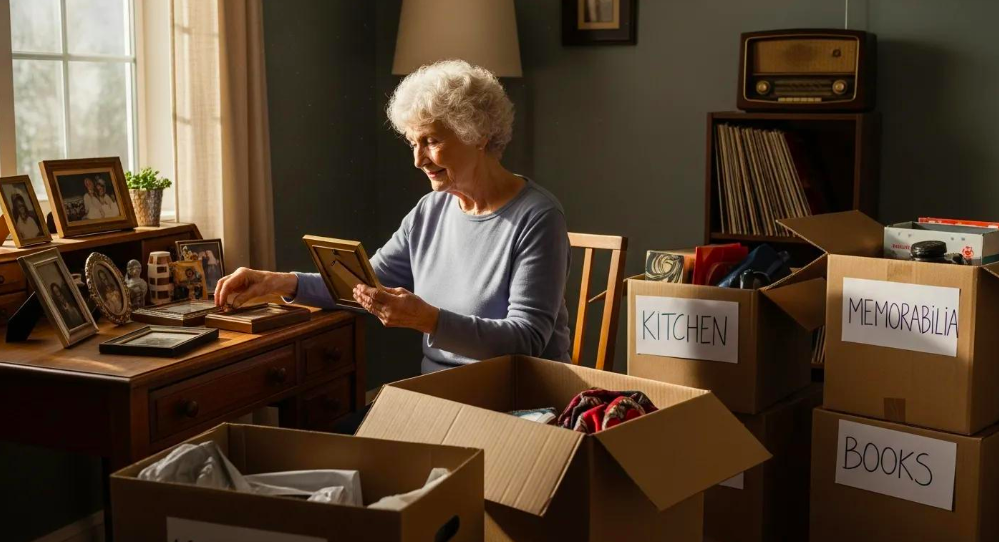
There comes a moment in almost every downsizing journey when reality sets in.
The boxes are piling up. The cupboards are open. The shelves are being emptied. And suddenly, you’re faced with a question that feels far bigger than the items in front of you:
“What do I keep when I can’t keep everything?”
I’ve seen this question arise time and time again while helping families clear homes, prepare for downsizing and sort through deceased estates. Whether someone is moving to a smaller home, helping an elderly parent relocate, or clearing the home of a loved one who has passed away, the challenge is rarely about the physical belongings themselves. Trying to decide what to keep can be a daunting task.
It’s about what those belongings represent.
A teacup becomes a memory of Sunday afternoons with Grandma.
A worn armchair becomes Dad’s favourite place to sit.
A collection of recipe cards becomes a connection to family traditions.
The truth is that when we’re forced to let go of possessions, we are often afraid that we are letting go of the memories attached to them. The good news is that we don’t have to keep everything to preserve what matters most.
What I’ve discovered is that the secret isn’t choosing what to get rid of. It’s learning how to identify what truly deserves a place in our lives moving forward.
Before we talk about what to keep, it’s important to understand why this process feels so emotional. Most of us don’t form attachments to things because of their financial value. We form attachments because of the stories attached to them.
I’ve stood in homes where someone has picked up an ordinary-looking object and suddenly the whole room changes. They aren’t looking at an old vase or a chipped mug anymore. They are remembering a person, a place or a part of their life that they aren’t quite ready to let go of.
A chipped mug may be worthless to anyone else, but to you it represents years of morning conversations with someone you loved. An old blanket may not be beautiful, but it reminds you of childhood comfort and security.
When we downsize, we often feel as though we’re being asked to choose which memories deserve to survive. That emotional weight can make every decision feel impossible but here’s something I’ve discovered:
The memory lives within you, not within the object.
The object may help trigger the memory, but it does not own the memory.
Understanding this can make the process a little easier.
Whenever I begin sorting through a home, I start with the obvious items that should always be kept safe.
These include:
These items are not only emotionally important but often legally necessary. They form the foundation of what should remain. They should be protected from water / damp as well as fire.
Once these essentials are safely set aside, the emotional decisions become easier to navigate.
When sorting through years of paperwork, keeping important documents together can save countless hours of stress. A fireproof document organiser protects passports, birth certificates, wills, insurance papers and other irreplaceable records from fire, water and everyday damage while keeping everything in one convenient place.
Some of the products I recommend on Rustic Daisy are linked to Amazon. These are affiliate links, which means that if you choose to purchase something through one of my links, I may receive a small commission at no additional cost to you. This helps support Rustic Daisy and allows me to continue creating useful content for you.
A quick note for my lovely South African readers 🇿🇦
These Amazon links are primarily intended for my international readers who already shop through Amazon in their own country. Unfortunately, there isn’t currently a South African Amazon shopping site, so international shipping charges, import duties or other fees may apply when ordering from Amazon. These costs can sometimes make an otherwise reasonably priced product considerably more expensive, so please check the final price, delivery costs and any additional charges before placing an order.
I’m working on finding local alternatives! 🌿
I’m making a real effort to find similar products that are available right here in South Africa. Wherever I can find a good local alternative, I’ll share it with you so that South African readers have more affordable and practical options.
I only recommend products that I genuinely believe are useful, relevant and worth considering. I’m not here to fill my pages with links simply for the sake of earning a commission.
Thank you for supporting Rustic Daisy, whether you’re reading from South Africa or somewhere else in the world. Every visit, share, click and purchase helps my little corner of the internet continue to grow. 🌼
South African readers: your local alternatives are coming! 🇿🇦🌿
Water and Fireproof document organiser
A secure document organiser can be useful for keeping passports, birth certificates, wills, insurance papers and other important family records together. Having one designated place for these documents can save an enormous amount of stress when something needs to be found quickly.
A portable filing box gives you somewhere practical to sort and store paperwork while you’re working through a house. I particularly like the idea of being able to move the box from room to room rather than creating several piles of paperwork that mysteriously seem to multiply overnight.
A label maker is one of those small things that can make organising feel considerably easier. Clear labels can help you identify files, storage boxes and important categories at a glance, particularly when you’re dealing with a large amount of paperwork.
When space is limited, I encourage people to think about storytelling. Imagine that future generations know nothing about your family.
Which items would best tell your story?
Perhaps it’s:
These are often the items that carry the strongest connection to your family’s history. Rather than keeping twenty boxes of possessions, you may only need a handful of meaningful treasures that tell the story beautifully.
One lesson I’ve learned repeatedly is that one meaningful item often carries more emotional value than twenty ordinary ones.
For example, if your grandmother had an entire china collection, you may not need every single piece. Perhaps keeping one teacup and saucer captures the memory just as powerfully.
If your father had a large workshop filled with tools, perhaps one favourite tool displayed in your home tells the story better than storing dozens of boxes.
When space is limited, choosing the best representation of a memory often brings greater peace than trying to preserve everything.
This sounds simple, but it can be surprisingly difficult. Many people keep items out of guilt rather than genuine affection. I often hear:
But when I ask whether they actually love the item, the answer is often no.
Guilt is not a good storage strategy. The belongings that deserve space in your life are the ones that genuinely bring warmth, joy, comfort, or meaning. If an item creates stress, obligation, or resentment, it may be time to let it go.
If I had to choose one category to preserve, it would almost always be photographs. Photos capture people, relationships, milestones, celebrations and everyday moments that can never be recreated.
Furniture can be replaced.
Dishes can be replaced.
Decor can be replaced.
The image of your grandparents laughing together at a family gathering cannot. I always encourage families to prioritise preserving photographs, digitising them where possible, and ensuring they are protected for future generations.
Old photographs become more fragile with time. Scanning them now helps preserve precious memories for future generations and makes it much easier to share them with family members.
A photo scanner can be a useful way to digitise old photographs so you can preserve copies and share them with family more easily.
A digital photo frame is a lovely way to keep favourite family photographs visible and enjoy them regularly rather than leaving them tucked away in a cupboard.
A photo storage box can help keep loose photographs organised and protected in one place, particularly when you’re sorting through several generations of family pictures.
This is one of the little tricks I often suggest when people are struggling with downsizing. Sometimes the memory matters more than the object itself. In these situations, taking a photograph of the item can be incredibly helpful.
You might photograph:
The photograph preserves the memory while freeing up valuable space. Many people find they revisit the photos far more often than they ever interacted with the physical items.
Whenever I struggle with a decision, I ask:
“If this item disappeared tomorrow, would I be devastated or simply disappointed?”
The answer often reveals everything. Items that would truly break your heart deserve serious consideration. Items that would simply cause mild regret may not need to stay.
This question helps separate genuine importance from emotional clutter.
One of the biggest sources of clutter comes from keeping things for a version of ourselves that may never exist.
We keep:
I’ve done this myself. The truth is that holding onto these items can keep us trapped in unrealistic expectations. Instead, I try to focus on supporting the life I’m living now. The belongings that deserve space are the ones that actively serve my current life and values.
When clearing a deceased estate, families often feel tremendous pressure to keep belongings. They fear that letting go of possessions somehow dishonours the person who has died.
I understand that feeling only too well. But I have also learned something important.
The person you loved is not contained within their belongings.
These are the things that truly matter.
Keeping one meaningful item can honour their memory just as effectively as keeping an entire house full of possessions. Sometimes even more so.
One of my favourite solutions is creating a memory box. A memory box allows you to keep a carefully selected collection of meaningful items in one dedicated space.
You might include:
The size of the box naturally encourages thoughtful decisions. Instead of keeping everything, you preserve the very best. I love the idea that a simple memory box can become a treasured family keepsake in its own right.
A memory box is a beautiful way to preserve the most meaningful reminders of a loved one without keeping an entire house full of possessions. Letters, jewellery, photographs and treasured keepsakes can all be stored together in one special place that future generations will appreciate.
A few practical things can make this process a little easier. When you’re sorting through paperwork, photographs and sentimental belongings, having somewhere safe and organised to put the things you’re keeping can make an enormous difference.
Water and fire proof document organiser
A secure document organiser can be useful for keeping important papers, passports, insurance documents and family records together in one place.
A keepsake memory box is a lovely option for storing treasured photographs, handwritten letters and small sentimental items without needing to keep an entire cupboard full of them.
Good-quality file folders are one of those simple things that make sorting paperwork considerably easier. I honestly can’t imagine working through a house full of paperwork without them!
There is something deeply comforting about knowing that an item can continue serving a purpose.
Sometimes letting go is not a loss. Sometimes it is a gift.
Thinking about where an item might help someone else often makes the decision easier.
What surprises many people is what happens after the difficult decisions are made.
Instead of regret, they often feel relief. The stress begins to lift and the home feels lighter.
The important items become easier to appreciate because they are no longer buried beneath clutter.
Rather than being surrounded by hundreds of possessions, they are surrounded by things that genuinely matter and that is where the real magic happens.
If you’re facing the challenge of deciding what to keep when you can’t keep everything, know that you’re not alone.
This is one of the most emotional parts of downsizing, estate clearing, and life transitions.
There is no perfect formula or universal checklist.
But there is one guiding principle that has helped me time and time again:
Let go of the rest with gratitude because the most important parts of your life were never stored in boxes. They live in your heart, your experiences and in the people whose lives you’ve touched along the way and those are the things you will never lose.
If you are going through a downsizing, estate clearing or major home transition and you’re finding the decisions more emotional than you expected, you’re not alone. Sometimes the hardest part isn’t deciding what to do with a piece of furniture or a box of old photographs. It’s deciding what that item means to you now.
At Rustic Daisy, I believe that clearing a home should be handled with patience, compassion and respect. You don’t have to make every decision in one day and you certainly don’t have to keep everything just because letting go feels difficult.
If this is something you’re facing, you may find more helpful ideas, practical guidance and gentle support throughout the Rustic Daisy website.
If someone in your family is facing a move, downsizing or the difficult job of clearing a loved one’s home, please share this article with them. Sometimes knowing that someone else understands makes the whole process feel a little less overwhelming.
If you’re dealing with a downsizing, estate clearing or major home transition, these other Rustic Daisy articles may help you take the next step.
The Best Way to Organise Important Family Documents
Things Elderly Parents Need That Money Can’t Buy
What Happens to a House Full of Belongings After Someone Dies?
25 Things you can declutter today without regret
Keep the things that are genuinely useful, deeply meaningful or important to your family’s history. Important documents, photographs and a small number of sentimental items often matter more than keeping large quantities of possessions simply because they have always been there.
Ask yourself why the item matters and whether you would genuinely miss it if it were gone. If the memory is more important than the physical object, consider taking a photograph before letting the item go. This can make difficult decisions considerably easier.
Not necessarily. Start by identifying the photographs that have real family, historical or sentimental value. Consider scanning important photographs and sharing digital copies with family members so the memories don’t depend on one physical album or box.
Important documents can include identity documents, birth and marriage certificates, wills, insurance documents, property records and other paperwork that may be difficult or expensive to replace. Keep these somewhere secure and make sure trusted family members know where they can be found.
Try to separate the memory from the object. Keeping everything isn’t the only way to honour a person or a chapter of your life. Sometimes taking a photograph, keeping one meaningful item or passing something on to someone who will use it can allow the memory to remain without keeping the entire house full of possessions.
Until next time,
Sharon 🌼