

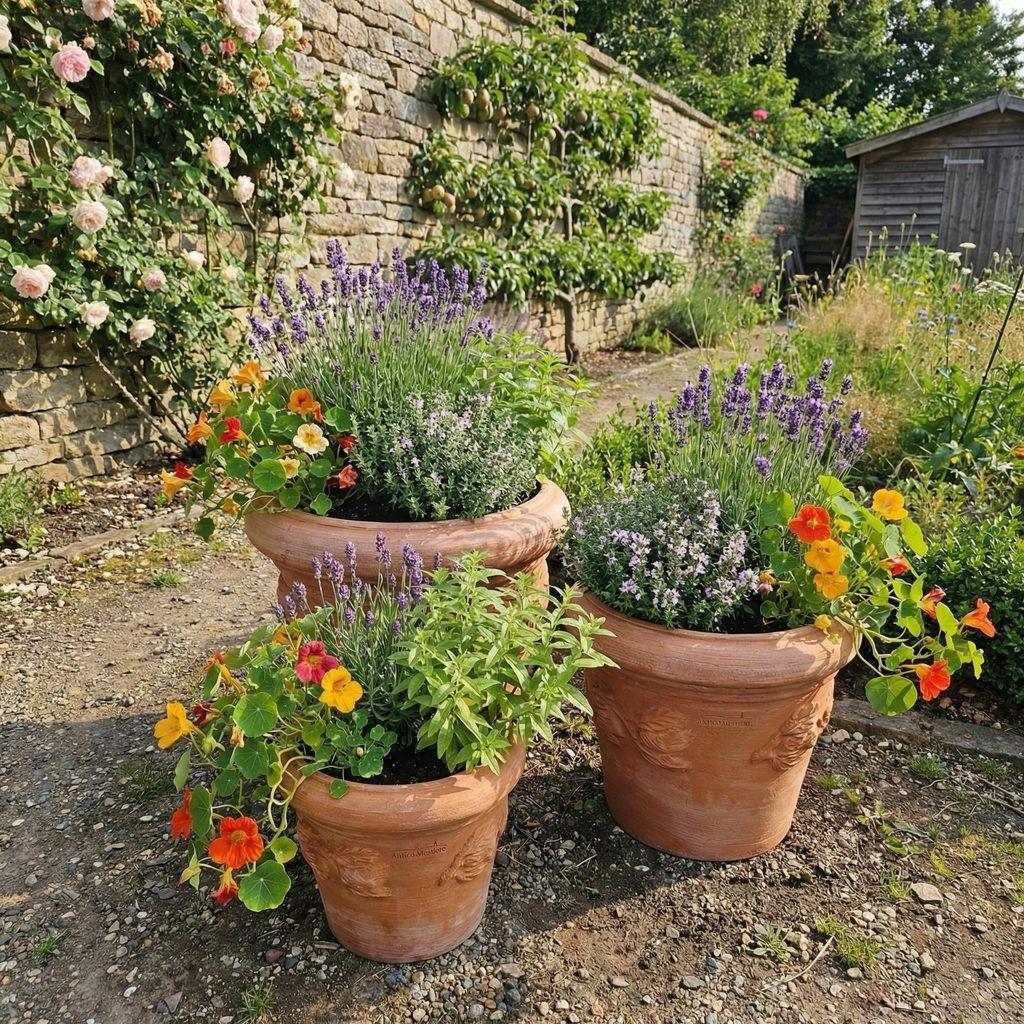
There is something incredibly satisfying about standing in a beautiful garden that you have created with your own hands. It is not about impressing the neighbours or keeping up with the latest trends. For me it has always been about creating a place that feels peaceful. A place where I can sit with a cup of tea in the early morning, listen to the birds and simply breathe.
When I started looking for budget garden ideas that look expensive of my own, I discovered something that surprised me: the gardens that looked the most expensive were often the ones where very little money had actually been spent.
People often assume that attractive gardens belong to people with deep pockets. They picture expensive landscapers, imported plants and elaborate water features. I used to think exactly the same thing until life taught me otherwise.
Some of the loveliest gardens I have ever walked through belonged to ordinary people who simply knew how to use what they had. They understood colour, texture and patience far better than they understood spending money. That completely changed the way I looked at my own little patch of earth.
Working in home clearances has taught me another valuable lesson. Families often spend thousands of rands filling their homes with beautiful furniture while neglecting the very first thing visitors see. The garden quietly waits outside, asking for very little except a little attention and a bit of creativity.
The wonderful thing about gardening is that nature does not care how much you spent. Plants certainly do not know whether their container cost R20 or R2,000. A carefully planned flower bed filled with inexpensive plants can look every bit as elegant as one planted with costly specimens.
If your budget is tight, please don’t think that means your dream garden has to wait. Some of the most charming outdoor spaces are built one small project at a time. One plant this month. One pot next month. A rescued bench a little later. Before you know it you have created something that feels wonderfully luxurious without ever emptying your bank account.
The secret to a garden that looks expensive is surprisingly little to do with how much money you spend. In my experience, it is much more about how everything comes together. A garden can be filled with expensive plants and still feel untidy or ordinary, while a simple collection of well-loved plants, pretty pots and rescued treasures can look wonderfully established when they have been put together thoughtfully.
The things that make the biggest visual difference are usually quite simple. Keeping the garden tidy, repeating the same plants or colours in different areas, using mulch to give planting beds a finished appearance, adding a few strong focal points and creating some structure with trees, shrubs or evergreen plants can make an enormous difference. Even something as inexpensive as painting an old fence, defining a pathway or adding a few warm garden lights can make a space feel far more considered.
I have also learnt that patience is one of the best budget gardening tools you can have. Plants grown from cuttings, divisions and seeds take time, but there is something particularly satisfying about watching a garden slowly fill out without constantly reaching for your purse. Add a few indigenous plants, repurpose things you already own and allow the garden to develop its own character, and you may find that the result looks far more expensive than it actually was.
So, if you are wondering how to make a garden look expensive on a budget, don’t start by asking what you need to buy. Start by looking at what you already have, what can be moved, divided, painted, propagated or repurposed, and where a little bit of tidying could make a big difference. A beautiful garden isn’t necessarily an expensive garden; very often, it is simply a thoughtful one.
One of the biggest surprises I discovered was that expensive-looking gardens rarely rely on expensive materials. They rely on thoughtful design. Think about luxury hotels or boutique guest houses. Their gardens often appear simple rather than crowded. They repeat colours, group similar plants together and leave enough open space for everything to breathe.
Many home gardens become cluttered because we buy one plant here, another plant there and eventually end up with a collection rather than a design. Once I began planting in groups instead of scattering individual plants around the garden everything suddenly looked far more intentional. Even inexpensive plants started looking like they belonged in a professionally designed landscape.
The same principle works with pots, ornaments and pathways. Repetition creates harmony. Harmony creates elegance. That realisation saved me a great deal of money.
This may sound too obvious but nothing makes a garden look expensive faster than being well maintained. Before buying a single new plant I always spend time cleaning, trimming and clearing. I trim overgrown shrubs, remove weeds, sweep the pavers, edge the lawn and wash outdoor furniture. Dead leaves disappear. Broken pots are removed. Old plastic containers are hidden away.
The transformation is often remarkable. It reminds me of clearing homes before they go on the market. The house itself has not changed yet suddenly it feels brighter, larger and more valuable simply because the clutter has gone.
Gardens work exactly the same way. Fresh mulch around flower beds immediately creates a polished appearance. Freshly cut lawn lines make everything look neater. Clean paving can look almost new after a good pressure wash.
These are some of the cheapest improvements you can possibly make yet they often produce the biggest visual impact.
Buying one of everything because every plant looks beautiful at the nursery will result in chaos. Rather buy fewer varieties but more of each one whenever possible.
A group of lavender planted together creates far more impact than one lonely lavender bush tucked into a corner. The same applies to agapanthus, society garlic, salvias, day lilies and many other affordable South African favourites.
Large drifts of the same plant create a feeling of confidence. They look professionally planned and surprisingly luxurious. The bonus is that many of these plants divide easily after a few years, allowing you to expand your garden without spending another cent.
If there is one inexpensive trick that instantly makes a garden look professionally landscaped it is mulch. Fresh bark chips, composted mulch or even pine needles create a rich background that allows every plant to stand out. Mulch also keeps moisture in the soil, suppresses weeds and improves soil quality as it breaks down.
I especially enjoy using natural-looking mulch because it makes everything feel settled rather than freshly planted. When the soil is hidden beneath attractive mulch the garden immediately feels more finished.
It is amazing how such a simple addition changes the entire appearance of an outdoor space.
Too many little ornaments, tiny pots and random decorations can end up competing with one another until nothing really stands out. I prefer creating one or two beautiful focal points.
Perhaps it is an old bench beneath a tree. Maybe it is a large terracotta pot overflowing with colourful flowers. Sometimes it is simply a bird bath surrounded by lavender.
When your eye naturally settles on one attractive feature, the entire garden feels thoughtfully designed. Interestingly many of the most memorable gardens I have visited contain surprisingly few decorative pieces. Each one has simply been given room to shine.
One of my favourite parts of clearing homes is discovering items that still have so much life left in them.
These pieces bring personality into a garden that cannot be bought from a shop. Friends often ask where I found certain garden ornaments and are amazed when I tell them they were destined for the rubbish pile.
Sometimes all something needs is a gentle clean and a fresh purpose.
One evening I wandered outside just after sunset and realised my garden disappeared almost completely in the dark. It felt flat and lifeless. Just adding a few inexpensive solar lights changed everything. Now pathways glow softly and the plants cast beautiful shadows.
The garden has become somewhere I want to spend time long after the sun has gone down. Solar lighting has become remarkably affordable and requires almost no maintenance. Rather than filling the garden with bright lights I prefer placing them carefully to highlight a favourite tree, illuminate a pathway or softly light a seating area.
The result feels warm, welcoming and surprisingly elegant.
One of the greatest joys of gardening is discovering that plants love to be shared.
When I first started gardening I thought every new flower bed meant another trip to the nursery. Thankfully, my mom, being an experienced gardener, showed me otherwise. She arrived one morning carrying an old cardboard box filled with cuttings wrapped in damp newspaper. Another friend divided a clump of agapanthus that had become too large for her garden. Before long my own little garden was beginning to fill with plants that had cost me nothing at all.
There is something rather special about knowing exactly where a plant came from. Every time I see one of those salvias flowering or the agapanthus sending up their familiar blue blooms I think of my mom and the other generous people who shared them with me.
Many popular South African plants are wonderfully easy to propagate. Lavender, rosemary, salvias, geraniums, spekboom and countless succulents root readily from cuttings. Agapanthus, day lilies, clivias and society garlic can all be divided as they mature.
A garden that grows slowly through shared plants has a story behind it. That story gives it a richness that money simply cannot buy.
Flowers certainly steal the show for part of the year but structure is what makes a garden look elegant every single day.
I once visited a beautiful property during winter expecting to see very little. Instead I found clipped hedges, neat evergreen shrubs and carefully shaped trees that looked just as attractive without masses of flowers.
That visit changed the way I planned my own garden. Rather than relying entirely on seasonal colour I have started introducing evergreen shrubs that give the garden shape throughout the year. They quietly hold everything together while the flowering plants come and go with the seasons.
Instead of buying several tiny pots, buy one larger pot whenever your budget allows. A substantial planter immediately catches the eye. It feels confident and intentional. Even when planted with inexpensive flowers it creates an impression of quality.
Terracotta pots are timeless and age beautifully. Concrete pots add a contemporary feel. Wooden barrels and galvanised containers can also look wonderfully rustic. I often keep my eyes open when clearing homes because old pots are surprisingly common. Many only need a good scrub before looking beautiful again.
One striking planter beside the front door often creates far more impact than half a dozen small containers scattered around the garden.
Our eyes naturally like direction. A simple pathway invites visitors to explore while making the entire garden feel organised. You do not need expensive paving stones to achieve this. Gravel, reclaimed bricks, stepping stones or even sections of old concrete can all become attractive walkways when thoughtfully laid out.
One of my favourite pathways was created using reclaimed bricks laid in a gentle curve through a cottage garden. Moss gradually softened the edges and flowering plants spilled over both sides. It looked as though it had always belonged there.
Sometimes age adds more beauty than brand new materials ever could.
Fresh paint performs little miracles. An ageing fence suddenly becomes an elegant backdrop. An old bench looks inviting again and weathered pots take on new character.
One weekend I painted a tired wooden fence a deep charcoal colour. I honestly wasn’t expecting much but the transformation was remarkable. Every green leaf suddenly looked brighter. White flowers practically glowed against the darker background and colourful blooms became even more vibrant.
The fence disappeared visually whilst the plants became the stars of the show. Sometimes the background deserves just as much attention as the flowers themselves.
One thing I have always admired about larger gardens is how they reveal themselves slowly. Instead of seeing everything at once you discover one peaceful corner after another.
You can also create this feeling in the smallest of gardens.
These little spaces invite people to linger. Luxury is often about experience rather than expense.
Living in South Africa gives us access to some of the world’s most beautiful indigenous plants. They are perfectly suited to our climate which means they require less watering, less fertiliser and less maintenance once established. One of the great advantages of gardening in South Africa is that we don’t have to create a garden that fights against our climate simply to make it beautiful.
Spekboom, aloes, wild garlic, gazanias, pelargoniums, arum lilies, leonotis and countless indigenous shrubs reward gardeners with spectacular displays whilst supporting local birds, bees and butterflies.
There is also something deeply satisfying about creating a garden that belongs naturally in its surroundings. Instead of fighting the climate you begin working alongside it and the result usually looks healthier and costs considerably less to maintain.
One mistake I made in my early gardening days was trying to keep everything perfectly controlled. Every plant had to remain inside its allocated space and every border had to stay sharply defined.
Then I realised that some of the loveliest gardens allow plants to spill naturally onto pathways, soften stone walls and gently weave around one another.
Cottage gardens do this beautifully. Lavender leans into walkways. Verbena dances above neighbouring flowers. Groundcovers creep between stepping stones.
The effect feels relaxed yet incredibly elegant. Nature rarely grows in perfectly straight lines and neither should every garden.
Healthy soil produces healthy plants. Knowing this has probably saved me more money than anything else.
Rather than constantly replacing struggling plants, begin improving the soil itself with compost, organic matter and mulch. It makes all the difference. Plants will flower for longer, leaves become greener and water soaks into the ground more effectively.
Everything simply looks happier. A smaller number of thriving plants always looks more luxurious than a larger number of struggling ones.
Luxury gardens are not only beautiful to look at. They feel alive. One of my favourite moments each morning is watching birds visit the bird bath while bees move quietly between flowers.
A simple bird bath, a shallow water dish, indigenous flowering plants and a few carefully placed feeders invite wildlife into your garden.
The soundtrack changes completely. Instead of silence you hear birdsong, buzzing bees and rustling leaves. That feeling of life is worth far more than expensive ornaments.
More than almost anything else, gardening teaches patience. There were times when I wished my garden would hurry up and become what I imagined. Looking back I am grateful it didn’t. Each season brings its own surprises. Some plants flourish whilst others quietly disappeared.
One forgotten cutting can become the centrepiece of an entire flower bed. A self-seeded flower will appear where I would never have thought to plant it. An old bench, rescued from a home clearance, has become everyone’s favourite place to sit.
If everything had happened immediately I might never have appreciated those little gifts. The most beautiful gardens usually tell a story that has unfolded over many years. Perhaps that is why they feel so welcoming. They have grown alongside the people who cared for them.
Whenever someone compliments my garden they often ask where I bought this plant or how much that feature cost. The truth usually surprises them.
Many of my favourite plants were rescued from my mom’s garden when she passed away. The rest have been divided from existing plants or grown patiently from tiny cuttings. Others came from generous friends or family members who simply wanted to share something beautiful.
Very little happened all at once. It happened one weekend at a time. One flower bed at a time. One season after another. That slow approach has taught me to notice every little improvement. It has allowed me to enjoy the process instead of chasing perfection.
If your garden feels unfinished today please don’t see that as failure. See it as possibility. Every weed you remove, every cutting that takes root, every flower that opens and every quiet morning spent outside is helping create a space that reflects who you are.
Some of the most memorable gardens I have ever visited were not the biggest or the most expensive. They simply felt loved and perhaps that is the one ingredient no amount of money can ever replace.
If you’re creating your garden slowly, you might also enjoy some of my other simple ideas for making home and everyday life feel beautiful without spending a fortune. Sometimes the loveliest changes are the ones that cost almost nothing.
Gardening and Emotional Wellness
The Unexpected Joy of Growing Herbs at Home
Cozy Doesn’t Mean Expensive: How I Created a Warm Home on a Tight Budget
If you enjoy spending time in the garden, these are a few useful things that can make gardening a little easier and more enjoyable.
🌿 A little note about my Amazon links
Some of the products I recommend on Rustic Daisy are linked to Amazon. These are affiliate links, which means that if you choose to purchase something through one of my links, I may receive a small commission at no additional cost to you. This helps support Rustic Daisy and allows me to continue creating useful content for you.
As an Amazon Associate I earn from qualifying purchases.
A quick note for my lovely South African readers 🇿🇦
Amazon links can be useful for readers who already shop through Amazon in their own country. Unfortunately, there isn’t currently a South African Amazon shopping site, so international shipping charges, import duties or other fees may apply when ordering from Amazon.
These additional costs can sometimes make an otherwise reasonably priced product considerably more expensive, so please check the final price, delivery costs and any additional charges before placing your order.
I’m working on finding local alternatives! 🌿
I’m making a real effort to find similar products that are available right here in South Africa. Wherever I can find a good local alternative, I’ll share it with you so that South African readers have more affordable and practical options.
I only recommend products that I genuinely believe are useful, relevant and worth considering. I’m not here to fill my pages with links simply for the sake of earning a commission.
Thank you for supporting Rustic Daisy, whether you’re reading from South Africa or somewhere else in the world. Every visit, share, click and purchase helps my little corner of the internet continue to grow. 🌼
South African readers: your local alternatives are coming! 🇿🇦🌿
Gardening Stool – A simple folding gardening stool can make those longer planting and weeding sessions much more comfortable.
Gardening set – A basic set of reliable hand tools is useful for planting, weeding and tending smaller beds and pots.
Small garden scissors – Handy for trimming herbs, taking cuttings and dealing with small pruning jobs around the garden.
Gardeners Handcream – I cannot go without a nourishing hand cream after gardening
Gardening Gloves – A good pair of gardening gloves protects your hands while still allowing you to get stuck into the work.
Soil moisture stick – A simple soil moisture meter can help you avoid overwatering or underwatering, particularly when you’re getting to know the needs of different plants.
Until next time,
Sharon 🌼