

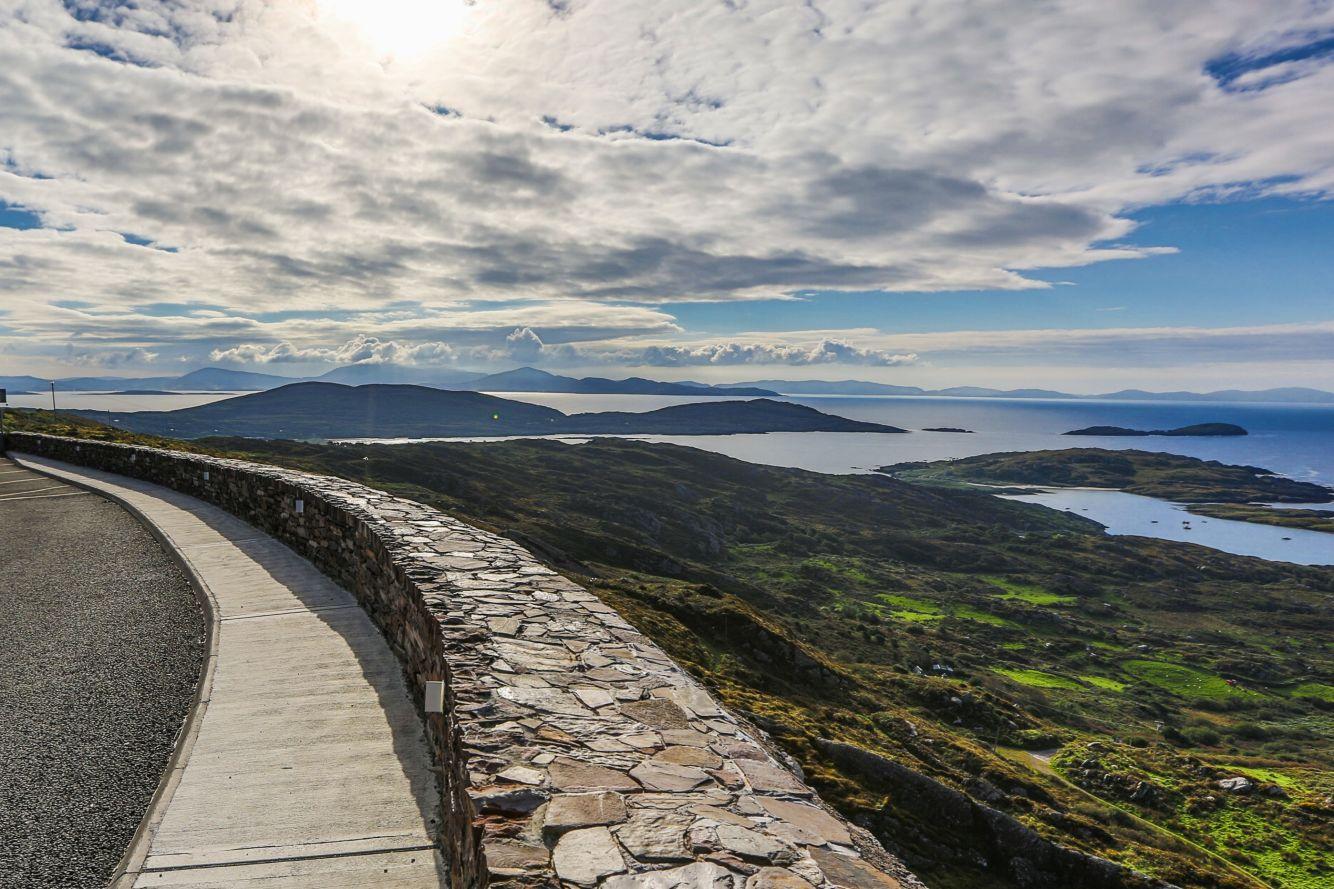
Some journeys are simply about getting from one place to another.
Others become part of the story you carry with you for the rest of your life.
The Wild Atlantic Way is one of those journeys.
Although I have yet to experience this remarkable route for myself, it has captured my imagination in a way few travel destinations ever have. Stretching along Ireland’s rugged western coastline, the Wild Atlantic Way offers dramatic cliffs, charming villages, ancient ruins, breathtaking beaches and some of the most beautiful scenery in Europe.
Whenever I read about Ireland, I find myself drawn back to this extraordinary coastal route. It represents everything I love about travel: stunning landscapes, fascinating history, authentic local culture and opportunities to discover places that feel untouched by time.
If Ireland is on your bucket list, the Wild Atlantic Way deserves a place at the very top.
The Wild Atlantic Way is one of the world’s longest defined coastal touring routes.
Stretching for approximately 2,500 kilometres along Ireland’s western seaboard, it runs from County Donegal in the north to County Cork in the south.
The route passes through some of Ireland’s most spectacular landscapes including towering cliffs, remote peninsulas, fishing villages, sandy beaches and vibrant towns.
What makes this road trip so appealing is the incredible variety found along the way.
One day you may find yourself exploring ancient ruins overlooking the ocean.
The next could involve wandering through a colourful harbour village or enjoying a peaceful walk along a deserted beach.
Each section reveals a different side of Ireland.
Many famous road trips are celebrated for their scenery.
The Wild Atlantic Way seems to offer something much deeper.
It combines natural beauty with culture, history and human connection.
I love the idea of travelling without rushing. Taking time to stop at viewpoints, chatting with locals and discovering hidden places that never appear in glossy travel brochures.
The Wild Atlantic Way appears perfectly suited to that style of travel.
Rather than focusing solely on famous attractions, it encourages visitors to explore the character and charm of Ireland’s west coast at a slower pace.
That is exactly the kind of journey I dream about.
One of the areas I am most eager to visit is County Donegal.
County Donegal
Located in the far north-west of Ireland, Donegal is renowned for its wild landscapes and rugged beauty.
The coastline is shaped by powerful Atlantic waves and dramatic cliffs that seem to stretch endlessly into the distance.
Many travellers describe Donegal as one of Ireland’s most unspoilt regions.
Photographs of its remote beaches, mountain scenery and winding coastal roads only strengthen my desire to visit.
For nature lovers and photographers, it appears to be a dream destination.
Slieve League
One location that fascinates me is Slieve League.
These sea cliffs are among the highest in Europe and rise dramatically above the Atlantic Ocean.
Visitors often describe the experience as both exhilarating and humbling.
The combination of immense height, crashing waves and endless ocean views creates a landscape that looks almost otherworldly.
Standing at the edge of such a powerful natural wonder must be unforgettable.
County Mayo
County Mayo frequently appears in travel articles celebrating Ireland’s hidden treasures.
The county offers a wonderful combination of coastal beauty, historical sites and welcoming communities.
One attraction that particularly interests me is the island of Achill.
Achill Island
Connected to the mainland by bridge, Achill Island is known for its stunning beaches, dramatic cliffs and peaceful atmosphere.
It seems like the perfect place to slow down and simply enjoy the surrounding landscape.
No discussion of the Wild Atlantic Way would be complete without mentioning the iconic Cliffs of Moher.
Cliffs of Moher
Rising high above the Atlantic Ocean, these cliffs are among Ireland’s most famous landmarks.
Millions of visitors are drawn here each year and it is easy to understand why.
The scale of the cliffs is extraordinary.
The views stretch for miles across the ocean and on clear days visitors can see distant islands and coastal features.
Photographs capture some of their beauty but many people say the true experience can only be appreciated in person.
I can certainly believe that.
Beyond the Cliffs of Moher, County Clare offers many lesser-known attractions.
County Clare
The Burren is one of the most unusual landscapes in Europe.
The Burren
This vast limestone region is home to rare plants, ancient monuments and striking geological formations.
The contrast between the rocky terrain and the lush countryside found elsewhere in Ireland makes it particularly fascinating.
It is exactly the sort of place I would happily spend hours exploring.
One aspect of the Wild Atlantic Way that appeals to me is the opportunity to visit smaller communities.
Many of Ireland’s coastal villages appear full of character and charm.
Places like Doolin, Westport and Dingle are often praised for their welcoming atmosphere.
These are the places where travellers can experience traditional music, local food and genuine Irish hospitality.
I often find that smaller destinations leave the strongest memories.
They allow you to connect with local culture in a more meaningful way.
County Kerry
County Kerry is often described as one of Ireland’s most beautiful regions.
The scenery here seems almost impossibly picturesque.
Mountains, lakes, rugged coastlines and charming towns combine to create landscapes that attract visitors from around the world.
The famous Ring of Kerry remains one of Ireland’s most celebrated driving routes.
For travellers who appreciate dramatic scenery and outdoor adventure, this area appears to be a true highlight.
What makes the Wild Atlantic Way particularly appealing is that it is not simply a scenic drive.
History can be found around almost every corner.
Ancient monasteries, medieval castles and prehistoric sites provide fascinating glimpses into Ireland’s past.
I love destinations that combine natural beauty with heritage.
The opportunity to explore centuries of history while travelling through stunning landscapes makes the journey feel even more rewarding.
Travel is never just about what we see.
It is also about what we taste.
Ireland’s food scene has evolved significantly in recent years and many coastal communities now celebrate fresh local produce and traditional recipes.
Seafood features prominently in many areas along the Wild Atlantic Way.
Visitors can enjoy everything from freshly caught fish to homemade baked goods and locally produced cheeses.
Sampling regional specialities is one of the experiences I most look forward to.
The Wild Atlantic Way is not a route to rush.
Trying to see everything in a few days would mean missing much of what makes it special.
Its true appeal lies in taking time.
Time to stop at scenic viewpoints.
Time to explore hidden beaches.
Time to chat with local residents.
Time to wander through villages without an agenda.
Slow travel allows destinations to reveal themselves naturally and the Wild Atlantic Way seems perfectly designed for that approach.
Whenever I think about Ireland, I find myself imagining a leisurely drive along this remarkable coastline.
I picture winding roads beside the ocean, ancient stone walls, colourful villages and dramatic cliffs disappearing into the distance.
I imagine stopping whenever something catches my eye rather than following a strict itinerary.
Most of all, I imagine experiencing the warmth and authenticity that travellers so often associate with Ireland.
The Wild Atlantic Way represents far more than a road trip.
It is an invitation to explore one of Europe’s most beautiful coastlines while discovering the history, culture and character that make Ireland so beloved.
For me, it remains one of the most exciting travel adventures waiting on my bucket list.