

If someone had asked me a few years ago whether I was creative, I probably would have laughed and said no.
I think many of us grow up with a rather narrow idea of what being creative actually means. We imagine somebody sitting at an easel, effortlessly painting a beautiful landscape, or perhaps someone with a sewing machine who can turn a piece of fabric into a dress without looking particularly worried about it. We see beautifully decorated homes, handmade cards, intricate crochet and gorgeous things at craft markets, and quietly decide that creativity belongs to other people. People who know what they are doing, people with talent, people who can draw. Certainly not us.
I used to think that way myself. If I couldn’t look at something and immediately imagine how to make it beautiful, I assumed I wasn’t creative. And if I did try something and it looked a little wonky, well, that seemed to prove my point rather nicely.
But I have come to realise that we have been making creativity far more complicated than it needs to be. There are so many simple craft ideas that you can start with.
Creativity does not necessarily mean painting a masterpiece or producing something worthy of a craft fair. Sometimes it is simply choosing an old glass jar and deciding that it deserves a second life. Sometimes it is putting flowers into a little arrangement, painting a plant pot, making a bookmark or turning something that would otherwise be thrown away into something useful.
Sometimes creativity is simply looking at an ordinary object and thinking, I wonder what I could do with that? And that, I think, is where things begin.
If you have ever looked at somebody else’s craft project and thought, I could never make that, I want you to stay with me for a little while. You don’t need to consider yourself artistic, and you certainly don’t need a cupboard overflowing with expensive craft supplies. You just need to be willing to try something small.
One of the biggest problems with the word creative is that we tend to associate it with talent.
We think a creative person is somebody who already knows what they are doing. They have the right tools, the right ideas and, presumably, the ability to produce something lovely without leaving fingerprints in the paint or accidentally gluing themselves to the project. The rest of us can end up feeling as though we missed an important lesson somewhere along the way.
But creativity isn’t really about being good at something before you begin. It is much closer to curiosity. It is the little thought that says, I wonder what would happen if I tried this?
That distinction matters because when we believe we have to be talented, we are afraid to make mistakes. We don’t want to waste materials, make something ugly or discover that our grand creative idea looks considerably less impressive once it has left our imagination and landed on the kitchen table.
And so we don’t begin.
That is such a shame because some of the nicest things I have made have not been the things that turned out perfectly. In fact, the things that have gone slightly wrong often have more personality than the things I carefully tried to get right.
That is one of the reasons I think simple crafts are such a lovely place to begin. They remove much of the pressure. You aren’t trying to become an artist. You are simply making something.
And once you stop worrying about whether you are good at it, you may be surprised by how much you enjoy yourself.
If you have spent years telling yourself that you aren’t creative, I wouldn’t recommend beginning with a complicated project involving twelve different materials, specialist equipment and instructions that seem to have been written by somebody who assumes you already know what they are talking about.
That is a fairly good way to convince yourself that you were right all along.
Instead, choose something so simple that there is very little to lose. Paint a flower pot, decorate a plain photo frame, make a bookmark or put together a little arrangement using things you already have at home.
I particularly like projects that allow you to use things you already have. There is something satisfying about opening a cupboard and finding an old jar, a scrap of ribbon, a forgotten piece of pretty paper or a plant pot that has seen better days, and suddenly seeing it differently.
Perhaps that old jar could hold buttons. Perhaps the ribbon could become part of a gift. Perhaps the slightly battered pot could become something cheerful for the kitchen windowsill.
You don’t always need to buy something new to be creative. Sometimes creativity begins with noticing what you already have.
The important thing is to make a start.
Painting terracotta pots is one of my favourite suggestions for someone who is convinced they are not creative because there is almost no way to get it completely wrong.
You can keep it wonderfully simple. A single colour can be enough. You could paint the rim and leave the rest natural, add a few dots or stripes, try a simple geometric pattern or choose colours that remind you of your garden. You don’t need to be able to draw flowers beautifully, and you don’t even need a particularly steady hand.
There is also something lovely about giving an ordinary pot a little bit of personality. Once it has dried and you have added a plant, it becomes part of your home rather than simply another object you bought from a shop.
And if the stripes aren’t quite straight, nobody needs to know. Or, if they do notice, tell them it is handmade. That sounds much better.
Acrylic paint is a useful place to start because a small collection of colours can be used for all sorts of projects. You can experiment on inexpensive pots before moving on to other surfaces, and you may find yourself becoming rather braver once you discover that your first attempt didn’t collapse into disaster.
Sometimes confidence comes after the making, rather than before it. You don’t have to feel creative before you start crafting; sometimes you become creative because you started.
One of the easiest ways to enjoy crafting when you don’t think of yourself as a creative person is to make something that has a purpose.
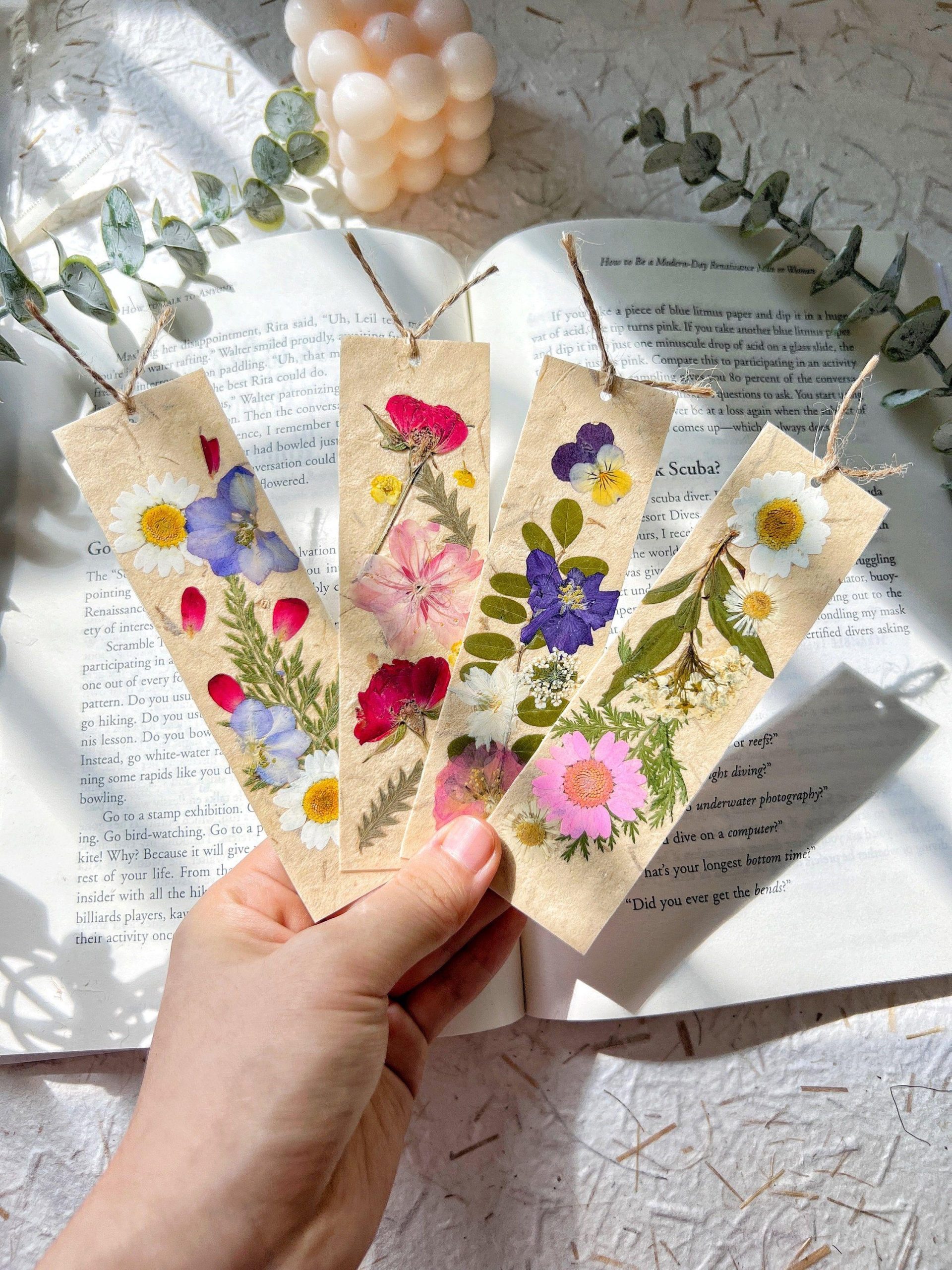
There is something reassuring about a project that doesn’t have to become a masterpiece because, at the end of it, you are going to use it anyway. A bookmark is a good example. It can be made from a piece of sturdy card, an old greeting card, pretty wrapping paper or even a photograph that has been sitting in a drawer for years. Add a little ribbon at the top and suddenly you have something personal to keep inside your favourite book.
I rather like the idea of making bookmarks for particular books too. A pressed flower bookmark might belong inside a gardening book, while a photograph could make a lovely reminder of a special person or place. You could even write a little date or message on the back.
Photo frames are another wonderfully forgiving project.
A plain wooden frame can be painted, covered with scraps of pretty paper or decorated with small pieces of ribbon, buttons, shells or other little things that might otherwise be sitting forgotten in a drawer. You don’t need to cover every inch of it. Sometimes a simple painted frame with one small decorative detail is far more appealing than something covered from corner to corner.
I think this is particularly lovely when the frame is going to hold a photograph that already means something to you. Perhaps it is a photograph of your children when they were little, a wedding photograph, an old family picture or a favourite holiday memory.
Giving the frame a little attention can make the photograph feel even more special, and you end up with something that has both practical and sentimental value.
There is a difference between giving somebody something you picked up from a shop and giving them something you spent an afternoon making specifically with them in mind. Even if the finished frame isn’t perfect, the thought behind it is.
And handmade gifts don’t have to become grand occasions. A decorated frame with a favourite photograph inside can be a lovely birthday gift, a small thank-you or simply something to give to someone because you thought of them.
Those are often the nicest gifts.
The word decoupage sounds rather more sophisticated than it really is.
At its simplest, it is the process of decorating an object with pieces of paper and adhesive. That’s it. You don’t need to turn a small wooden box into an elaborate work of art. You could start with something as simple as a little tray, an old tin or a plain container that needs a new lease of life.
Pretty napkins are particularly useful because they can create a lovely effect without requiring you to draw or paint a complicated design yourself.
Creativity can also be about choosing: choosing the paper, choosing the colours, choosing where the pattern should go and deciding what looks good together. Moving things around until they feel right is a creative decision too, even if you never put a paintbrush to canvas.
If you enjoy this kind of project, Mod Podge or another suitable decoupage medium can also be useful for attaching and protecting paper decorations.
And if the first attempt isn’t perfect, don’t worry. The second one will probably be better, and the third may be better still.
Some crafts are beautiful because of what they look like. Others are beautiful because of what they hold.
A memory jar falls firmly into the second category.
Find an ordinary glass jar and decorate it as simply or elaborately as you like. You might add a handwritten label, a little ribbon around the lid or nothing at all. Then start filling it with small notes about things you want to remember.
It could be something funny one of the children said, a particularly lovely day, a meal you enjoyed, something that made you laugh, a kind thing somebody did for you or a little moment that would otherwise disappear into the busyness of everyday life.
There is something rather lovely about returning to a jar months later and finding all those tiny pieces of ordinary life waiting for you. The big occasions tend to get remembered because we take photographs and make a fuss about them. It is the little things that can so easily disappear.
A memory jar gives them somewhere to live.
If you enjoy flowers and gardening, you already have a wonderful source of craft material around you.
Pressed flowers can be used to decorate bookmarks, cards, small pictures and other simple projects. You don’t need an elaborate flower press to begin experimenting. The important thing is to choose suitable flowers, press them carefully and give them enough time to dry properly.
I particularly like this kind of crafting because it encourages us to slow down and notice things. A flower that might normally be admired for a few days and then disappear can become part of something that lasts much longer. A little piece of summer can end up tucked inside a book or displayed in a frame.
If you enjoy growing things as much as you enjoy making things, you might also enjoy Growing Things Heals The Soul and The Unexpected Joy Of Growing Herbs At Home here on Rustic Daisy. There is something lovely about bringing the garden and the craft table together.
Wreaths can look intimidating when you see the elaborate ones people make for their front doors, but they don’t have to be complicated.
A simple wreath can begin with a basic base and a handful of things you already have or can gather fairly inexpensively. Dried flowers, leaves, ribbon, small fabric pieces, twigs or seasonal decorations can all be used to create something that feels personal.
Your front door does not need to look like a magazine photograph. It just needs to look like yours.
You can also change it throughout the year. Something soft and floral in spring, a simpler arrangement during summer, autumn leaves and warm textures when the weather turns cooler, and something festive towards Christmas can give you an excuse to make things without needing to buy another decoration every time the season changes.
I know several people who would happily attempt almost any craft until somebody mentions a sewing machine. At that point, the enthusiasm disappears rather quickly.
Fortunately, there are plenty of ways to use fabric without becoming a seamstress.
A pretty piece of fabric can be wrapped around a container, tied around a jar, used to cover a small noticeboard or turned into simple decorative bunting. You can also make little fabric sachets using straightforward folding and tying techniques, depending on the project.
This is another area where scraps are your friends. An old shirt with a pretty pattern, leftover curtain fabric or a piece from a sewing project can all become useful again.
There is something satisfying about looking at a piece of fabric that might otherwise have gone into the bin and finding another use for it.
A jar isn’t just a jar anymore, and a scrap of ribbon isn’t just a scrap of ribbon. An old pot isn’t necessarily something that needs replacing. You begin to see possibilities.
There is a rather unfortunate idea that serious crafters need an entire room dedicated to their hobbies.
But please don’t let the lack of a craft room stop you.
A kitchen table is enough. A small box in a cupboard is enough. A drawer with a pair of scissors, some glue and a few useful bits and pieces can be enough.
I have always believed that hobbies should fit into our lives rather than requiring us to rearrange our lives around them. If you have a small corner where you can leave a project for an afternoon, wonderful. If you need to pack everything away after twenty minutes, that is perfectly fine too.
You don’t need permission from your home, your budget or your level of artistic ability to make something. You can simply begin with what you have, and sometimes that is more than enough.
If your collection of paints, paper and ribbons does eventually start taking over the kitchen table, my Creative Craft Room Storage Ideas For Small Spaces article has some practical ideas for keeping everything under control without needing an entire room.
There is one thing I think we need to talk about before we go any further, and that is the possibility that your project might not turn out the way you imagined it.
It probably won’t.
You may paint something and decide the colour isn’t quite right. You may glue something slightly crooked. Your wreath may look much fuller on one side than the other, or your carefully arranged flowers may have a mind of their own. You may make something that you look at afterwards and think, Well, that didn’t go according to plan.
That is all perfectly normal. The trouble starts when we interpret an imperfect result as evidence that we aren’t creative.
There is also something to be said for allowing ourselves to make things badly. We don’t have to turn every spare moment into an opportunity for achievement. Not everything we do needs to be impressive, productive or worthy of photographing.
Sometimes it is enough to sit at the table with a little project and enjoy the fact that our hands are busy and our minds have somewhere pleasant to wander.
That is one of the reasons I think simple crafts can be so enjoyable. There is no exam at the end, nobody is handing out marks and you don’t have to submit your painted pot for judging. You made something because you wanted to make something, and that is enough.
Sometimes a simple craft project stays exactly that — a pleasant little project that occupies an hour or two.
And sometimes it becomes something more.
You might discover that you love working with resin, paper, fabric or flowers. You might find yourself making things for friends and family. You might eventually start selling something you create. Or you might simply discover a new way to spend a quiet afternoon.
If you do eventually discover that you would like to explore a particular craft more seriously, there is plenty of room to grow. But you don’t have to know that when you make your first little project. You can simply enjoy the beginning.
And if crafting does eventually become something you want to take further, it can be fascinating to see how a few simple experiments develop into a genuine creative interest. My article Why Making Resin Jewellery Has Become Therapy For Me explores another side of this, and how a creative hobby can sometimes become surprisingly meaningful.
That is another reason not to dismiss a small beginning. You never quite know where curiosity will take you.
If you’re beginning to feel tempted to rummage through the cupboards and start making something immediately, I completely understand. You really don’t need much to get started, and I would always suggest using what you already have before buying a whole collection of craft supplies.
But there are a few simple things that are useful to keep together if you find yourself enjoying these little projects. I’ve included a few below that I think are worth considering, rather than filling the page with things you may never use.
Some of the products I recommend on Rustic Daisy are linked to Amazon. These are affiliate links, which means that if you choose to purchase something through one of my links, I may receive a small commission at no additional cost to you. This helps support Rustic Daisy and allows me to continue creating useful content for you.
As an Amazon Associate I earn from qualifying purchases.
A quick note for my lovely South African readers 🇿🇦
Amazon links can be useful for readers who already shop through Amazon in their own country. Unfortunately, there isn’t currently a South African Amazon shopping site, so international shipping charges, import duties or other fees may apply when ordering from Amazon.
These additional costs can sometimes make an otherwise reasonably priced product considerably more expensive, so please check the final price, delivery costs and any additional charges before placing your order.
I’m working on finding local alternatives! 🌿
I’m making a real effort to find similar products that are available right here in South Africa. Wherever I can find a good local alternative, I’ll share it with you so that South African readers have more affordable and practical options.
I only recommend products that I genuinely believe are useful, relevant and worth considering. I’m not here to fill my pages with links simply for the sake of earning a commission.
Thank you for supporting Rustic Daisy, whether you’re reading from South Africa or somewhere else in the world. Every visit, share, click and purchase helps my little corner of the internet continue to grow. 🌼
South African readers: your local alternatives are coming! 🇿🇦🌿
You certainly don’t need all of these things to start crafting. In fact, you may already have several of them tucked away in a drawer somewhere. But if you find yourself enjoying these little projects, a few dependable supplies can make it easier to sit down and start without having to search the house for something suitable.
Acrylic paint is probably one of the most versatile things to have. A small selection of colours can be used for terracotta pots, wooden frames and plenty of other small projects. You don’t need twenty different shades either. A handful of colours that you genuinely like is a much better place to begin.
Paint pens are particularly useful when you want to add lettering, dots, little flowers or simple patterns without having to become particularly accomplished with a tiny paintbrush. They can make a beginner feel rather more confident, which is always helpful when we’re still telling ourselves that we aren’t creative.
A few inexpensive terracotta pots give you something straightforward to practise on, and they are especially satisfying once a plant is sitting inside your finished creation.
Glass jars are useful for memory jars and can also be decorated or reused for storage.
Pretty paper can be used for bookmarks, decoupage, handmade cards and all sorts of little projects.
A good pair of craft scissors is one of those supplies that will earn its place in your drawer because it can be used again and again.
Glue sticks are useful for many simple paper and decorative projects.
A decoupage medium such as Mod Podge is useful if you find yourself enjoying paper-based projects.
And if you enjoy making little gifts for people, keeping a few blank cards nearby can be handy. A simple handmade card doesn’t need elaborate decoration. Sometimes a little painted detail, a pressed flower or a handwritten message is all it takes to make a card feel personal.
I use pressed flowers in so many craft projects. These are particularly useful when I don’t have the appropriate colours I need in my collection of home pressed flowers.
The idea isn’t to collect craft supplies. It is to have enough useful things around that, when the urge to make something strikes, you can actually sit down and make it.
I’ve never thought a hobby becomes more enjoyable simply because we own more equipment. Sometimes having too much choice can be rather paralysing. A small box of things you love using can be much more inviting than an entire cupboard full of supplies you feel guilty about not using.
And if you discover that crafting really is something you enjoy, you can always add to your collection slowly. There is no rush.
If this little exploration of crafting has made you want to try a few more things, there are plenty of other corners of Rustic Daisy you might enjoy. If you’re looking for more approachable projects, Craft Ideas For Older Adults is a lovely place to continue, while Creative Craft Room Storage Ideas For Small Spaces is useful if your collection of paints, papers and ribbons has begun quietly taking over the house.
If the more mindful side of making things interests you, you can also explore Why Making Resin Jewellery Has Become Therapy For Me. And if you enjoy the connection between creativity, nature and the home, Growing Things Heals The Soul and The Unexpected Joy Of Growing Herbs At Home are worth a little wander too.
You don’t have to choose a new hobby today, and you don’t even have to make anything. But perhaps next time you see an old jar, an empty frame or a slightly battered plant pot, you’ll look at it for a second longer than you normally would and wonder what it could become.
That little thought might be enough to get you started.
With love,
Sharon 🌿
Thank you for spending a little time with me here at Rustic Daisy. I hope you’ll come back soon, because there is always another little idea, story or bit of everyday inspiration waiting for you.