

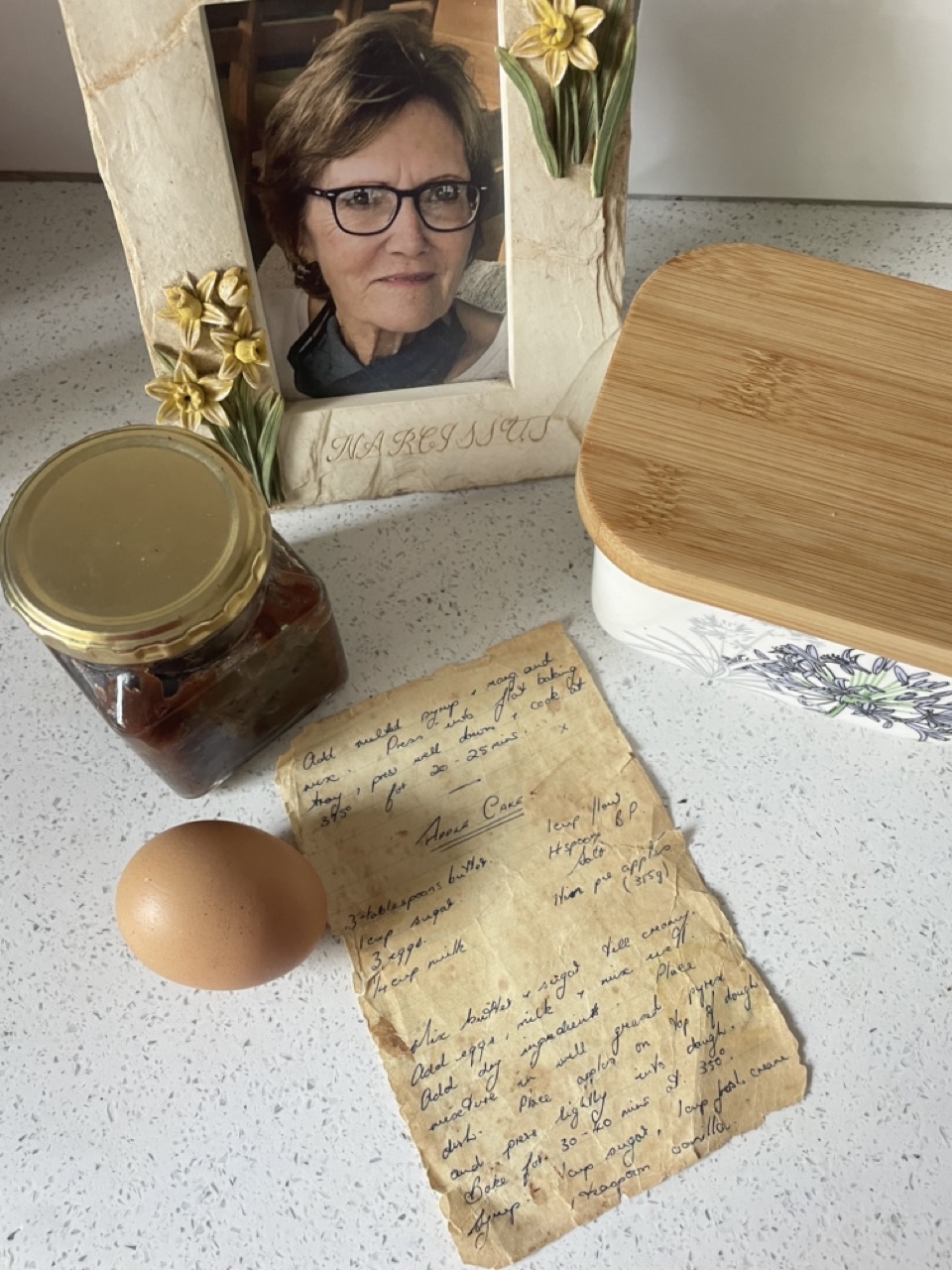
Some of my most treasured possessions from my late mother are not jewellery, photographs or family heirlooms. They are my mom’s old recipes.
A little stained. Slightly faded. Sometimes difficult to read. Often covered with splashes of gravy, cake batter or flour from decades ago.
When I open my mother’s old recipe collection, I am holding far more than a list of ingredients and cooking instructions. I am holding family history, precious memories and a small piece of the woman who helped shape my life.
In a world where almost any recipe can be found with a quick online search, people might wonder why I still reach for my mum’s handwritten recipes.
The answer is simple. They make me feel connected to her.
They remind me of family dinners, birthday celebrations, Sunday lunches and ordinary evenings that somehow became extraordinary simply because we were together.
Food has a remarkable ability to transport us through time. One familiar smell can bring back memories we haven’t thought about for years. A favourite recipe can make someone feel close, even when they are no longer sitting at the table beside us.
That is why I continue to use my mom’s old recipes and why I suspect I always will.
Every recipe in my mother’s collection has a story attached to it.
Some were passed down through generations. Others were exchanged with neighbours, friends and relatives. A few were clipped from magazines and newspapers many years ago.
When I make one of these recipes, I often find myself wondering about its beginnings and remembering the people and occasions connected to it.
I can picture my mother standing in the kitchen, stirring a pot on the stove. I remember helping her with the preparations and noticing her handwritten notes in the margins. Sometimes she adjusted ingredients. Sometimes she crossed things out entirely and started again.
Those little details tell a story that a list of ingredients could never capture on its own.
Recipe books often become family journals without anyone realising it. They record favourite meals, celebrations and the dishes that brought people together. They also reveal something about the person who cooked them: their habits, their preferences and the little shortcuts they discovered along the way.
For me, these recipes are a reminder that family history is not always found in official documents or carefully preserved photographs. Sometimes it is tucked inside an old cookbook.
There is something deeply comforting about familiar food. Many of us spend our lives searching for flavours that remind us of childhood.
Perhaps it is the roast potatoes that tasted better than any others, the soup that seemed to make everything feel better, the cake that appeared at every birthday or the biscuits that filled the biscuit tin during school holidays.
These foods become part of our memories in ways we may not fully appreciate at the time.
When I cook one of my mother’s recipes, the smells and flavours can take me straight back to those moments. Even the process of preparing a familiar dish can bring back a feeling of being at home.
It is a gentle reminder that some things remain with us, even as life changes around us.
We grow older. Families change. Children become adults and the people who once filled our kitchens are no longer always there.
Yet a familiar recipe can bring a little of that earlier world back into the present.
A typed recipe simply does not have quite the same emotional impact as seeing a loved one’s handwriting.
When I look at my mother’s handwritten notes, it feels as though she is speaking directly to me. Her little reminders make me smile because they are so familiar.
“Use the good vanilla.”
“Do not rush this step.”
“Best made the day before.”
“Cook for 5 mins longer.”
These small comments tell me so much about her. They remind me that recipes were never just about food. They were about experience, wisdom and sharing what worked with the people we love.
There is something particularly precious about handwriting because it is so personal. We recognise the familiar shapes of letters and the way someone wrote a word. We may even remember watching them write it.
A simple note in the margin can become one of the most treasured parts of a recipe.
It is a reminder that the person behind the handwriting was here, cooking, experimenting and sharing their knowledge long before we realised how much these ordinary moments would come to mean.
One thing I appreciate about many older recipes is their simplicity.
They often rely on familiar ingredients such as flour, butter, eggs, fresh fruit, vegetables, herbs and spices. They do not necessarily require complicated techniques or a long list of speciality products.
There is something reassuring about opening an old recipe book and finding a dish that can be made with ingredients already sitting in the kitchen cupboard.
Of course, not every older recipe is simple and some call for considerable time and effort. But many of the dishes passed down through families were developed around the ingredients people could obtain and the cooking methods they knew.
These recipes have a practical value as well as an emotional one. They remind us that good home cooking does not always have to be complicated.
And when a recipe has been made and enjoyed by generations of a family, there is often a good reason it has remained a favourite.
One of the things I appreciate most about family recipes is their ability to connect generations.
When I cook one of my mother’s recipes, I can share the story behind it with my children. They can learn where it came from, when their grandmother used to make it and why it became a family favourite.
One day, my grandchildren may enjoy hearing those same stories.
Questions such as these can open the door to wonderful conversations:
A simple apple pie or casserole can become a way of sharing family history without anyone having to sit down for a formal history lesson.
The stories emerge naturally while ingredients are being prepared and food is being shared.
That is one of the loveliest things about family traditions. They are often passed on through ordinary moments rather than deliberate attempts to preserve the past.
Food has always been about more than nutrition. Meals bring people together, and familiar dishes can create a powerful sense of belonging.
Whenever I prepare one of my mother’s recipes for a family gathering, there is often a moment when someone takes a bite and says, “This tastes exactly like your Mum’s.”
Those words mean more to me than any compliment about my cooking.
For a moment, we are all remembering her. We are sharing something that belongs to our family and recognising a familiar taste that connects us to the past.
It feels as though a small part of our family history is still being lived rather than simply remembered.
A recipe cannot bring someone back, and I would never pretend that it can. But it can give us a way to celebrate what that person brought into our lives and to share those memories with the people who matter to us.
Sometimes, that is more than enough.
Traditions do not always survive by themselves. Someone has to continue them.
It might be the Christmas pudding that appears every December, the birthday cake everyone expects or a favourite Sunday lunch that has been part of family life for as long as anyone can remember.
When we continue making these dishes, we give younger generations an opportunity to experience something that was meaningful to those who came before them.
The recipe may be exactly as it was originally written, or we may adapt it slightly to suit our own kitchens and tastes. Either way, the connection remains.
I think there is something beautiful about knowing that a dish prepared in one generation can still be enjoyed by another.
We may not always be able to preserve every family possession, photograph or keepsake. But a recipe can be written down, shared and made again.
In that way, the tradition can continue long after the original cook is gone.
Perhaps this is the biggest reason of all.
There are days when I miss my mother terribly. Life moves forward, but there are moments when I wish I could ask her a question, hear her advice or simply spend an afternoon chatting over a cup of tea.
Grief does not always arrive in the ways we expect. Sometimes it comes quietly, through a memory, a familiar smell or a moment when we instinctively wish we could share something with the person who is no longer here.
Cooking my mother’s recipes gives me a way to feel connected to her.
As I read her familiar handwriting, measure the ingredients and follow the steps she once followed, I find myself thinking about the woman behind those recipes.
I remember her laughter.
I remember her kindness.
I remember her cheekiness and her sense of humour.
I remember the countless meals she prepared for our family and the memories that grew around them.
These are not simply memories of food. They are memories of my mother as a person, with all the little things that made her so special to me.
I am still grieving for her, and I know that missing her is something I will carry with me. Cooking her recipes does not take that sadness away, but it gives me a comforting way to remember her and to feel close to her in the ordinary moments of life.
For me, the kitchen becomes a place of connection, not just with food but with memory, love and the life we shared.
If you have old family recipes tucked away in a cupboard or drawer, it is worth taking a little time to protect them.
You do not need to create an elaborate family archive. A few simple steps can help preserve both the recipes and the stories attached to them.
If you no longer have access to a relative who could explain a recipe, do not worry about documenting every detail perfectly. Preserve what you know and leave room for others to add their own memories.
Even a small collection of family recipes can become a treasured record of the people and traditions that shaped your life.
When people talk about legacy, they often think of property, investments or possessions. But some of the most meaningful things we leave behind are far simpler.
Recipes represent love, generosity and care. They remind us of the meals prepared for us, the people who welcomed us around their tables and the traditions that helped make a family feel like home.
Every time someone prepares a familiar family recipe, they have an opportunity to keep part of that person’s story alive.
Perhaps a child will one day make their grandmother’s favourite cake. Perhaps a grandchild will discover an old recipe card and wonder about the person who wrote it. Perhaps a familiar dish will become part of a new family tradition.
We cannot know exactly how these memories will be carried forward. But we can make it easier for the next generation to discover them.
That is a beautiful legacy to leave behind.
When I look through my mother’s recipes, I do not see only measurements and instructions.
I see family dinners, celebrations and conversations around the table. I remember comfort during difficult times and the happiness of being together.
Most of all, I remember my mother.
Her recipes are precious to me because they bring together so many parts of the life we shared. They remind me of her kindness, her humour and the love she gave to our family.
I know that no recipe can replace a person, and no meal can take away the ache of missing someone so special. But I am grateful to have these little pieces of her life to hold on to.
Long after a meal has been eaten, the memories remain.
And whenever I open one of my mom’s old recipes, I am reminded that love has a way of finding its place in the simplest things.
For me, these recipes will always be far more than food. They are a part of my mother, a part of my family and a part of the story I will continue to carry with me.
And that is why I will treasure them always.
Old family recipes are about so much more than preparing a meal. They hold memories of people we love, traditions we grew up with and little pieces of family history that might otherwise be forgotten.
If you have treasured recipes tucked away in an old cookbook or handwritten on faded recipe cards, you may be wondering how best to preserve them and pass them on. Here are a few thoughts on keeping these special memories alive for generations to come.
Old family recipes are special because they connect us to the people, places and experiences that have shaped our lives. A familiar dish can bring back memories of childhood, family gatherings and the loved ones who once prepared it. The handwritten notes and little adjustments often make these recipes even more meaningful.
Keep original recipe cards and cookbooks in a cool, dry place away from direct sunlight and moisture. Photograph or scan fragile pages to create digital copies and share copies with family members. Remember to preserve the handwriting and personal notes wherever possible, as these can be just as precious as the recipes themselves.
Our senses are closely connected to memory. Familiar smells, tastes and cooking routines can remind us of particular moments and the people we associate with them. Preparing a loved one’s favourite dish can be a comforting way to remember them and celebrate the role they played in our lives.
Share copies of your favourite recipes with children, grandchildren and other family members. Whenever possible, include the stories behind the dishes, who originally made them and the occasions when they were traditionally served. Cooking together is another lovely way to pass on both the recipe and the memories attached to it.
Keep them if they hold meaning for you, even if their origins are uncertain. You can ask relatives whether they recognise the handwriting or remember the dish. If the story remains a mystery, record whatever you do know and leave space for future family members to add their own discoveries.
Family recipes can be a meaningful way to remember someone who has passed away. Preparing their favourite dishes may bring back memories of shared meals, familiar conversations and happy times together. Although a recipe cannot replace the person we miss, it can offer a tangible connection to their life and the love they shared with us.
If you have old handwritten recipes tucked away in a drawer or an old cookbook, you might like to give them a special place of their own. A simple recipe box, a family recipe journal or protective sleeves for fragile cards can help keep these little pieces of family history safe for years to come.
I particularly like the idea of creating a family recipe collection that includes not only the ingredients but also the stories and memories behind each dish. Imagine a child or grandchild opening it one day and discovering the handwriting and favourite recipes of someone they love.
Here are a few things you might find useful:
🌿 A little note about my Amazon links
Some of the products I recommend on Rustic Daisy are linked to Amazon. These are affiliate links, which means that if you choose to purchase something through one of my links, I may receive a small commission at no additional cost to you. This helps support Rustic Daisy and allows me to continue creating useful content for you.
As an Amazon Associate I earn from qualifying purchases.
A quick note for my lovely South African readers 🇿🇦
Amazon links can be useful for readers who already shop through Amazon in their own country. Unfortunately, there isn’t currently a South African Amazon shopping site, so international shipping charges, import duties or other fees may apply when ordering from Amazon.
These additional costs can sometimes make an otherwise reasonably priced product considerably more expensive, so please check the final price, delivery costs and any additional charges before placing your order.
I’m working on finding local alternatives! 🌿
I’m always on the lookout for lovely, practical alternatives that are available right here in South Africa. When I find something suitable, I’ll gladly share it with you so that our local readers have options that are easier and more affordable to find.
I only recommend products that I genuinely believe are useful, relevant and worth considering. I’m not here to fill my pages with links simply for the sake of earning a commission.
Thank you for supporting Rustic Daisy, whether you’re reading from South Africa or somewhere else in the world. Every visit, share, click and purchase helps my little corner of the internet continue to grow. 🌼
South African readers: your local alternatives are coming! 🇿🇦🌿
Choose whatever suits your collection and budget. Even a simple notebook can become something precious when it holds recipes and memories from the people we love.
Some of the things we treasure most are not necessarily the things with the greatest monetary value. They are the belongings that hold our memories, remind us of the people we love and help us feel connected to the lives we have shared.
If this story about my mom’s old recipes has touched your heart, you might enjoy these other Rustic Daisy articles.
I hope these stories bring you a little comfort and remind you that the love we share with others often lives on in the simplest things.
Some memories are too precious to fade, and some loves stay with us forever. May we always find comfort in the little things that keep our loved ones close.
With love and a little daisy sunshine,