

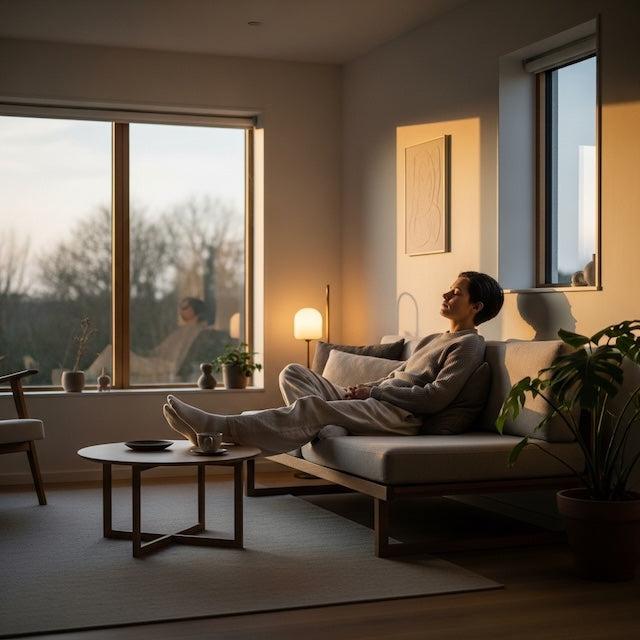
These real home transformation stories begin in homes that feel overwhelming. There is something deeply emotional about walking into a space that no longer feels peaceful or manageable.
Perhaps it is the piles of paperwork that seem to multiply overnight. Maybe it is cupboards crammed with things nobody uses anymore. Sometimes it is a garage filled with years of postponed decisions. Other times it is a family home that has quietly become too much to manage after children have grown up and moved away.
Many of us reach a point where our homes no longer support us. Instead they drain our energy, create stress and leave us feeling stuck.
I know this because I see it all the time. I have also witnessed something remarkable though. When people begin letting go of what no longer serves them and they create space for what truly matters, the transformation goes far beyond the physical home.
The stories I am sharing today are based on real situations I have encountered through home transitions, downsizing projects and helping families navigate major life changes. Names and identifying details have been changed to protect privacy, but the experiences are genuine.
These stories show that a peaceful home is not about perfection. It is about creating a space that allows you to breathe, think clearly and enjoy the life happening within its walls.
Most clutter does not arrive all at once. It accumulates slowly through busy seasons of life.
Children grow up and leave behind possessions. Parents pass away and their belongings need to be sorted. Hobbies change. Health challenges arise. Careers evolve. Life happens.
Before we realise it, we are surrounded by things that once had a purpose but no longer fit our current circumstances.
The emotional side of clutter is often overlooked. Many possessions represent memories, hopes, responsibilities and relationships. That is why decluttering is rarely about simply throwing things away. It is often about processing change.
When people understand this, they stop feeling guilty for finding the process difficult.
Margaret had lived in the same home for more than thirty years. After her husband passed away she found herself alone in a large family house filled with furniture, keepsakes and decades of memories.
When I first met her, she felt completely paralysed.
Every room seemed to contain something emotionally significant. Family photographs covered surfaces. Closets were packed with clothing. Drawers held old letters, cards and documents dating back years.
Margaret told me she knew she needed to downsize but could not imagine where to begin. We started with a simple approach.
Instead of looking at the entire house, we focused on one small area at a time. We sorted one drawer. Then one cupboard. Then one room. As the process unfolded, Margaret discovered something surprising. She did not need every object to preserve every memory.
She selected the pieces that truly represented important moments in her life. Family photographs were organised into albums. Special letters were stored safely. Meaningful keepsakes were kept. Many other items were donated to people who could use them.
Several weeks later, Margaret moved into a smaller home. What struck me most was not how much she had let go of. It was how peaceful she looked. The stress that had weighed on her for months had lifted.
Her new home felt lighter and easier to manage. More importantly, all the memories remained intact.
Many people assume keeping everything is the safest option when in reality, holding on to too much often creates hidden costs. There is the cost of storage. The cost of maintenance. The cost of cleaning. The cost of emotional energy.
Then there is the mental burden. Without realising it, every unfinished decision occupies space in our minds.
That stack of paperwork we keep meaning to sort. The spare room filled with boxes. The overflowing cupboards. These unfinished tasks quietly demand attention even when we are not actively thinking about them.
Reducing clutter often reduces stress because it removes countless small decisions waiting to be made.
James and Helen had recently retired. Their dream was to travel more and spend time with their grandchildren.
Unfortunately, their home was standing in the way.
Years of collecting furniture, decorative items, tools and hobby equipment had filled almost every available space. They spent entire weekends trying to stay on top of cleaning and organising. Instead of enjoying retirement, they felt trapped by their possessions.
We worked together to identify what genuinely added value to their lives.
Some items had practical uses. Others held deep sentimental significance. Many had simply remained because nobody had made a decision about them.
Gradually, rooms became more functional. Cupboards became easier to access. Storage areas became manageable and their spare room became available for visiting family.
Several months later, James told me something I will never forget.
He said, “I feel like we’ve got our lives back.”
That single sentence perfectly captured the impact of the transformation.
One of the biggest changes came from using simple storage solutions that made it easy to find what they needed without creating more clutter.
One of the biggest misconceptions about decluttering is that one thinks that everything must happen quickly. Many people delay starting because they feel overwhelmed by the size of the task.
What works far better is making steady progress.
Small victories matter because they prove change is possible and each completed area creates a sense of accomplishment that makes the next step easier.
Life transitions often leave behind more than emotional baggage. Sarah found herself managing an entire household after a difficult divorce.
The family home contained years of accumulated belongings. Every room felt like a reminder of a chapter she was trying to move beyond.
She wanted a fresh start but had no idea how to create one.
Together we focused on building a home that reflected her current life rather than her past. Items that no longer served a purpose were donated. Furniture was rearranged. Storage systems were simplified.
The physical changes were noticeable, but the emotional changes were even more significant. As her home became calmer, Sarah found herself feeling calmer too.
The environment around us has a powerful influence on how we feel. When our homes support our wellbeing, everyday life becomes easier.
Research continues to highlight the connection between our surroundings and our mental state.
Because clutter competes for our attention, visual chaos can increase feelings of stress and overwhelm. A well-organised environment does not solve every problem, but it can remove unnecessary pressure.
A peaceful home creates space for rest, creativity and meaningful relationships. It allows us to focus on the people and experiences that matter most rather than constantly managing possessions.
Whenever I talk about decluttering, someone inevitably says, “I don’t want an empty house.”
I understand completely.
A peaceful home does not need to look like a magazine photo shoot. It does not require bare surfaces or strict minimalism. Some people love books. Others enjoy collections. Many of us treasure family photographs and meaningful keepsakes.
The goal is not to remove personality. The goal is to remove excess.
Your home should reflect who you are while remaining functional and comfortable.
Although every home is different, successful transformations usually share several characteristics.
The homeowners stop aiming for perfection. They turn their focus on progress instead. They identify what matters most and they create systems that are realistic to maintain.
Most importantly, they recognise that their home exists to support their life rather than the other way around.
When priorities become clear, decisions become easier.
People often expect decluttering to create more physical space. What they do not always anticipate is the emotional freedom that follows.
Many describe feeling lighter and others say that they are sleeping better. Some discover renewed enthusiasm for hobbies, relationships and future plans.
A calmer home frequently creates room for new possibilities. The process is rarely just about possessions. It is about creating an environment that reflects the life you want to live moving forward.
Every one of these real home transformation stories reminds us that creating a peaceful home starts with one small decision at a time.
If your home currently feels overwhelming, you do not need a perfect plan.
You do not need to tackle every room this weekend.
You simply need to begin.
Choose one drawer, one shelf, one cupboard, or one small area that has been quietly asking for your attention. Every peaceful home starts with a single decision to move forward.
The transformation does not happen overnight, but it does happen.
I have seen people move from stress to calm, from frustration to relief and from feeling trapped by their belongings to feeling genuinely at home again.
And if they can do it, so can you.
I hope these real home transformation stories encourage you to take the first step towards creating a home that feels peaceful and welcoming.
These are products I genuinely believe can make the process of decluttering and organising a little easier. If you purchase through one of the links below, I may earn a small commission at no extra cost to you. Thank you for supporting The Rustic Daisy.
Protect important documents, passports, insurance papers and family records in one secure place.
Perfect for storing treasured photographs, handwritten letters and sentimental keepsakes without filling an entire cupboard.
Organise years of family memories while protecting photographs for future generations.
One of the simplest tools for creating organised cupboards, files and storage boxes.
Being able to see what’s inside makes it much easier to stay organised long after the decluttering is finished.
Ideal for kitchens, offices and bedroom drawers where clutter tends to accumulate.
A practical way to keep everyday items tidy while still creating a warm and welcoming home.
These shelves are perfect for any room in the house. They have a beautiful, rustic chic look about them.