

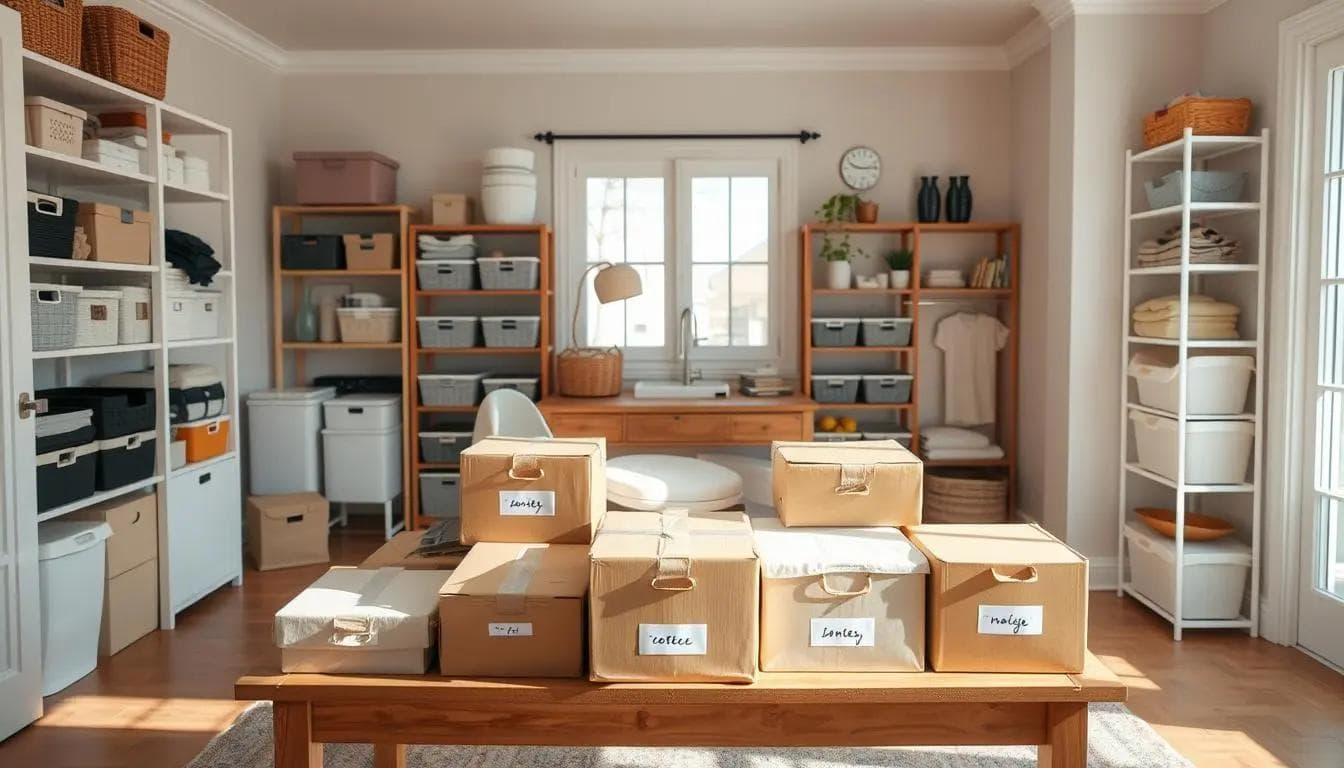
These downsizing tips can help make moving to a smaller home far less stressful. Downsizing does not have to feel like losing your past. With the right plan, it can become the beginning of a simpler, more peaceful future.
There are moments in life when a home that once felt just right suddenly becomes too much. Perhaps the children have grown up and moved away. Maybe retirement has arrived and maintaining a large property no longer makes sense. Sometimes life changes unexpectedly, or the loss of a loved one leaves one person facing a house full of memories.
I know what that feels like.
I have stood in rooms filled with decades of family history, wondering where to begin. I have seen the tears that appear when someone holds an old photograph or a favourite coffee mug that belonged to a husband who is no longer there. I have watched people become completely overwhelmed before they have packed a single box.
That is why I believe downsizing is never just about moving house. It is about navigating one of life’s biggest emotional transitions while trying to make practical decisions at the same time.
The good news is that it does not have to be chaotic. With a little planning and a gentle approach, you can make the process far less stressful and even discover a surprising sense of freedom along the way.
Most people imagine that downsizing simply means getting rid of things. The reality is very different.
Every cupboard contains memories, every drawer tells part of your family’s story and every decision can feel surprisingly final. When emotions are involved, even deciding what to do with an old saucepan can become exhausting.
That is why the secret is not to rush. Breaking the process into manageable steps gives you time to think clearly and make decisions you are comfortable with rather than simply getting rid of things because you feel overwhelmed.
So, with that in mind, here are some practical ways to make downsizing easier.
One of the biggest mistakes I see is leaving everything until the last few weeks before moving day. Panic leads to poor decisions, and when you are surrounded by years of belongings, making hundreds of rushed decisions can be exhausting.
Starting several months ahead gives you time to think clearly and make thoughtful choices rather than hurried ones. Even spending thirty minutes each day can make an enormous difference. You don’t have to empty the house in a weekend. A drawer today, a cupboard tomorrow and a room when you have the time can gradually add up to a surprisingly large amount of progress.
Don’t start with the family photo albums or the keepsake cupboard. That is a sure way to spend three hours looking through photographs and wondering where the afternoon went!
Instead, begin with areas that have very little emotional attachment, such as:
These areas usually involve more practical decisions and fewer emotional ones. Getting an easy win under your belt can give you the confidence to tackle the harder rooms later.
Before deciding what to keep, it helps to know exactly how much space you’ll have. A simple tape measure or laser measuring tool can save hours of frustration and prevent you from moving furniture that won’t fit.
Measure:
If your new dining room only fits a six-seater table, there is little point moving an eight-seater and then discovering that you can no longer open the kitchen door.
Knowing your available space removes much of the guesswork and makes it much easier to decide what deserves to make the move with you.
Trying to decide whether every single item stays or goes quickly becomes exhausting.
Instead label boxes or areas as:
Trying to decide whether every single item stays or goes can quickly become exhausting. Instead, create four simple categories:
You will need boxes, colour-coded labels or permanent markers, packing tape and somewhere to put each category as you work. The important thing is to keep the system simple. Every item only needs one decision.
Once you have decided which category something belongs in, move on rather than repeatedly reconsidering the same item. That simple system keeps the process moving.
One question has helped me countless times.
Will this item improve my life in my next home?
Will it genuinely serve the life you are creating now?
That single question makes difficult decisions surprisingly clear.
Some possessions deserve more time and consideration than others. Family photographs, wedding dresses, children’s artwork and handwritten letters can carry an enormous amount of emotional meaning, so these are not things to rush through after a long day of packing.
Choose a quiet afternoon when you have the time and emotional energy to look through them properly. You may decide to keep some things, pass others on to family members or let a few go. There is no right or wrong answer.
Sometimes taking photographs of larger sentimental items allows you to preserve the memory without keeping the object itself. You might not need the old dresser, for example, but having a photograph of it in the home where your children grew up can still bring those memories back.
Many disagreements happen simply because nobody asked.
Before donating or selling things that have been in the family for years, invite your children or grandchildren to look through them and choose anything that has particular meaning to them. You may be surprised by what they want.
Sometimes an old recipe book, a piece of crockery or a box of childhood drawings means far more to someone than an expensive piece of furniture. What looks ordinary to you may be something they have quietly associated with home for years.
If you plan to sell furniture, antiques, tools or collectibles, don’t wait until moving week. Selling takes time, particularly if you want to get a reasonable price rather than simply finding someone willing to take the item off your hands.
Advertise quality items while you are still living comfortably in your home. This gives you time to photograph them properly, answer questions from potential buyers and arrange collection without the pressure of moving day looming over you.
You are also more likely to get a better price and avoid the last-minute stress of trying to sell half the house in a hurry.
This can be one of the hardest lessons to accept. We often attach emotional value to possessions that buyers simply do not share.
Something that cost thousands twenty years ago may be worth very little today. That doesn’t mean it wasn’t worth buying or that the memories attached to it don’t matter. It simply means that second-hand value and sentimental value are two very different things.
Try not to take low offers personally. If nobody wants to pay what you believe something is worth, you may need to decide whether selling it is more important than simply letting it go.
The goal is to create space, not to recover every rand you ever spent.
Future you will be incredibly grateful that you did this.
Label each box with:
Instead of simply writing “Kitchen”, write something like “Kitchen – mugs, plates, kettle, coffee”. You will thank yourself when you are standing in your new kitchen on the first morning trying to find the coffee!
A little extra detail when packing can save a surprising amount of frustration when unpacking.
Your first night should not involve opening twenty boxes looking for toothpaste. Pack one clearly labelled essentials box containing the things you are most likely to need straight away:
Keep this box with you rather than placing it on the moving truck if possible. You will be very glad to have your essentials close at hand when you arrive, particularly if the move has taken longer than expected.
Keep important documents with you rather than packing them into the moving truck. Passports, wills, property documents and other essential paperwork are not things you want disappearing into a sea of boxes.
Many people feel they should manage everything alone.
You do not have to.
Friends, family, neighbours or professional organisers can reduce both the physical workload and the emotional burden. Sometimes another person doesn’t even need to do the sorting for you. Having someone beside you can simply make it easier to stay focused when the whole house feels overwhelming.
And if you reach a point where you genuinely don’t know where to start, asking for professional help is not a failure. Sometimes it is simply the most sensible way forward.
Decision fatigue is real. After making hundreds of choices, your brain simply gets tired. When that happens, step away for a while. Go outside, make yourself a cup of tea, stretch your legs or sit somewhere quiet for twenty minutes. You may find that a short break gives you a fresh perspective and makes the next decision much easier. There is no prize for exhausting yourself during a move.
Perhaps this is the most valuable advice I can offer: stop keeping things simply because you feel guilty about letting them go. Your children may not want every heirloom and your grandchildren may not treasure every collection. That is perfectly alright. It does not mean they don’t love you or value your family history. It simply means that they are creating lives of their own.
You are allowed to keep the things that have genuine meaning for you and let go of the things that have become a burden. Your home should support the life you are living now, not weigh you down with obligations from the past.
Downsizing is often described as giving things up, but I think we sometimes forget to look at what we gain.
You may gain:
And perhaps the biggest gain of all is having more time and energy for the things that actually matter to you.
Imagine spending Saturday morning enjoying a cup of coffee instead of cleaning rooms you hardly use. Imagine being able to lock the door and leave for a weekend without worrying about everything that needs to be done while you are away.
Those are valuable gifts too.
Downsizing sounds simple enough until you are standing in the middle of a house surrounded by decades of belongings. It is surprisingly easy to make the process harder than it needs to be, particularly when you are tired, emotional or working against a deadline.
Here are some of the most common mistakes to avoid:
Every home tells a story. Some are filled with celebrations, laughter and family memories. Others carry grief, difficult seasons and chapters that people would rather leave behind. Many homes contain a little of both.
One thing I have noticed time and again is that people often worry far more about letting go than they do once the process is finished. After settling into their new home, they rarely talk about the things they gave away or the cupboards they cleared. What they remember is how much lighter they feel.
They enjoy spending less time cleaning and maintaining rooms they hardly used. They rediscover favourite belongings because those things are no longer hidden beneath years of accumulated possessions. They have more space to sit, breathe and actually enjoy their home.
Most of all, they realise that home has never really been about the size of the house.
Home is where you feel safe. Home is where you can make a cup of tea and sit quietly at the end of a long day. Home is where the people you love know they are welcome.
Those things move with you.
Life changes. Families change. Our homes change too. A house that was perfect when the children were small may feel very different once they have left home. A home that once felt spacious can eventually become expensive, difficult to maintain or simply more than you need.
There is no shame in choosing a home that better suits your current season of life. In fact, it can be one of the wisest financial and emotional decisions you make.
You don’t have to tackle everything at once. Start with one cupboard, one drawer or one room. Make one decision at a time. Before long, you will begin to see something changing. It won’t just be fewer possessions. It will be more space for the life you actually want to live.
Sometimes letting go of the excess gives us more room to hold onto what truly matters.
If you are feeling overwhelmed, don’t try to remember everything at once. Save or print this simple checklist and work through it one step at a time.
Downsizing tips checklist
There is no perfect age to downsize. Some people choose to move after retirement while others downsize after their children leave home, following a divorce or after the loss a spouse. The best time is when your current home no longer suits your lifestyle, budget or physical needs.
There is no set timeframe because it depends on the size of your home, how many possessions you have and how much time you can dedicate to the process. For some people it may take several weeks, while others need several months. Starting early allows you to make thoughtful decisions rather than rushing.
Start with rooms that have the least emotional attachment, such as the bathroom, laundry, linen cupboard or garage. These areas usually contain practical items that are easier to sort, helping you build momentum before tackling sentimental belongings.
Ask yourself whether an item fits your future lifestyle rather than your past. If you have not used it in years and it will not have a place in your new home, it may be time to let it go. Keep the things that are useful, meaningful or genuinely bring you joy.
Take your time with sentimental belongings. Set aside a quiet afternoon to go through family photographs, heirlooms and keepsakes without feeling rushed. You do not have to keep everything. Sometimes taking photographs of larger items preserves the memory while reducing clutter.
It depends on the item. Valuable furniture, antiques and collectibles may be worth selling, while everyday household goods are often better donated to local charities. Family members may also appreciate receiving meaningful keepsakes before you donate them.
Set aside important legal and financial documents such as passports, birth certificates, marriage certificates, wills, insurance policies, property documents and relevant financial records. Keep important medical records where appropriate and don’t throw away paperwork simply because you aren’t sure whether you still need it. If you’re uncertain about a particular document, check before disposing of it.
Break the process into small tasks and focus on one room or one cupboard at a time. Create separate piles for items to keep, donate, sell and recycle. Ask friends or family for help when you need it and remember to take regular breaks to avoid decision fatigue.
Yes. Downsizing often marks the end of one chapter and the beginning of another. Feeling sad, nostalgic, anxious and excited all at the same time is completely normal. Allow yourself space to acknowledge those emotions while remembering that your memories are not contained within your possessions.
Approach the process with patience and compassion. Listen to their concerns, avoid pressuring them into quick decisions and involve them in every choice. Downsizing should never feel like something that is happening to them but rather something they are part of.
For many families, yes. A professional organiser can help create a clear plan, keep the process moving and provide emotional support when difficult decisions arise. They can also save time and reduce stress, particularly if you have a large home or a tight moving deadline.
The most common mistakes include leaving everything until the last minute, keeping too many duplicate items, failing to measure furniture for the new home, buying storage containers before decluttering and trying to complete the entire process in one exhausting weekend.
Most people find that once they settle into their new home they enjoy having less to clean, maintain and organise. While letting go of possessions can be emotional, many people discover that a simpler home gives them greater freedom and peace of mind.
Create a moving timeline, label every box clearly, pack an essentials box for your first night and keep important documents with you rather than on the moving truck. A detailed checklist can make the entire moving process feel much more manageable.
What to Keep When You Can’t Keep Everything
Things Elderly Parents Need That Money Can’t Buy
The Best Way to Organise Important Family Documents
What Happens to a House Full of Belongings After Someone Dies?
Downsizing doesn’t require a house full of new gadgets. In fact, buying too much before you declutter can simply create another pile of things to deal with!
There are, HOWEVER, a few practical items that can genuinely make the process easier, particularly when you are sorting photographs, packing boxes and trying to keep everything organised.
These are some of the things I would consider useful:
Some of the products I recommend on Rustic Daisy are linked to Amazon. These are affiliate links, which means that if you choose to purchase something through one of my links, I may receive a small commission at no additional cost to you. This helps support Rustic Daisy and allows me to continue creating useful content for you.
Amazon links can be useful for readers who already shop through Amazon in their own country. Unfortunately, there isn’t currently a South African Amazon shopping site, so international shipping charges, import duties or other fees may apply when ordering from Amazon.
These additional costs can sometimes make an otherwise reasonably priced product considerably more expensive, so please check the final price, delivery costs and any additional charges before placing an order.
I’m working on finding local alternatives! 🌿
I’m making a real effort to find similar products that are available right here in South Africa. Wherever I can find a good local alternative, I’ll share it with you so that South African readers have more affordable and practical options.
I only recommend products that I genuinely believe are useful, relevant and worth considering. I’m not here to fill my pages with links simply for the sake of earning a commission.
Thank you for supporting Rustic Daisy, whether you’re reading from South Africa or somewhere else in the world. Every visit, share, click and purchase helps my little corner of the internet continue to grow. 🌼
South African readers: your local alternatives are coming! 🇿🇦🌿
Photo scanner – To preserve old photographs before they fade.
Digital photo frame – This brings favourite memories into daily life instead of leaving them hidden away in a cupboard.
Brother P-Touch Label Maker – One of the simplest tools for creating organised cupboards, files and storage boxes.
Fireproof document bag – To preserve important papers.
Clear Storage Bins – Being able to see what is inside your storage bins makes life so much easier.
Archive Storage Boxes – These boxes are perfect for all your storage needs. Great for organizing.
Heavy-duty Moving Boxes – These storage boxes are great for any moving or packing needs. Super easy to assemble and store.
Bubble wrap – To keep all your precious breakables safe.
Packing tape with dispenser – This tape dispenser saves so much time when sealing boxes.
Keepsake memory box – This beautiful box is stunning for treasured family mementos.
These are the sorts of practical items that can make a busy move a little easier.