

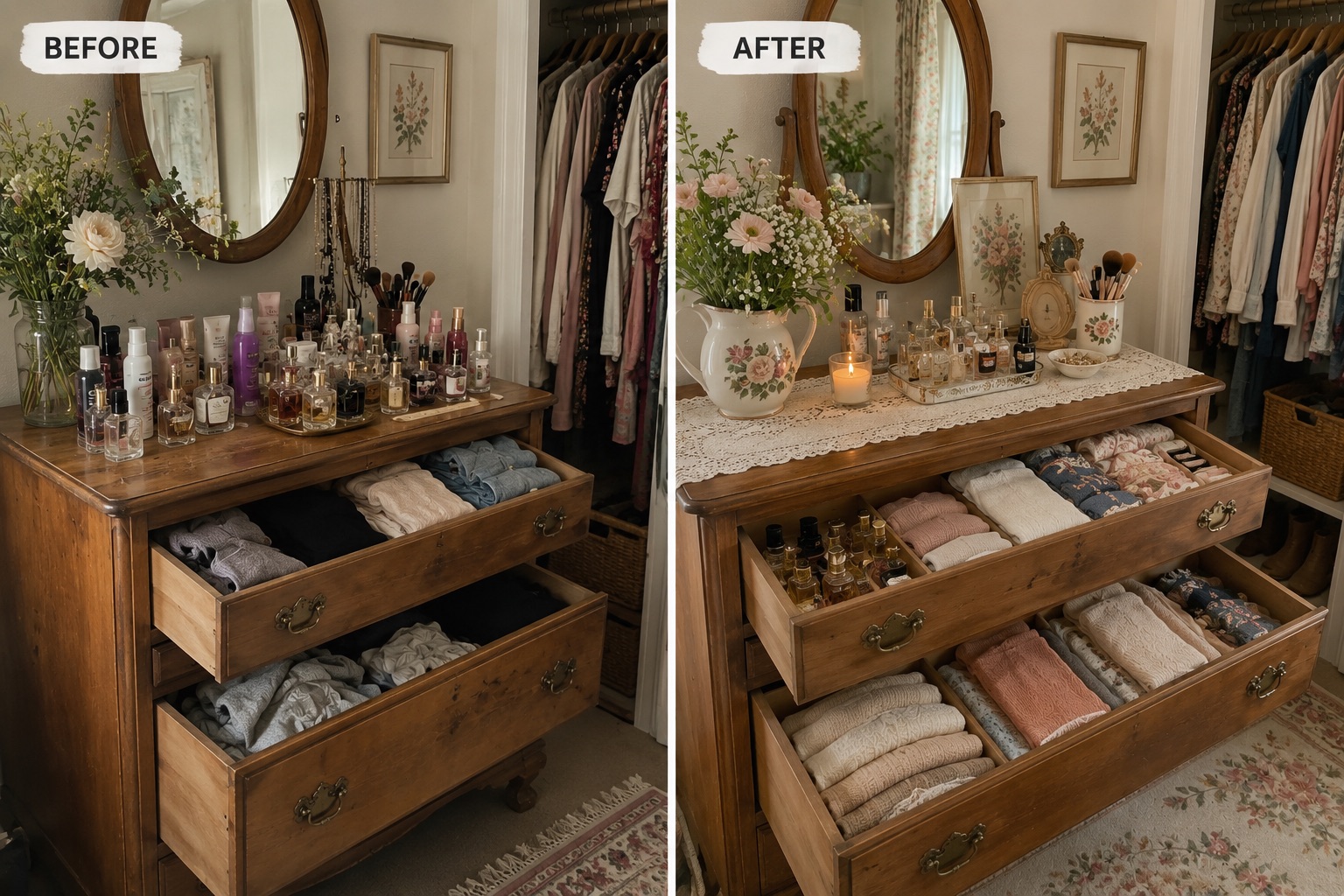
The first things I stopped buying weren’t particularly dramatic. They were the ordinary household purchases that seemed completely reasonable at the time and therefore escaped much scrutiny. These are often the hardest expenses to notice because they don’t feel wasteful. They are inexpensive, familiar and usually marketed as things that will make our lives easier. The problem is that when you have dozens of these little conveniences making their way into your home, they begin taking up more than just money. They take up space, attention and sometimes quite a surprising amount of time.
There was a stage when I seemed to have a cleaning product for practically every surface in my house. There was something for the bathroom, something for the kitchen, something for glass, something for stainless steel, something for floors, something for furniture and probably several others that had been purchased with great enthusiasm and then forgotten at the back of the cupboard.
Every bottle seemed to promise that this particular formula was going to solve a problem I hadn’t previously realised I had. At some point I had to wonder whether my house had developed twelve different kinds of dirt simply to justify my collection of cleaning products.
I gradually simplified what I used and became much more selective about buying products that promised a specialised solution to an ordinary household job. There are certainly times when a particular cleaner is useful, and I am not suggesting that every cleaning product is unnecessary. What I discovered was that I didn’t need an entire cupboard full of brightly coloured bottles to keep my home clean.
Having fewer products also makes cleaning feel considerably less complicated because I can open the cupboard, see what I have and get on with the job instead of standing there trying to remember which bottle was meant for which surface.
Paper towels are wonderfully convenient, which is probably why they disappear so quickly. Something spills on the kitchen counter and you can simply grab a sheet, wipe it up and throw it away. There is no washing, drying or putting anything back where it belongs. I completely understand the appeal, particularly when you are dealing with a particularly unpleasant mess and don’t want to contemplate the future of the cloth you have just used.
For ordinary everyday cleaning, however, I eventually realised how often I was paying for something that was used for a few seconds before being thrown into the bin. I started using washable cloths for most kitchen spills and cleaning jobs and found that they worked perfectly well. I still keep paper towels for those occasions when they genuinely make life easier, but they are no longer my automatic response to every little mess.
A washable cloth can wipe up the same spilled cup of tea today, go through the washing machine and be ready to deal with tomorrow’s cup of tea as well. Considering how many cups of tea take place in my household, that is quite a useful little arrangement.
I have bought some rather questionable kitchen gadgets in my time. There have been things designed to chop one particular vegetable, gadgets that promised to make a very specific shape of food and contraptions that looked absolutely brilliant in the shop but became considerably less impressive once I discovered that they needed to be washed afterwards.
That last part is rarely emphasised on the packaging. Somehow the gadget is always going to make life easier, but nobody mentions that I will then be standing at the sink with seven tiny pieces wondering whether I have accidentally purchased a new hobby.
Eventually I started asking myself whether a gadget genuinely solved a problem or whether it simply performed a task that I could already do with a knife, spoon or ordinary kitchen utensil. If I use something regularly and it genuinely makes my life easier, I am happy to keep it. What I have stopped doing is buying gadgets for jobs I might possibly perform once every six months. My kitchen cupboards are considerably happier for it, and so am I.
This one was harder because I genuinely love mugs. There is something particularly appealing about finding a beautiful mug with a lovely floral design, an amusing saying or a shape that feels perfect in your hands. I can walk past a shelf of mugs and immediately begin imagining the peaceful morning I will have while drinking tea from the new one. The difficulty is that my existing mugs are perfectly capable of holding tea, which is the primary qualification required of a mug.
Eventually I had to accept that my cupboard had reached what I would describe as a small ceramic population crisis. I stopped buying mugs simply because I liked them and started buying them only when I genuinely loved one and knew I would use it. Oddly enough, this has made me enjoy my mugs more rather than less.
When everything isn’t constantly being added to, the things you choose to keep become more noticeable. I also discovered that there is a certain pleasure in opening the cupboard without having three mugs fall out and attempt to injure you before breakfast.
This was one of the biggest changes for me because I used to believe that inexpensive decorative items couldn’t really be a problem. If something only cost a small amount, surely it wasn’t worth worrying about. The difficulty is that cheap things become expensive when you buy enough of them, and decorative objects have a particularly sneaky way of multiplying because each individual purchase feels insignificant.
A little ornament here, a decorative bowl there, a sign for the kitchen and perhaps a small wooden object with a cheerful saying on it can all seem perfectly harmless. Eventually, though, the shelves become crowded and every new object needs somewhere to live. It also means there is more to dust, move, clean and eventually decide whether you still like.
I started asking myself whether I genuinely wanted the object or whether I simply liked the feeling I imagined it would give my home. That question has saved me from quite a few purchases, and it has also helped me create a home that feels more like mine rather than a collection of things I happened to bring home from shops.
Then there are the clothes we buy for imaginary circumstances. The dress that is slightly too tight but might fit one day, the jeans that were comfortable five years ago, the jacket that hasn’t been worn for ages but might suddenly be needed and the blouse that was heavily reduced despite the fact that we weren’t particularly fond of it in the first place.
I have accumulated my fair share of these hopeful purchases over the years, usually with some very convincing explanation about why I was being sensible.I eventually stopped buying clothes for an imaginary version of myself. If I genuinely need something for a particular occasion, I can buy it when that occasion actually exists. I don’t need to spend money preparing for every possible event that might happen somewhere in the future.
More importantly, I don’t need to keep buying clothes in anticipation of becoming a different size, a different shape or a different version of myself. There is something wonderfully freeing about dressing the person you are today rather than constantly preparing a wardrobe for the person you think you ought to become.
This has probably been one of the most useful lessons for me. A bargain is only a bargain if you actually need the thing you are buying. Otherwise, it is simply something you purchased at a reduced price, which sounds considerably less impressive when you put it that way.
I have bought plenty of things because they were “too good to leave behind”. The price seemed so reasonable that not buying them almost felt foolish. Eventually I realised that if I didn’t need something when it was full price, I probably didn’t suddenly need it because the shop had reduced it by thirty per cent. I started becoming much more comfortable walking away from sales, particularly when I couldn’t immediately explain where I would use the item or why I wanted it.
There is a strange little satisfaction in leaving a bargain behind when you know you don’t need it. You haven’t missed out on something. You have simply kept your money, your cupboard space and your future self from having to deal with another unnecessary purchase. These days, I would much rather spend money on something I genuinely need or love than collect a house full of things that were cheap enough to buy but never quite valuable enough to matter.
There is nothing wrong with enjoying a little self-care or buying something that makes you feel good. I still do both. What changed was my relationship with products that promised to turn me into somebody else. I became much more interested in buying things because I genuinely enjoyed them rather than because I felt I ought to become the sort of person who used them.
I have been persuaded by some very convincing beauty advertising over the years. Apparently, there was always a new cream that was going to make my skin look younger, smoother, brighter or generally more enthusiastic about life. There were serums, lotions, masks, scrubs and mysterious little bottles containing things I couldn’t pronounce but which sounded as though they had been discovered somewhere in a very expensive laboratory.
Eventually I started looking at what I actually used rather than what I thought I should be using. I discovered that I had a handful of products I genuinely liked and regularly reached for, while many of the others spent months sitting in a cupboard waiting for the glamorous woman in the advertisement to come and collect them. I stopped buying products simply because they promised miraculous results and became much more selective about what earned a place in my bathroom.
Perfume is personal, and I still believe there is something wonderful about finding a fragrance that feels like you. What I stopped doing was buying perfume simply because I liked it in the shop or because someone told me it was popular.
A fragrance can smell beautiful on one person and completely different on another. I have learned to be patient and actually live with a scent before deciding whether I want to buy it. If I love it after several hours, there is a good chance I will enjoy wearing it. If I forget about it entirely, it probably wasn’t meant to come home with me.
That small change has saved me from accumulating half-used bottles that seemed wonderful for the first ten minutes and rather less wonderful after that.
My hair has never needed quite as many products as the beauty industry would have me believe.
There was a time when I could have had a small shelf dedicated entirely to making my hair do things it clearly had no intention of doing. There were products for volume, shine, smoothness, texture, protection and whatever other problem the advertising department had decided my hair needed to have that week.
Eventually I simplified things. I found what worked reasonably well for my hair and stopped buying every new product that promised to transform it. My bathroom became less crowded and getting ready became considerably easier.
There is also something rather liberating about accepting that sometimes your hair is simply going to do what it wants.
Food was another area where I began noticing how easy it was to spend money without really thinking about it. I don’t mean the occasional treat or something delicious that I deliberately choose to buy. Those things can be part of the pleasure of life.
I am talking about the food that came home because it sounded useful, looked convenient or was on special, only to sit in the cupboard until I eventually wondered whether it had expired.
I have bought unusual ingredients because a recipe looked fantastic, only to discover that the recipe required six other ingredients, two different cooking techniques and considerably more enthusiasm than I possessed on a Tuesday evening. The exotic ingredient would then sit in my cupboard looking increasingly accusatory.
These days, I am much more realistic about what I actually cook. If a recipe requires an ingredient I will use once and never touch again, I think carefully before buying it. Sometimes the recipe is still worth making, but often there is a simpler version that uses ingredients I already have.
Buying fresh food in large quantities can feel like being organised.
There is something satisfying about bringing home a beautiful collection of vegetables and imagining all the wonderful healthy meals that are going to happen during the week. Unfortunately, vegetables have no respect for good intentions.
I have learned that buying what I will realistically eat is much better than buying what I wish I would eat. A slightly smaller shop means less food going soft in the fridge and less money being thrown away. It also means I am more likely to use what I have rather than opening the fridge several days later to discover that the lettuce has entered a completely different stage of existence.
Special offers can be particularly persuasive in the food aisle because there is always a convincing argument for buying more. If something is buy-one-get-one-free, surely not taking the second one would be irresponsible.
Except, of course, when I didn’t actually need either of them.
I have become much more selective about buying snacks simply because they are discounted. If something is a favourite and I know it will be eaten, that’s different. But buying extra food because the price is attractive isn’t really saving money if it ends up being forgotten at the back of the cupboard.
Some of the things I stopped buying were items I had assumed every home simply needed. They were part of the background of shopping, the things you put in your trolley without really asking whether they were still necessary.
There is something lovely about fresh towels. A thick, fluffy new towel can make an ordinary Tuesday morning feel slightly more luxurious, but towels don’t need to be replaced simply because a shop has a beautiful new range.
I started keeping towels until they were genuinely worn out rather than replacing them because I fancied a different colour. This has been particularly useful because towels are one of those household items that seem to multiply when you aren’t looking. There is only so much linen cupboard space available before opening the door becomes a dangerous activity.
I used to think changing bedding was an easy way to refresh a bedroom, and it certainly can be. The temptation is to keep buying new duvet covers, pillowcases and throws because creating a new look is so much cheaper than redecorating the entire room.
There is nothing wrong with doing that occasionally, but I realised I had enough bedding to furnish a small hotel.
Now I am much more likely to use what I already have and change the feel of the room with smaller adjustments. Sometimes simply washing everything, making the bed beautifully and opening the curtains in the morning is enough to make the room feel completely different.
The interesting thing about stopping these purchases is that I didn’t feel deprived. I expected that I might miss some of them, particularly the pretty things and little treats, but mostly I discovered that I simply stopped thinking about them.
We often imagine that having less means giving something up. Sometimes it does. But sometimes it simply means making enough room to notice what you already have.
Once I started noticing that, I became curious about what else I could happily stop buying.
Once I had started questioning the little purchases that seemed harmless, I found myself noticing them everywhere. They were in the bathroom cabinet, the kitchen cupboards, the wardrobe and even the little spaces around the house where things somehow ended up waiting for a purpose. What surprised me most was how often I had been buying replacements for things I already owned simply because I had forgotten what I had.
There is something quite revealing about discovering three unopened bottles of something at the back of a cupboard. It makes you wonder whether you were preparing for a very specific emergency or simply shopping without looking first.
I used to buy a new bottle of shampoo or body wash while there was still another one sitting at home. The reasoning seemed perfectly sensible at the time. I was already in the shop, I liked the product and it was convenient to have another one waiting.
The trouble was that “waiting” eventually turned into several bottles waiting. Before long, I had products tucked into cupboards, drawers and corners of the bathroom that I had completely forgotten about. I stopped buying replacements until I had actually used what I already had, and this small change made a surprisingly big difference.
This is another one that seems obvious now but wasn’t always obvious to me. If I was running low on something, I would automatically put it on the shopping list. Then I would discover that I had bought exactly the same thing two weeks earlier and had simply forgotten where I put it.
I now check before I buy. It takes a few seconds and has saved me from bringing home duplicate bottles and packets. It has also made me much more aware of what I actually use, which means I am less likely to be persuaded by a new product simply because the packaging looks appealing.
Apparently, my cupboards were not an accurate representation of what I owned. They were more like a treasure hunt.
I love books and I will probably always love books. There is something comforting about having them around, and some books become part of our lives in ways that make them difficult to let go of.
But I eventually realised that I was buying books faster than I was reading them. A new book would arrive, I would put it somewhere safe and then another one would catch my attention before I had finished the first.
I still buy books, but I am much more selective. If I know I am likely to read it, love it or return to it, I am happy to buy it. If it is something I am only mildly curious about, I look for other ways to read it first. This has made buying a book feel like a choice again rather than simply something that happens whenever I walk past a bookshop.
Convenience is one of the easiest ways to spend money because it rarely feels extravagant. We are tired, busy or simply not in the mood to make something ourselves, so paying a little extra seems completely reasonable.
Sometimes it is reasonable. There are days when convenience is worth every cent. I simply became more selective about which conveniences genuinely improved my life and which ones had quietly become habits.
I understand why people buy pre-cut produce. It saves time, it is convenient and everything is ready to use but when I looked at the difference between buying whole fruit and vegetables and buying them already prepared, I realised I was paying quite a premium for someone else to do a job that usually took me only a few minutes.
I still buy prepared food when there is a genuine reason for doing so, but I no longer automatically choose the most convenient option. Sometimes chopping a few vegetables while dinner is cooking is perfectly manageable, and I would rather keep the extra money for something I genuinely value.
There always seems to be another kitchen product designed to make one small task easier. Special liners, special sheets, special covers and little disposable accessories can all seem wonderfully convenient, but convenience has a way of becoming clutter when there are too many things involved.
I have become much more comfortable using ordinary kitchen equipment for ordinary jobs. It may not look quite as clever, but it works and when I don’t have to remember which special item goes with which special gadget, my kitchen feels much simpler.
Bottled water is useful when travelling or when clean drinking water isn’t readily available. At home, however, buying bottle after bottle started to seem unnecessary.
I now have a reusable 25 litre container on the counter that I refill when necessary. It is one of those changes that seems almost too small to matter, but once you stop buying something repeatedly, you begin noticing just how often you were buying it.
It is also rather satisfying to reach into the cupboard and realise there isn’t a collection of empty plastic bottles waiting to be dealt with.
I adore beautiful stationery. Give me a lovely notebook and a pen that writes beautifully and I can become convinced that my entire life is about to become organised. The trouble is that organisation does not actually arrive with the notebook.
I have bought beautiful planners with elaborate sections for goals, schedules, habits and aspirations, only to discover that I eventually use about three pages. These days, I am perfectly happy with a simple notebook when that is what I need.
It turns out that the secret to remembering something is actually writing it down rather than owning an expensive book specifically designed for writing things down.
This is related to the planner problem but deserves its own confession. I used to collect notebooks because there is something irresistible about a fresh, untouched page.
I would tell myself that this particular notebook was going to be different. This one would be used for recipes. This one would be for ideas. This one would become my brilliant organisational system. Meanwhile, several perfectly good notebooks were sitting in a drawer with twenty pages used.
I now try to finish what I have before buying another one. It has been surprisingly satisfying to actually reach the end of a notebook. Apparently, completion is rather underrated.
Perhaps the biggest shift wasn’t about saving money at all. It was about becoming more honest with myself.
There are so many things we are told we should own, use, wear, eat or have in our homes. A good woman should have an organised pantry. A stylish woman should have certain clothes. A healthy woman should own certain kitchen equipment. A successful woman should have a perfectly organised planner.
At some point I became tired of buying things to prove that I was the sort of person who had her life together.
There is a strange pressure to buy ourselves little things simply because we deserve a treat. I agree that we deserve treats. I just don’t believe every treat has to be something we purchase.
Sometimes the treat is an afternoon with a book, a cup of tea in the garden, a favourite meal, a walk, a phone call with someone I love or an evening without feeling that I have to accomplish anything.
I have stopped confusing spending money with taking care of myself.
Shopping can be entertainment. There is nothing particularly complicated about it. You have some free time, you browse around a shop or scroll through an online store and suddenly you find yourself adding things to a basket. Sometimes I don’t actually want anything. I am simply bored.
Once I recognised that, I started finding other ways to occupy those moments. A cup of tea, a walk around the garden, reading something interesting or even tackling a small cupboard can be surprisingly satisfying when compared with buying something I didn’t need.
This one is slightly different from boredom. Sometimes a difficult day makes us want comfort and buying something can provide a brief little lift.
I don’t think there is anything terrible about buying yourself a treat after a hard day. We all deserve small pleasures. I simply try not to make shopping my automatic form of comfort.
Some things can’t be fixed by putting something in a shopping basket. A difficult conversation remains difficult, an exhausting week remains exhausting and a sad day doesn’t become less sad because a parcel is arriving tomorrow.
Sometimes what I actually need is rest rather than retail therapy.
By the time I reached this point, I realised that stopping unnecessary purchases wasn’t really about becoming frugal for the sake of being frugal. It was about becoming more deliberate about what I wanted my money, my home and my attention to do.
That led me to the final five things I stopped buying.
This sounds obvious but it has taken me years to understand it properly.
I don’t need twelve of something simply because it is cheaper to buy twelve. I don’t need a large packet if I know I will use only half. I don’t need enough supplies to prepare for an imaginary apocalypse unless there is a very good reason for having them.
Buying more can feel like being sensible, but only when the extra actually gets used.
Before buying something, I sometimes imagine myself six months from now. Will I still be using this? Will I still love it? Will I still know why I bought it?
If the answer is probably not, I am much more likely to leave it behind.
The funny thing is that I thought I would miss some of these things. I thought perhaps I would feel deprived or that my home would become boring. I imagined I might regret walking away from bargains or that I would eventually decide I needed all those little conveniences again.
Instead, I started noticing what I already had.
The mug I really love became my favourite mug rather than one of twenty. The clothes I actually enjoy wearing became easier to find. My cupboards became less crowded. My bathroom became easier to clean. I wasted less food. I spent less money on things that disappeared almost as soon as I bought them.
Most importantly, shopping stopped being something I did automatically. I could walk into a shop, admire something beautiful and leave it there. That doesn’t mean I never buy anything unnecessary. Of course I do. I am still me, after all. There will always be something lovely that catches my eye, and occasionally I will decide that I absolutely cannot live without it.
The difference is that now I am more likely to ask myself whether I really want it before handing over my money.
Sometimes I buy it. Sometimes I don’t. More and more I am discovering that walking away can feel just as good as bringing something home.
Perhaps that is what getting older has given me more than anything else: a better understanding of what is actually worth making room for. Not just in my cupboards, but in my life.
There is something peaceful about knowing that enough really can be enough. You don’t need a bigger collection, a newer version, a more fashionable home or another cupboard full of things waiting for their turn.
Sometimes you simply need to stop buying and start noticing because quite often, when we finally stop looking for the next thing we need, we discover that we already have rather a lot to be grateful for.
Many everyday purchases can be reduced or eliminated without making life less comfortable. Reusable cleaning cloths instead of constantly buying disposable products, unnecessary kitchen gadgets, duplicate toiletries, excessive beauty products, novelty stationery and things bought simply because they are on special are good places to start.
A useful starting point is to pause before purchasing and ask yourself whether you genuinely need or want the item. Consider where you will keep it, how often you will use it and whether you would still want it if it weren’t on special. Giving yourself time before making non-essential purchases can also reduce impulse buying.
Not necessarily. A discount only saves money if you actually needed or intended to buy the item. If you purchase something solely because it is reduced, you have still spent money that you otherwise would not have spent.
The easiest changes are usually the things you buy out of habit rather than genuine need. Duplicate toiletries, unnecessary cleaning products, disposable items, excessive stationery and snacks bought simply because they are discounted can all be good places to begin.
Yes. Small purchases can add up considerably over time, particularly when they are repeated every week or month. Buying less can also reduce clutter, food waste and the amount of time spent cleaning, organising and maintaining possessions.
Not at all. The idea isn’t to stop buying everything enjoyable. It is about becoming more deliberate about what you bring into your home and spending money on things you genuinely value rather than things you buy automatically.
Try making a shopping list before you go, avoid shopping when you are bored and give yourself a little time before buying anything that isn’t essential. Asking yourself whether you would still want the item tomorrow can be surprisingly effective.
Check whether you already own something that can do the same job. Also consider where the new item will live, whether you will genuinely use it and whether it will create additional cleaning, storage or maintenance.
If this has you looking around your own home and wondering where to begin, you might enjoy some of my other Rustic Daisy pieces about simplifying life without making your home feel cold or empty. I have written about the things we can declutter without regret, creating a cosy home without spending a fortune and finding new uses for things we might otherwise throw away. Sometimes simplifying isn’t about getting rid of everything. It is about deciding what deserves the space it takes up and what no longer does.
5 Things You Can Declutter Today Without Regret
Cozy Doesn’t Mean Expensive: How I Created a Warm Home on a Tight Budget
The Best Way to Organise Important Family Documents
What to Keep When You Can’t Keep Everything
Creative Ways to Repurpose Old Furniture
Until next time, take a look around, breathe deeply and remember that you don’t always need something new to make life feel better.
Sometimes you just need to notice what you already have.
With love,